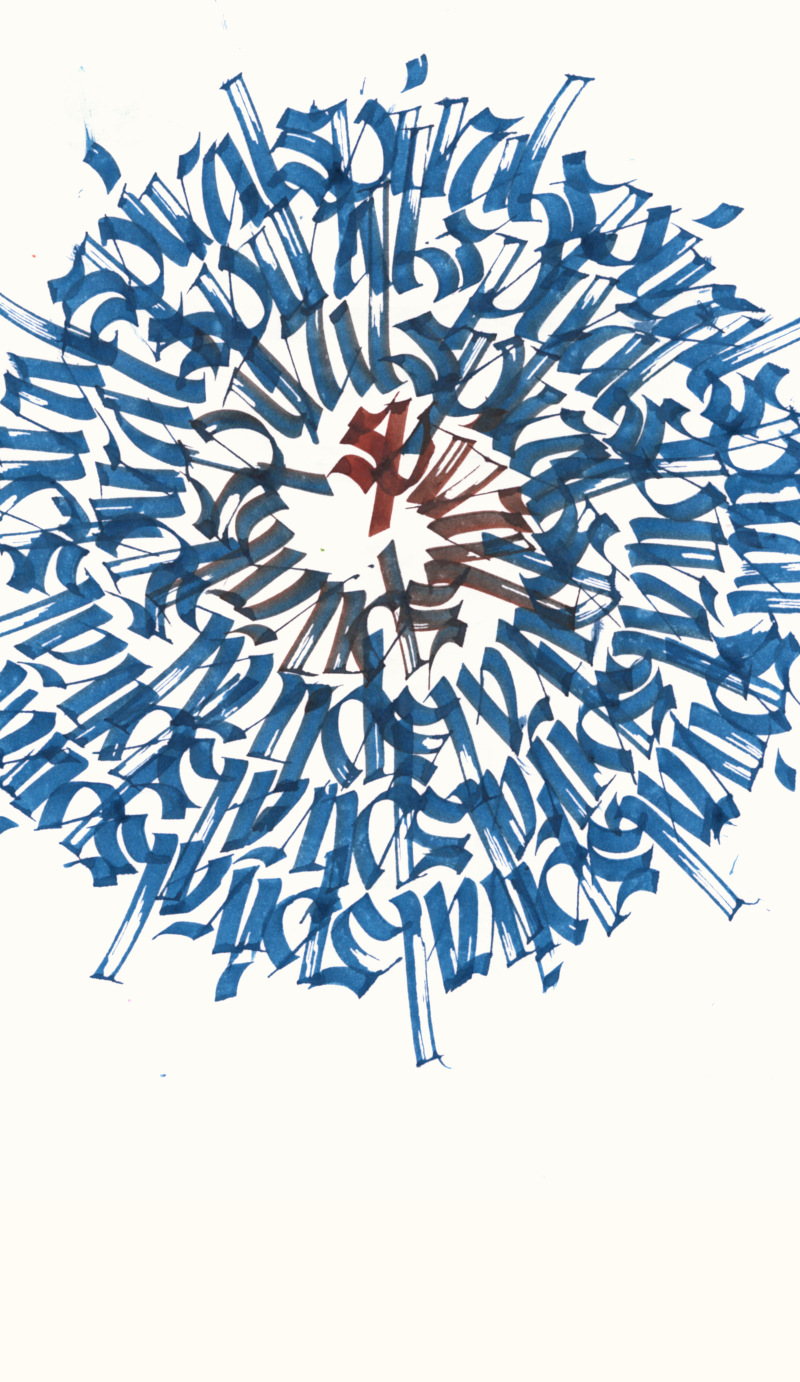
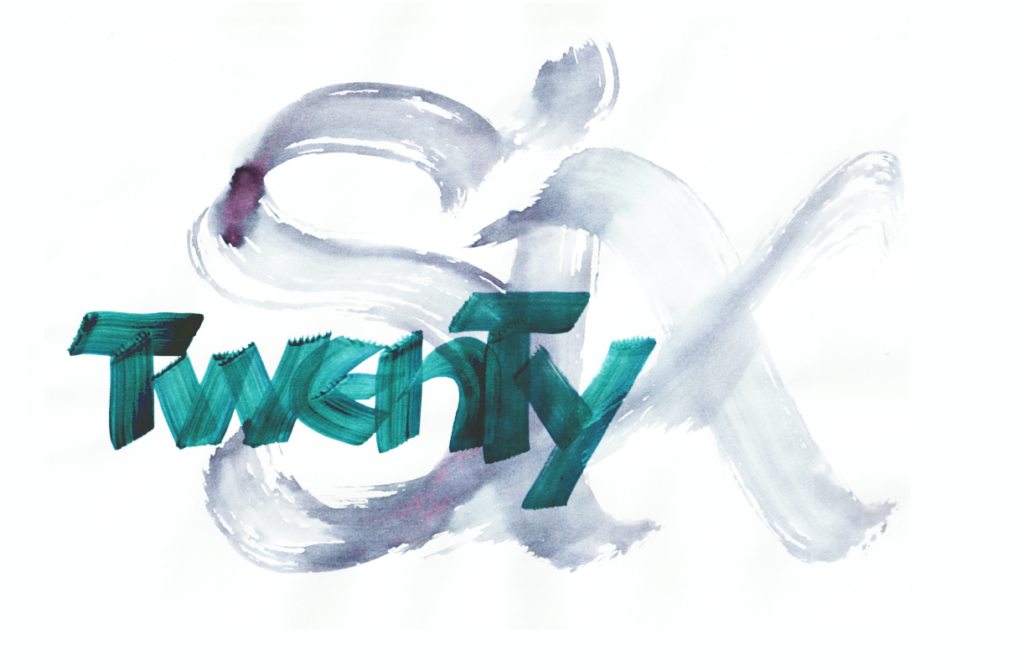
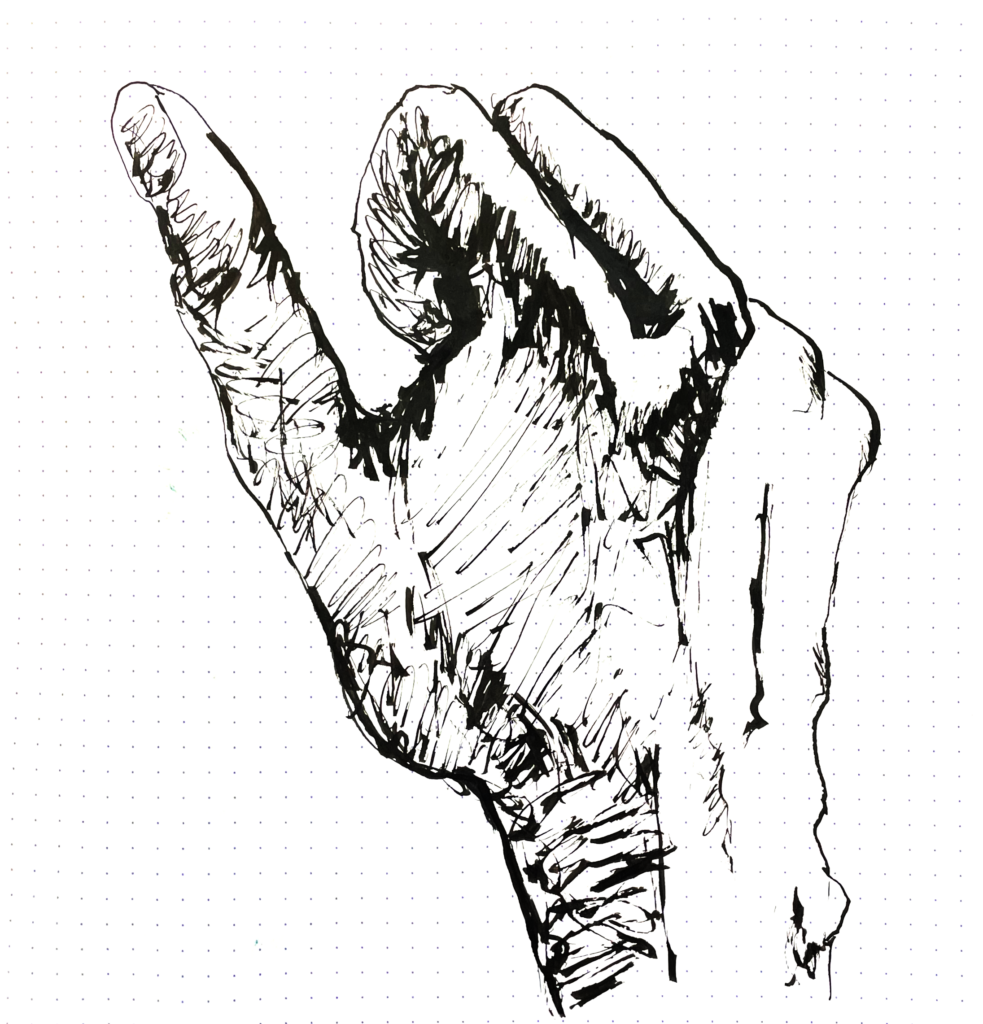
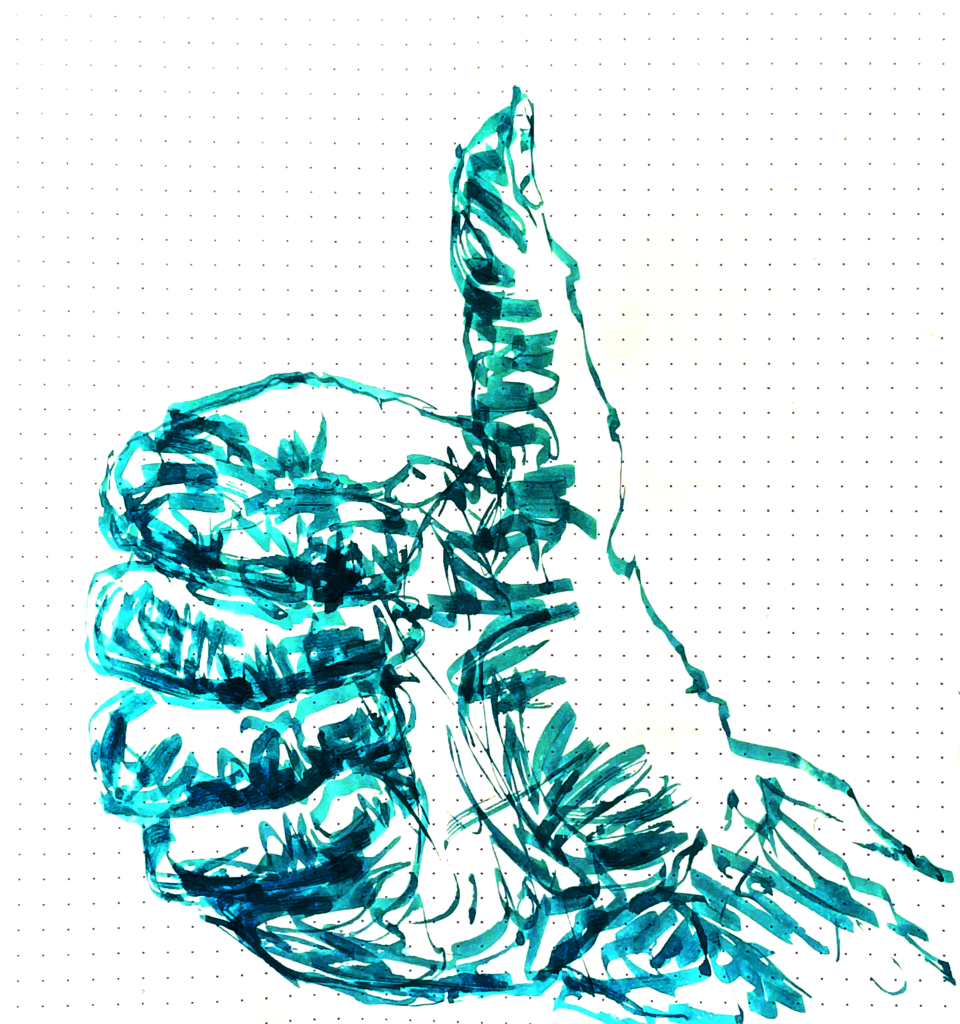
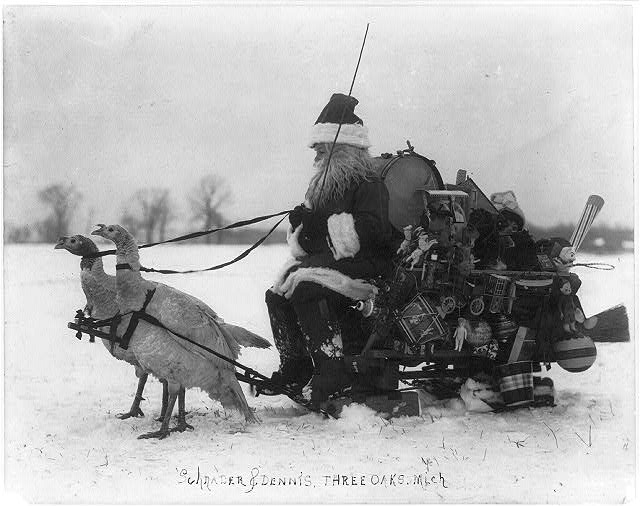
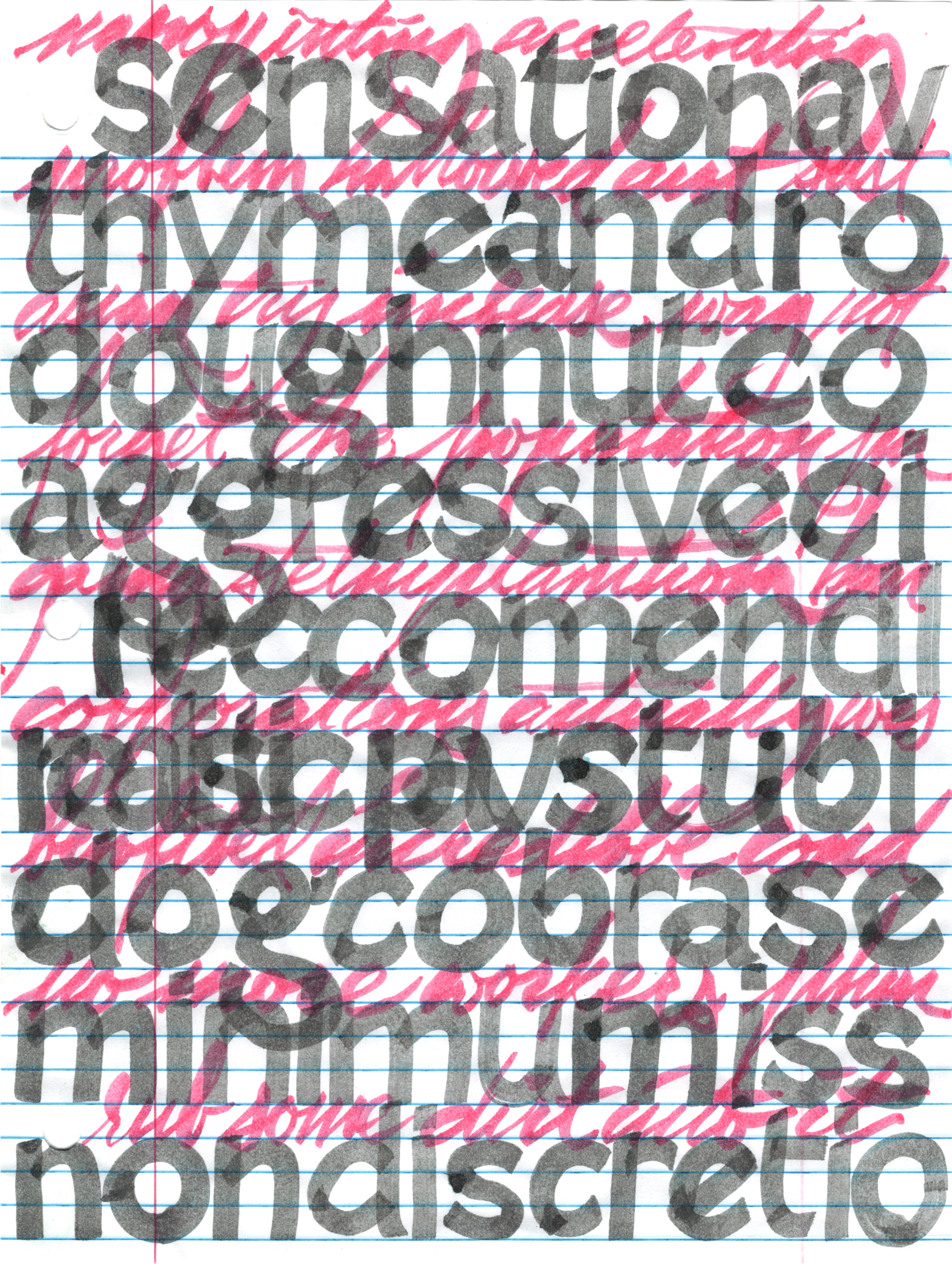
I saw how to do aspiralon youtube and had to try it!
,
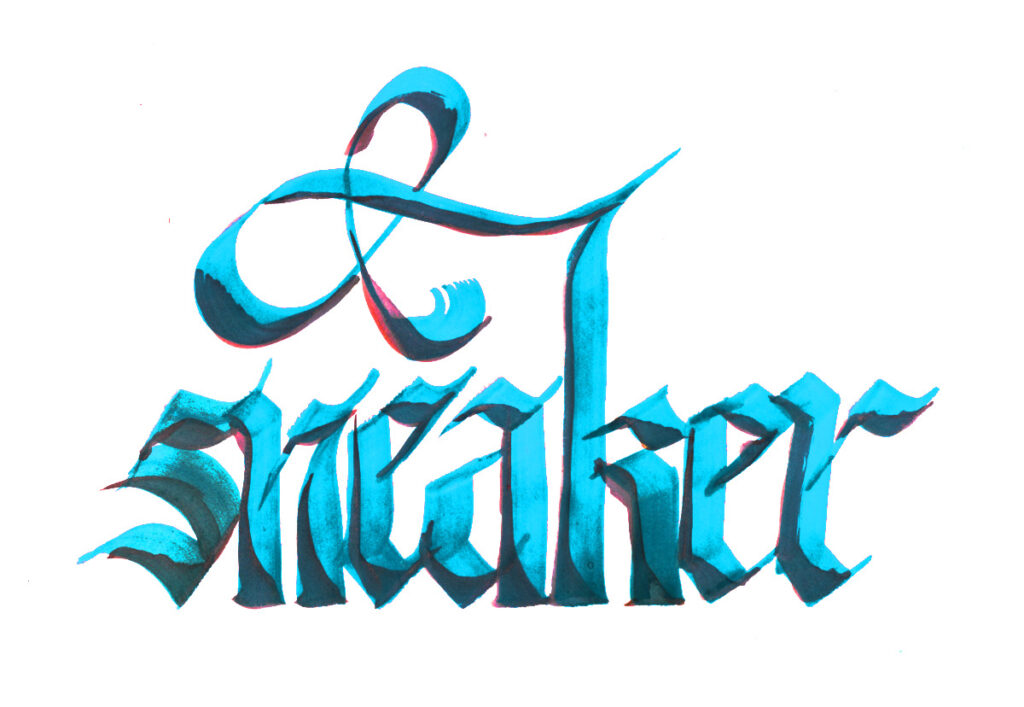
I spent some time playing with watercolors, in this case adding some shading to sneaker.
,
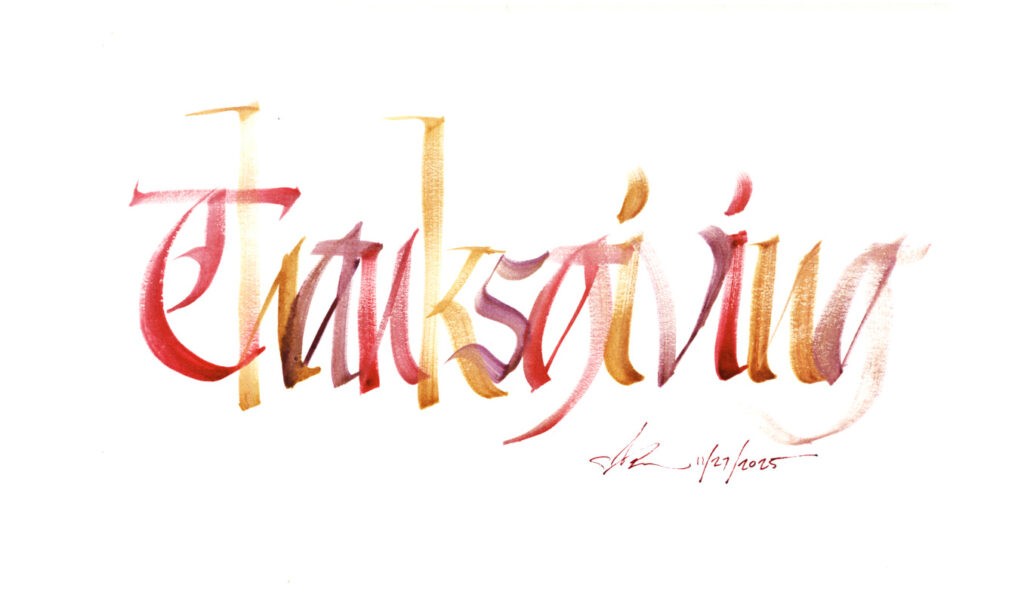
This Thanksgiving came out really nice. I often wonder if I could ever repeat a nice piece. As a hobbyist, you never cross the same river twice.
,
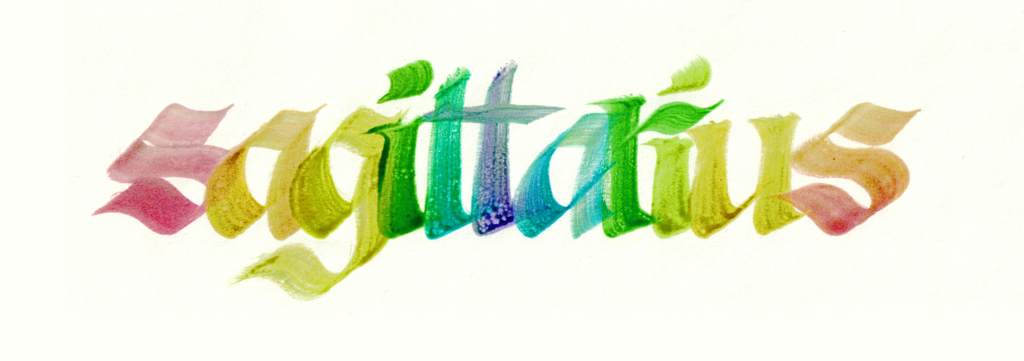
Trying a squished script with Sagittarius
,
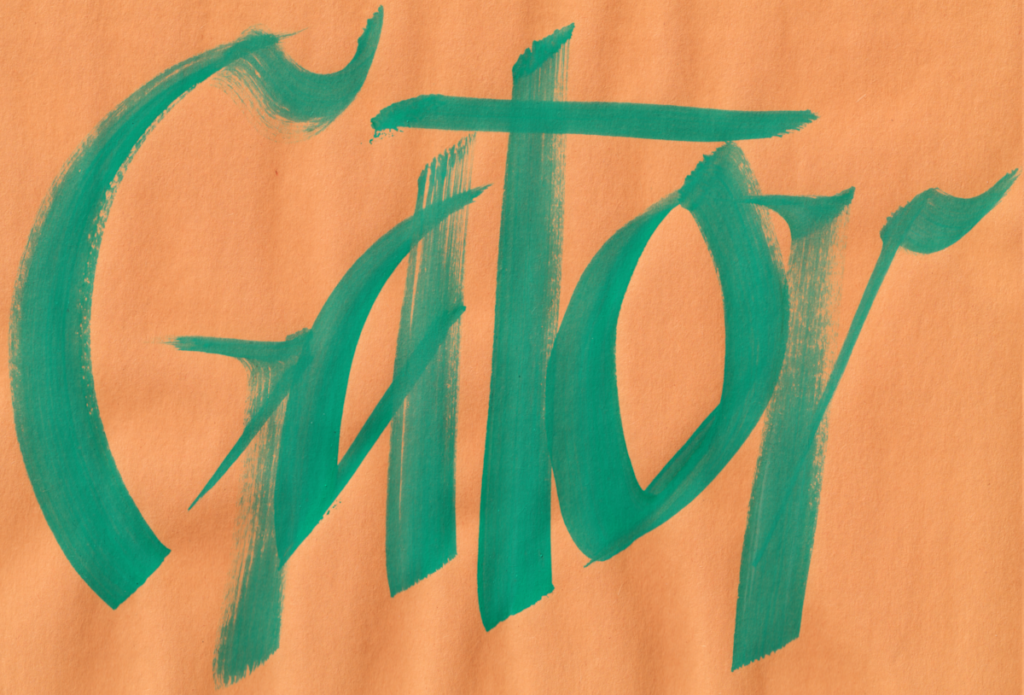
Watercolor led to gouache, and the opacity let me play with this Gator on construction paper. Unfortunately, the wrinkles on construction paper can’t be hidden like a black or white background with a curves adjustment.
,
Now that I’m a year away from these pieces, it feels like a different person scripted them. For most of 2026, I’ve been focused on scribing books. Then again, I just wrapped up my pieces for Inktober.
Who knows where this calligraphy kick will go.
Cya next time!
,
PS—Mia and the Migoo, Jacques-Rémy Girerd, 2008
It’s a simple story where a daughter braves an uncaring world to find her father far away. The characters aren’t complex, neither is the the plot or world building. The villain is cartoonish and the universe a bit strange.
Then again stories don’t need to all be deep. This movie works because the story is cute and the backgrounds are gorgeous.
Sometimes, that’s what counts. Make it beautiful and the rest falls in place. I haven’t revisited it since, but I remember it fondly for the impressionistic landscapes.
There’s a Studio Ghibli vibe with a young brave girl as a primary protagonist. It also reminds me of the diversity that we are blessed with in popular culture.
In my childhood, representation wasn’t really discussed because Asian Americans didn’t count. Of course this became a big deal over the past couple decades, and more agitated portions of social media still feel strongly about it.
But in this fragmented landscape of entertainment from all around the world, this a lack of representation feels less pressing.
Twenty years ago, I would have been more concerned about a lack of strong female non-princess protagonists, but that’s the majority of our fare nowadays. Of course, the good old boys club will not be as inviting. Hopefully, our animated universes is a harbinger of a more equitable world.
—November 2021
,
PPS—Ne Zha, Yu Yang, 2019 and Ne Zha Reborn, Ji Zhao, 2021
I went on a Netflix spree and watched both animated Nezha films.
The first one was set in a historical fantasy where a young brat grows up into a god. The second one is set in a diesel-punk Shanghai where a young punk grows up into a god. In both cases they beat up dragons and get hot and flamey.
They’re decent examples of a maturing Chinese animation industry, but I came away quite meh on both.
I accidentally watched the Ne Zha a few weeks after seeing a review by Accented Cinema about the Ne Zha Reborn. The unfulfilled expectation of a bucolic ancient China morphing into a diesel-punk Shanghai did not help my enjoyment of the film. Then again, I wouldn’t have watched Ne Zha through without that misplaced expectation.
A month later I finally got around to watching Ne Zha Reborn. It was enjoyable, not bad but not great. Given how rarely I watch films, I want them to be great or weird. Neither was either.
Now that I’ve stuck my nose into both camps, maybe I’ll follow up their sequels, since both of them were clearly set up for wider universes.
,
Almost five years later, I avoided this sunk cost pitfall for both franchises.
—January 2022
,
PPPPS—Penguins of Madagascar, Eric Darnell and Simon J. Smith, 2014
I came across this movie due to a podcast episode of the Anthropocene Reviewed by John Green. Like most commercial dreck, it entered and exited my memory.
It was a fun movie, likely worth a watch to kill some brain cells. My 7 year old daughter thought the movie was a little too thrilling, so she told me to finish it on my own.
It’s not that scary, but she’s a little sensitive, and that fine. The big bad world will be there soon enough. No need to use something like this to harden her soul.
Then again, I would have had no objections if she wanted to finish this silly action film with me. One can do worse with children’s films.
But if this note leads you to John Green’s excellent podcast, then it was well worth it.
,
Three years later, the kids discovered animation. Compared to other films, this was a standout. So was Surf’s Up (surprisingly!).
November and December 2025 turned into a crash course on estimating budgets and schedule.
Having gone through the crucible of three CIP seasons with the State of Nevada, I can quickly slam out numbers, but with multiple mega-projects on the horizon at the airport, I wanted to standardize our contingencies and develop a transparent process for turning a construction cost estimate into a project cost estimate.
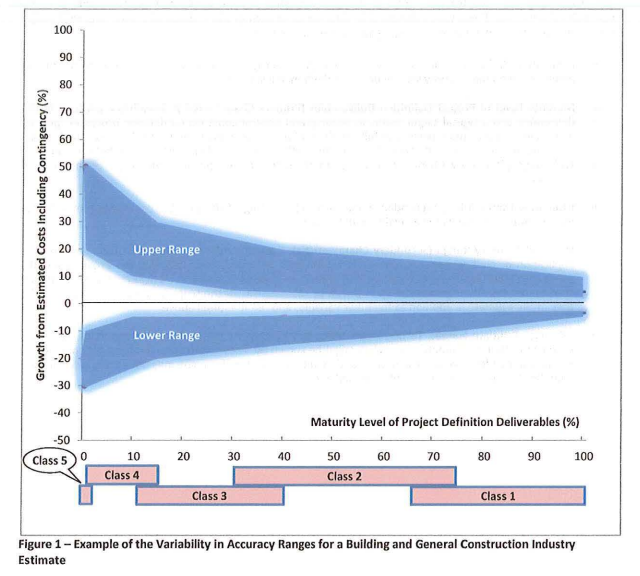
A while ago, I had pondered the question about desired accuracy for a project estimate. With a little research, I found a professional society who studied that exact problem—the Association for the Advancement of Cost Engineering (AACE). In their rubric, the roughest estimates are categorized “Class 5” with an 80% confidence of landing between -30% to +50% for construction projects (AACE 56R-08, adopted in ASTM E2516).
This range worked aligned with recommendations from our planning consultant for early cost markups. More specifically, we added a 20% Design Evolution markup to the Direct Construction Cost. This marked up cost became the basis of all the other costs in the project estimate, including a 20% Construction Contingency and a 10% Owner’s Allowance (because there are always changes after bid!)
Over the course of a project, the Design Evolution would drop to 0% when issued for Bid, while Construction Contingency should drop to about 5% as conditions in the field are investigated, but holding a bit for bid risk when bids are opened. The Owner’s Allowance would stay steady at 10%, but could shift if management was unwilling to allocate so much budget for post-bid changes.
As with all rules of thumb, the estimator is still responsible to account for the specific project needs, but having suggested defaults frees me to focus on unique conditions that require special consideration.
While it might be more technically accurate to stagger the cost of escalation over the course of time, we structured the estimate to provide a subtotal of the entire project cost and then add escalation as overall markup. Hopefully this will clearly highlight the cost of waiting to approve these major projects. While fools may rush in, analysis paralysis is not free—a few percent a year adds up fast!
So how to estimate a schedule? Unlike cost estimating, I was not prepared to tackle this question because I was always shoehorning dates to fit the State’s two-year legislative cycle. But the internet is a wonderful place, now that I have the freedom to recommend schedules that best fit our project needs.
Again, there is no need to re-invent the wheel—the Navy dealt with this problem in the 1950’s, creating the “Program Evaluation and Review Technique (PERT)”, where an estimator develops three schedules resulting in an Expected schedule. Since I’m intimately familiar with each step of the process, it’s easy to develop an Optimistic Schedule. My estimating spreadsheet combines these small steps into larger phases (design, permitting, construction, etc.) which makes it simple to take some broad guesses to develop the the Most-Likely and Pessimistic Schedules.
The spreadsheet then averages the estimated schedules to calculate an Expected Schedule. This schedule is considered to be a 50% confidence level estimate—half of projects will be delivered after the completion date. To bring the schedule back up to an 80% confidence level, the spreadsheet does some simple statistics to calculate a Schedule Contingency, which is shown as a final line item to determine the opening date.
As such, the schedule sheet is structured similar to the cost estimate (with the esclation added at the end). The Expected Schedule keeps the project team held to a tight process, while the additional contingency gives management a date they can confidently share with the public. This is similar to the US Army Corps of Engineer’s guidance that Congress is typically presented with an 80% confidence schedule while internal schedules are presented at 50% Confidence (USACE CSRA).
With a schedule in hand, we can now calculate escalation to the midpoint of construction. Since the cost estimate targets an 80% confidence level, we include the entire schedule contingency before the midpoint of construction.
How much annual inflation should to assume? The US Federal Reserve targets 2%, but the 2020’s have been rough, seeing 7-8% annual jumps. Things have settled down, but given recent experience, we are still assuming 4% annually. Call me in 2036 to see if that was anywhere near correct.
With that, the cost and schedule has been estimated. If you wanted to be fancy, you could build some s-curve spending projections. However, for the scale of my projects, I’ve only been asked for annual estimates, so I just use the even linear spending tracker calculated in Microsoft Project.
(Microsoft Project is a whole other thing I learned these past two months. It’s too much to cover but a few concepts that some figuring were task dependencies, hammock tasks, assigning costs to the tasks, and using flags to add color to the Gantt chart. YouTube is a great tutor, as well as AI—LLM’s are only semi-reliable, but used carefully, it was critical in working through both big picture questions and navigating software quirks.)
With this information, we can hold a jury to vet the project. Since the Construction and Design Division will be tasked with delivering the approved budget and schedule, we owe them an opportunity to critique the estimate. We also invite key operational staff for extra eyes to challenge assumptions and catch what’s missing.
And with that, we can finish the estimate with a cover letter to memorialize the basis of estimate to provide context around numbers:
Project Description (what will this do; where is it?)
Project Justification (why is this needed; who is served?)
Key Assumptions (when (schedule) and how the project will be delivered)
Base Documents (percentage of design complete, and often referencing a 3rd party estimate)
Confirmation (or not) that an internal jury vetted the project.
List of attachments (additional diagram, cost estimate backup, etc.)
After a couple initial tests, this template is working well. I can smash out a draft estimate in half a day, though I’d prefer a few days to do it right. Beyond half a week, I suspect that extra effort would be minimally helpful—I’ve often claimed that I can spend three hours or three weeks to end up equally wrong.
With that, I’m happy that I was given the time to develop a project estimate template that shares the work, from the basis of estimate to the final budget and schedule. Critically, this a transparent document, showing the assumptions with a clean line of logic so that decision makers can evaluate the staff’s technical opinion on the proposed project.
And with that, it’s on them.
~
Some Links
For some reason I don’t have much patience for live action films, but I gladly watch animation all the time with the kids. Here are three standouts from the last three years.
Puss in Boots: the Last Wish is the stunning sequel to the lackluster spinoff from the Shrek franchise. It was shockingly great with a tight, rich story paired with gorgeous animation. I guess DreamWorks was impressed by Sony Animation’s revolutionary Spiderverse and upped its game!
Robot Dreams is a cute, yearning story of a dog and his robot, lovingly set in in 1980’s New York City. We just watched the movie, so it might be recency bias, but it should have won the 2023 Oscar over Studio Ghibli’s The Boy and the Heron.
Flow was the worthy Oscar winner for 2024, a surreal tale of a cat weathering a sudden flood in the valley. As a wordless film, I was worried that the kids wouldn’t dig it, but they both loved it. Gints Zilbalodis is an auteur who has the courage to finish what Pixar started in that epic that first half of Wall-E. Zilbalodis’ 2019 full length film Away (included in the Criterion Collection DVD) was also well worth the watch.
Bonus! We just re-watched Ernst and Celestine now that they’re now old enough to enjoy the sweet tale and gorgeous watercolor animation. It might come from a children’s book series, but it’s absolutely enjoyable for adults as well.
~
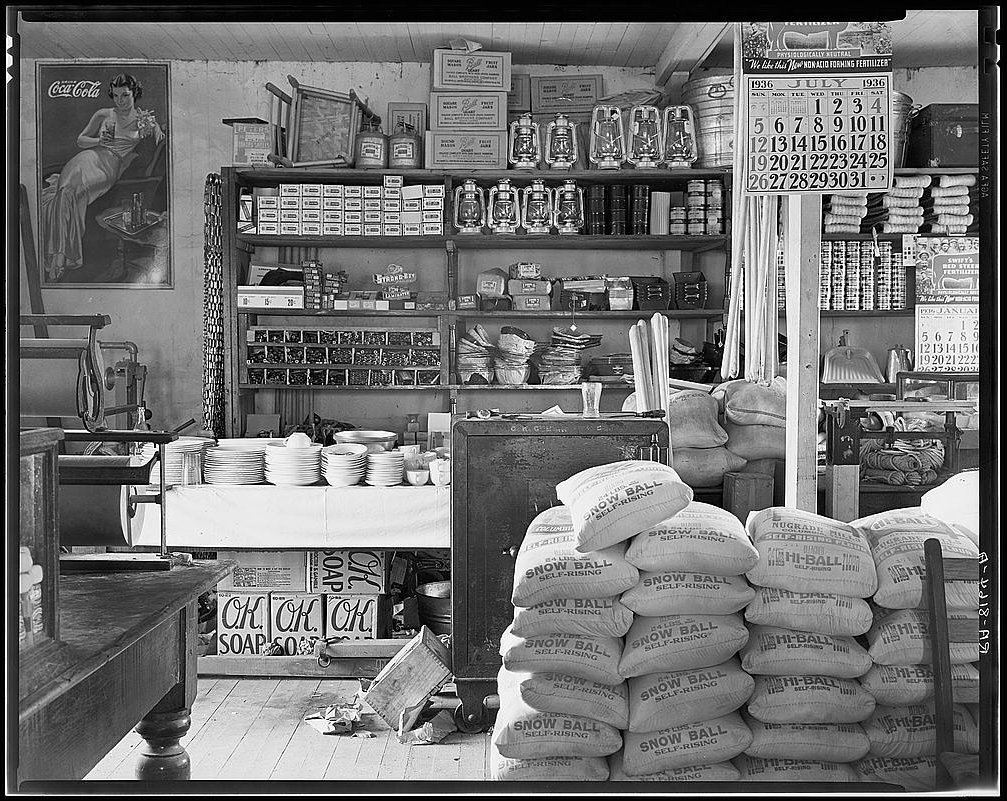
General Store, Moundville, Alabama, 1936, Walker Evans
Starting the New Year marching through pieces from eight months ago, then again, it’s fun to explore the (recent) past.
,
4/1/2025
Looking back, I should made a lot more of these backlit photos on the light tablet. I remember when light tables were big pieces of furniture. Now they are thin cheap LED’s powered by a USB-C cable.
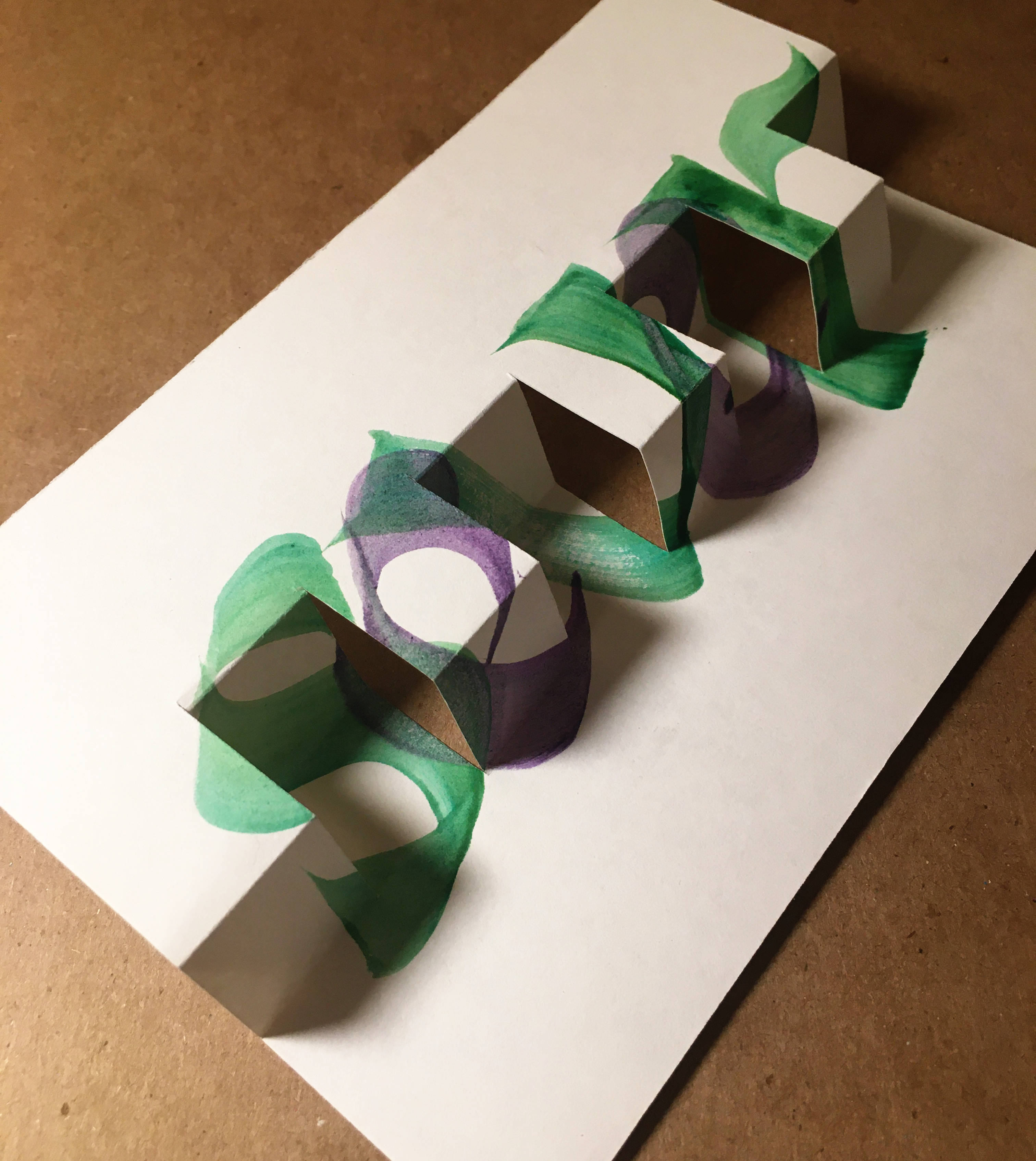
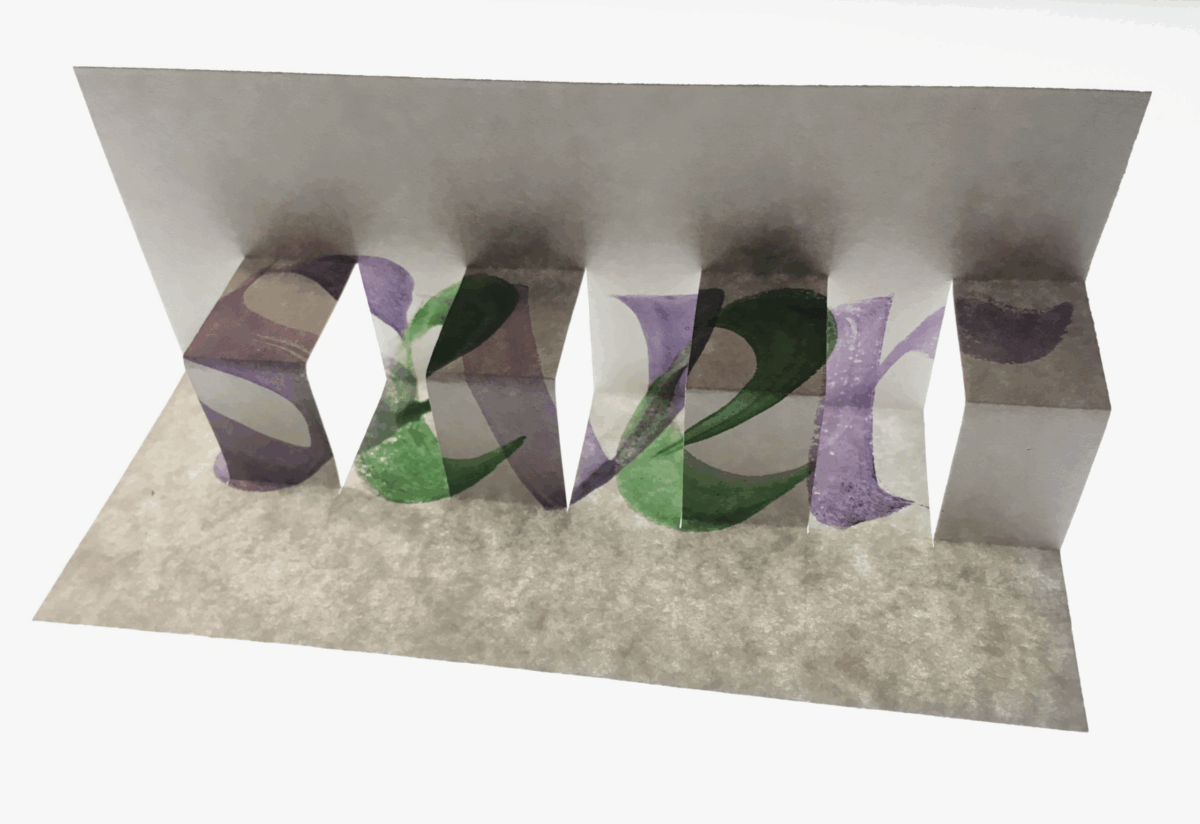
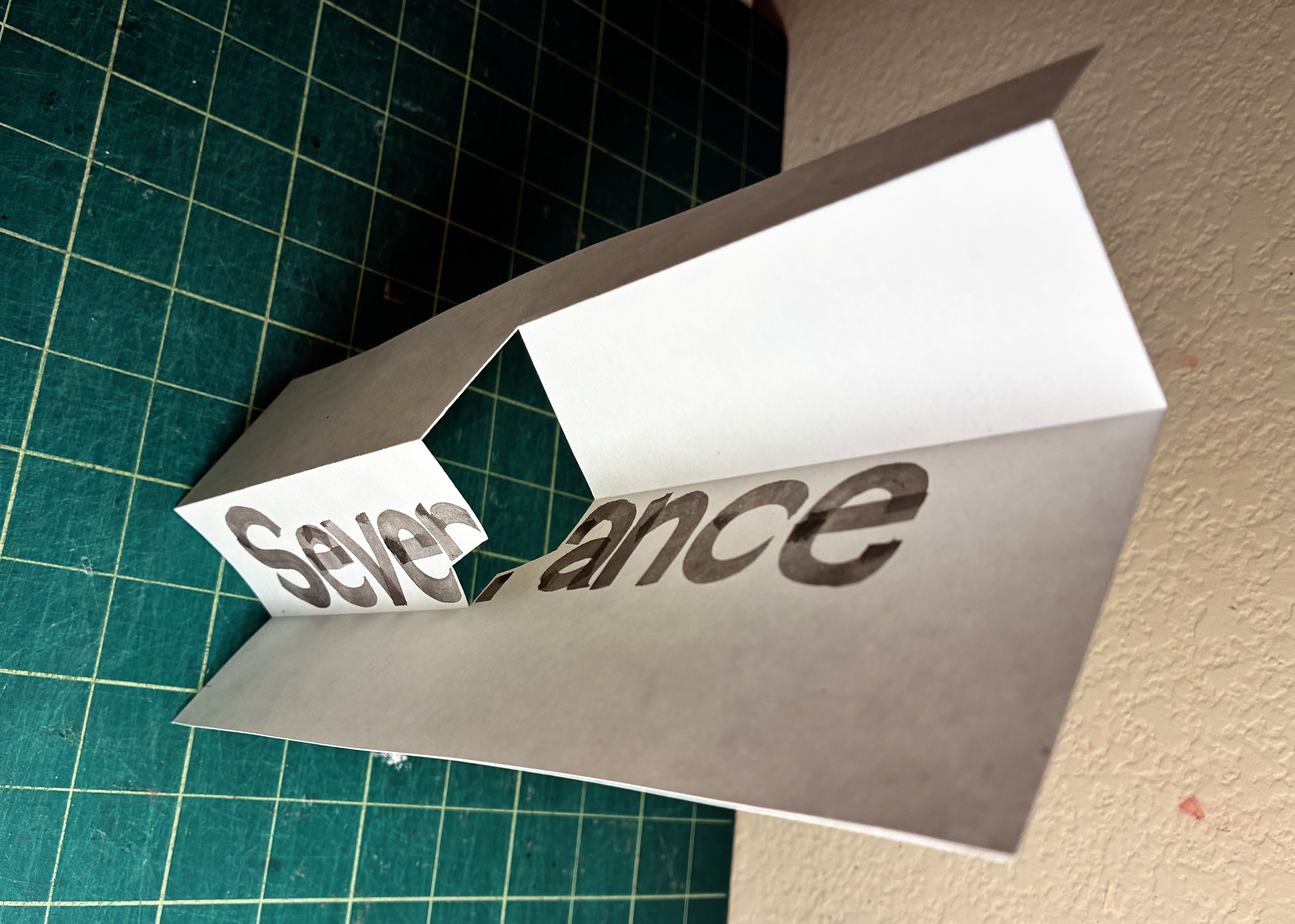
After making this piece, I realized that this prompt was likely inspired by the TV show Severance. So I made a popup based on that logo as well.
,
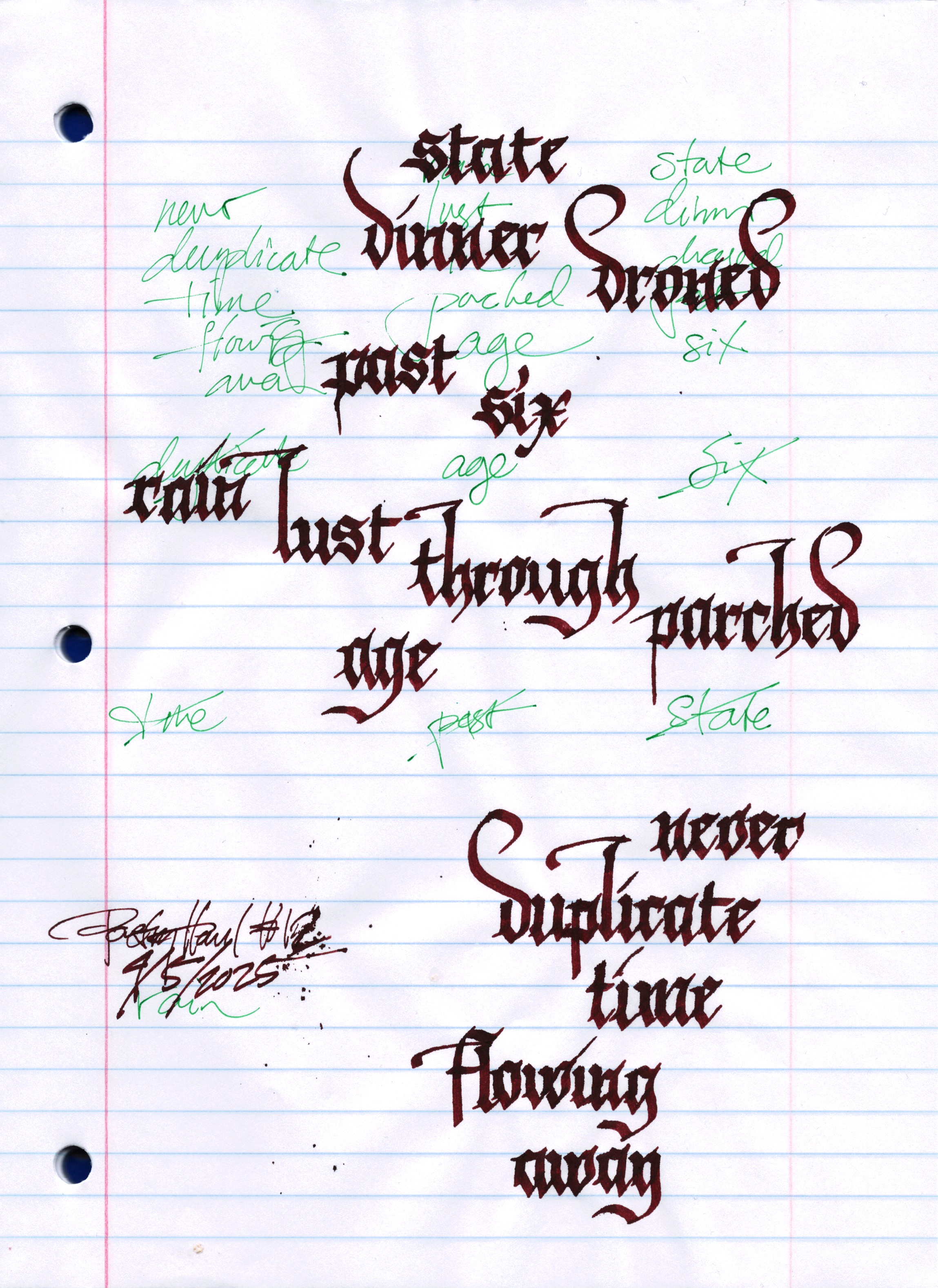
4/5/2025
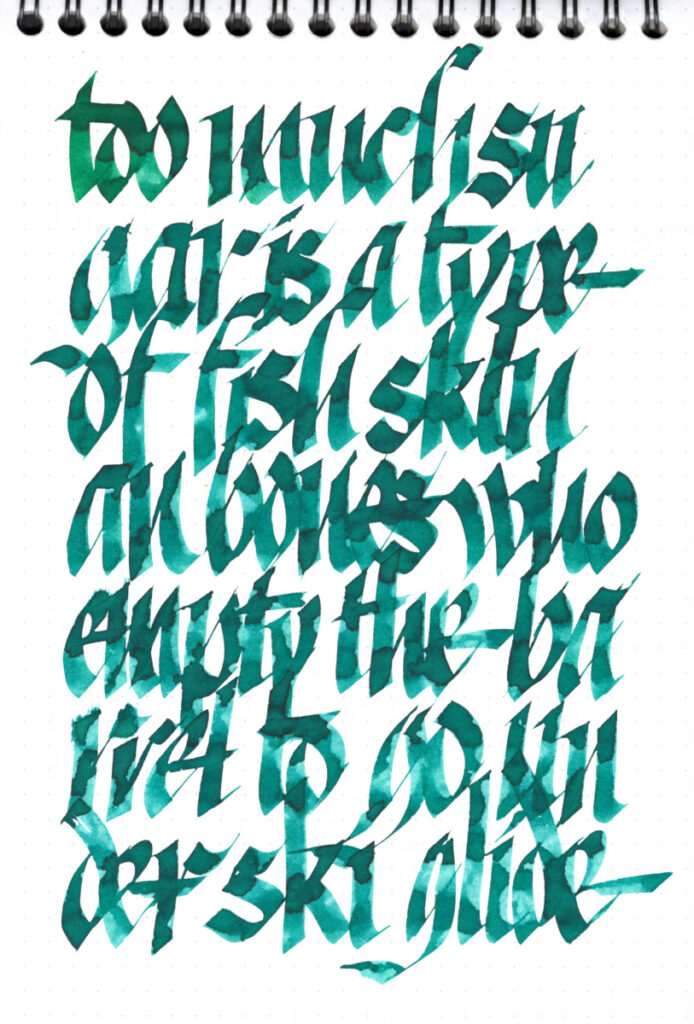
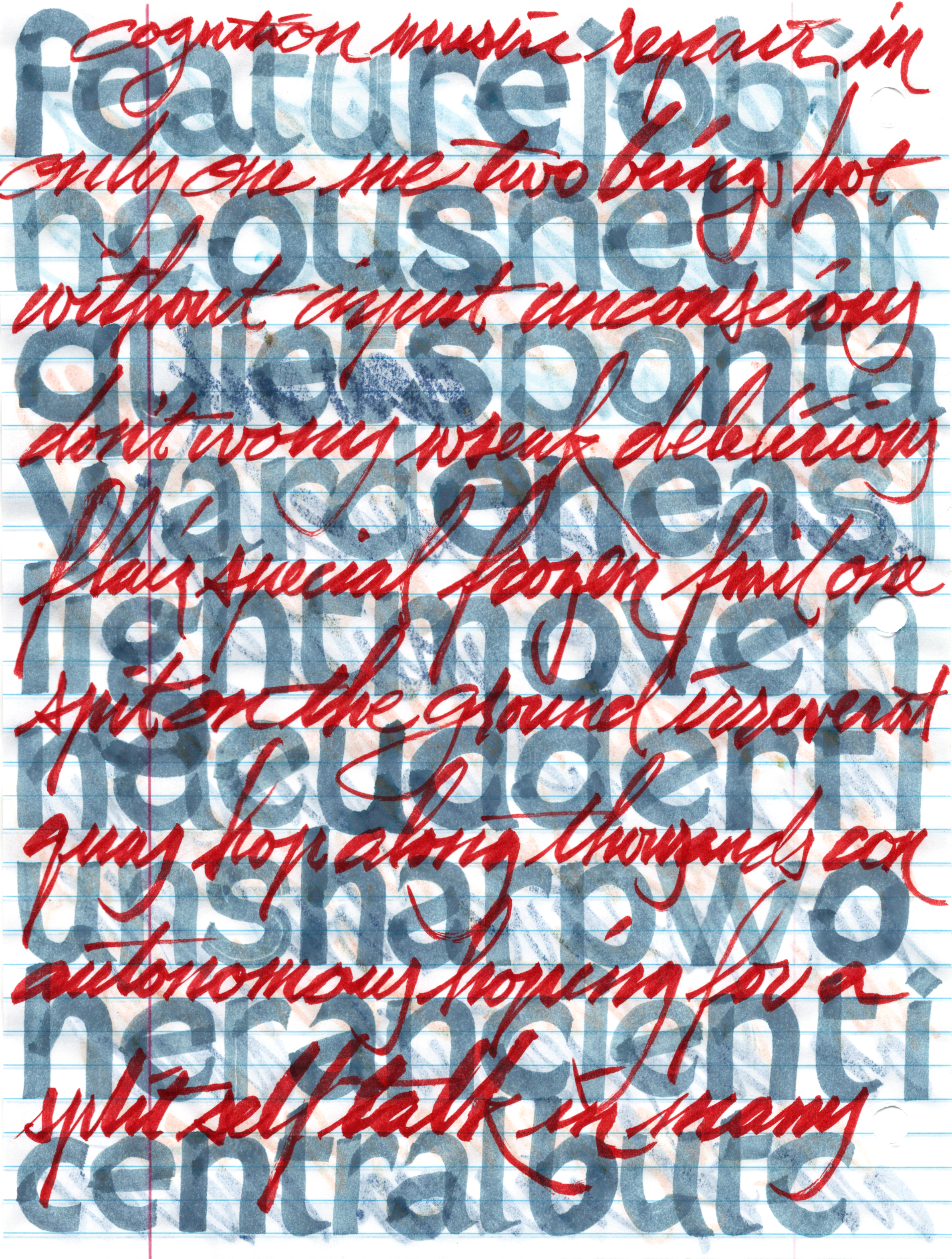
state dinner droned past six rain lust through parged age never duplicate time flowing away
I spent a month playing with fractur script. Normally I use a 6.0mm nib, so it’s fun to drop down to the 2.4mm and fit more than a few words on a page.
,
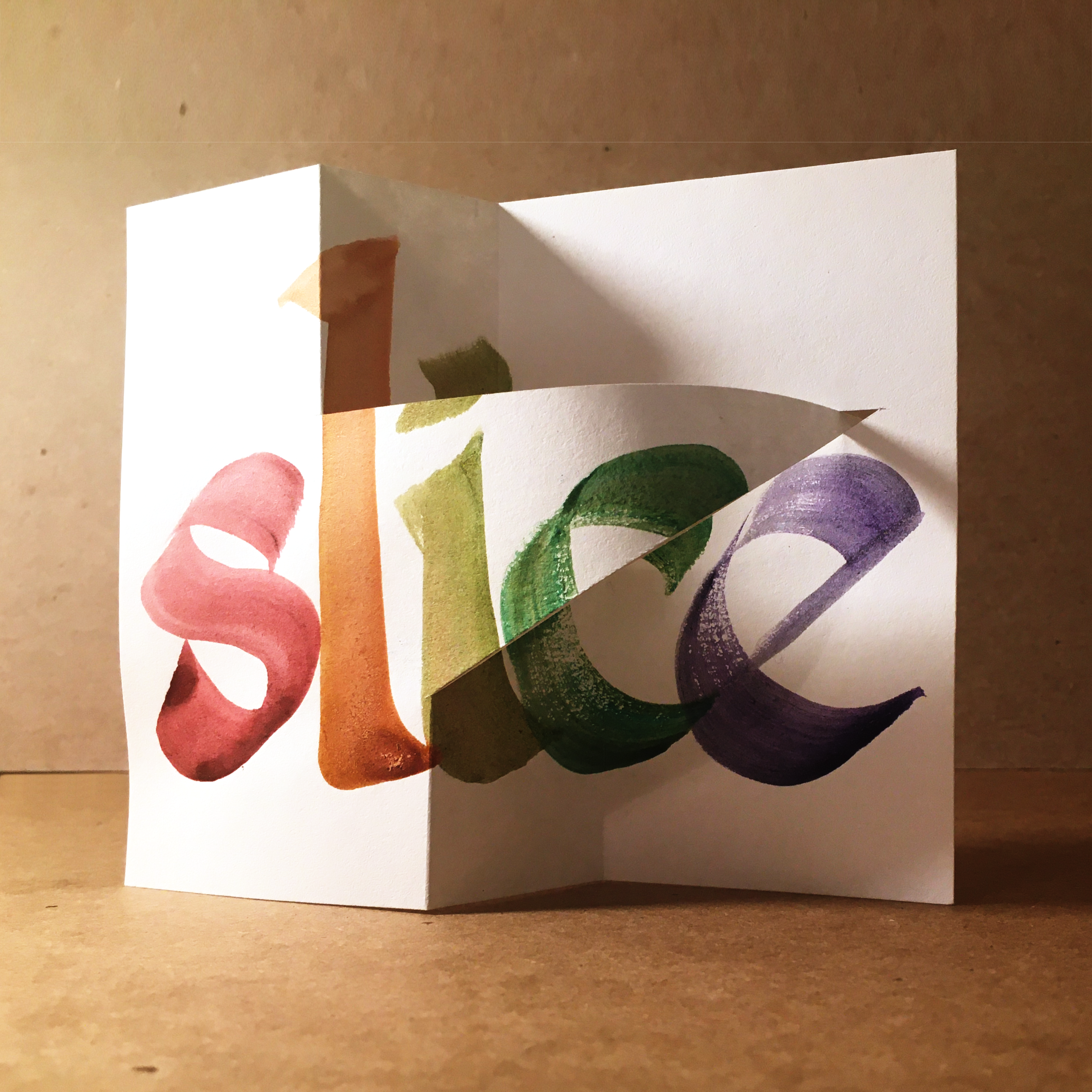
4/7
A simple slice, with the sliver tucked into its original cut.
,
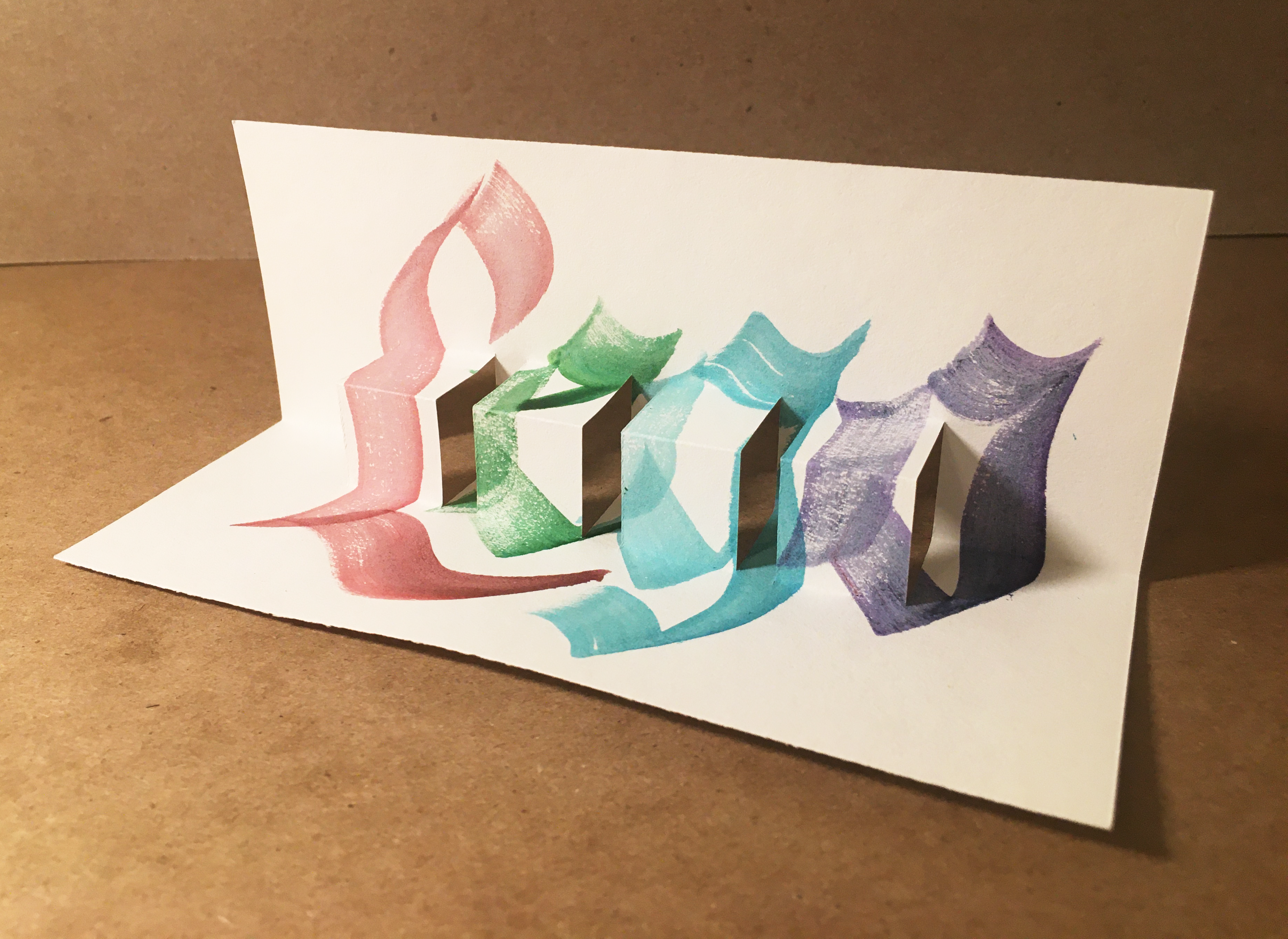
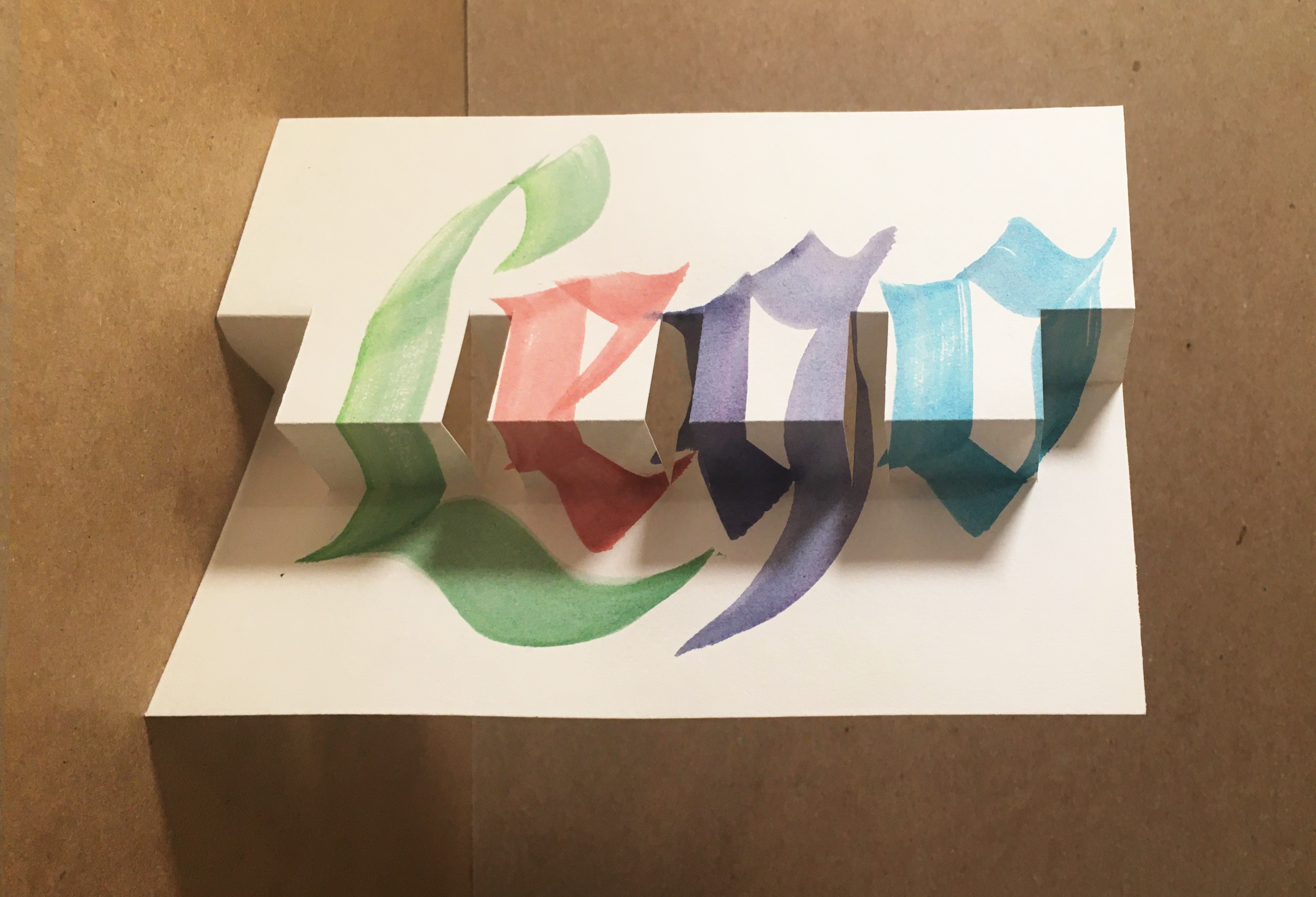
4/10/2025
A literal take on the Lego form as I was studying the 3+1 (above) versus 2+2 (below) folds.
,
4/18/2025
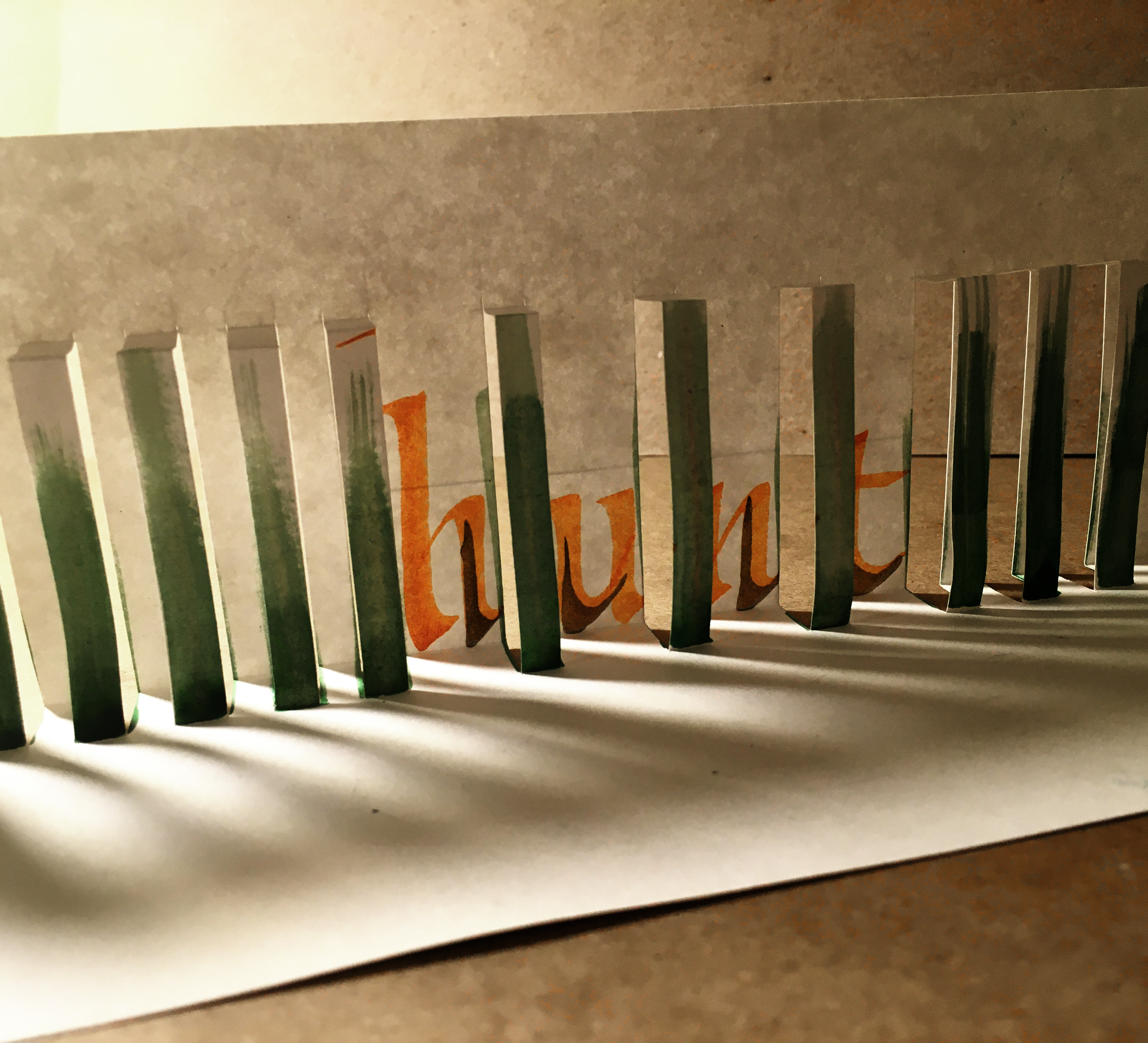
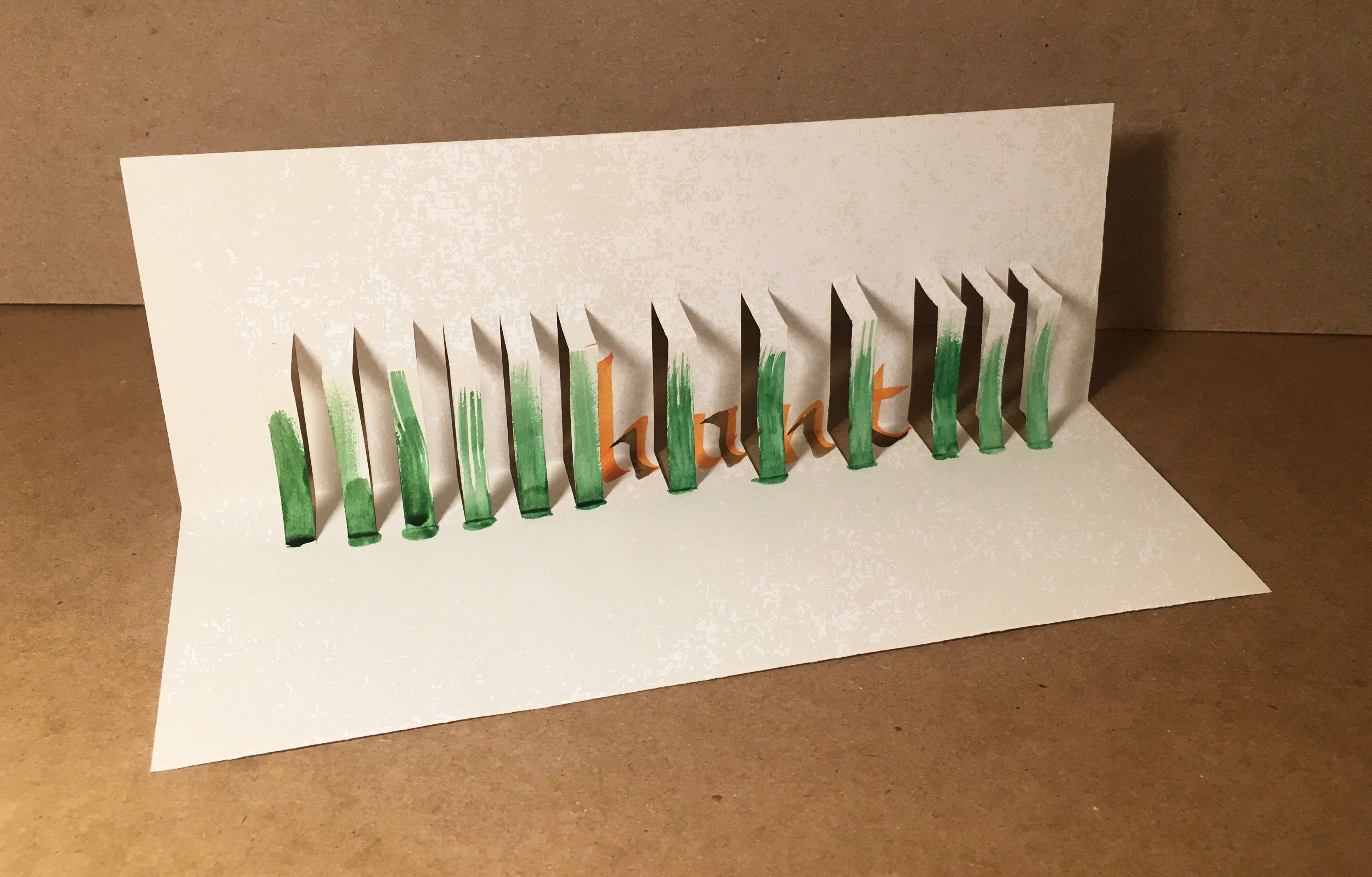
Tigers hunt in the tall grass.
,
I’ve been on a good run of working ahead, so it’s been weird to write in the present tense when it isn’t Thanksgiving yet. Moving forward, I might drop this pretense until I’m back to being behind “schedule”.
Cya next time!
,
PS—Journey to the West, CCTV, 1986
After I recounted the story of the jade rabbit from chapter 95, my daughter wanted to watch the story. The episode adapted the novel well, hitting the key points while abridging and eliding non-critical aspects. The producers spun the story with a moral exhorting Piggy to behave, but otherwise followed the original.
Indeed, they followed the spirit perfectly. The novel is itself an artful collection of folk tales, so this was a figuratively faithful translation into a new medium.
Unfortunately, the production shows its age. The pacing is a little stilted and the budget is much less than one expects with modern fare. I imagine two audiences for this show—rewatching for nostalgia and for nerds to analyze how the novel was adapted to the television medium.
I would fit the latter group, but having no fondness for live action TV, this series isn’t for me, definitely not for a 30 hour commitment.
After completing the novel, I watched the final episode of the show. I love how they stayed faithful to the original story while closing it in its campy, endearing way. I see why this show has been replayed on TV every since year since its original broadcast. I watched a trailer of a 2011 take on the novel and the old practical effects of the original are vastly more appealing than cheap, outdated CGI.
—October 2021
,
PPS—Cowboy Bebop, Netflix, 2021
I don’t know how to remake a classic, except that this ain’t it. The production is of decent quality, though imperfect. John Cho is a little old. None of the actors hits their notes dead on.
This adaptation is trapped in the uncanny valley of recreating the past (episode 1) and creating its own identity (episode 2). The first episode missed the mark (a damn near impossible task), and the second episode proved it was going in a direction that I wasn’t interested in.
Vicious and Julia are barely characters in the original. He was (as the name implies) is a cruel force of nature. She’s mute lost object of desire. Making them human reduces their essence and costs us time in revisiting the main characters.
To be fair, I might have given this series one more episode but after disliking the second I crawled the internet, found mixed removed and moved on. Why spend 8 hours on a mediocre echo when I could just revisit the original masterpiece again?
—November 2021
,
PPPS—World’s Most Extraordinary homes, Netflix, 2017-2018
My kids make little tent structures around the house so we thought they would enjoy checking out all these cool houses around the world.
Yup, it was pretty awesome!
Admittedly, when the revolution comes, these folks will be the first to fight the mob at their gates (unless their private security forces pushes the rabble towards easier targets).
Class envy aside, the rapport between the hosts was fun and the houses were luxurious. Unsurprisingly, we preferred the smaller (often architect owned) structures. Financial constraints made for tighter designs that just felt right.
The first season was sorted by geography (mountain, coast, etc.), while the second was by nation. Both were fun to watch and it’s a shame there aren’t any more seasons.
I met the Architect and our Agency to discuss a simple fencing project. We addressed logistical concerns and needs of their staff and clients. We covered security concerns, budgets, and traffic flows.
At the end of the meeting, the Architect started to ask questions. He stripped away the project requirements. He challenged our priorities and tested the assumptions.
It was a beautiful moment of architecture. I got to see a flash of inspiration happen in real time.
I’m not sure what the agency will do. Maybe they will stick to what they originally requested. But the architect’s job is to ask the hard questions. We’re not just order takers. We push our clients towards their best future—which might not the one they imagine.
In my years, I’ve had the privilege to watch professionals practice their craft at the highest level. A few years ago, I watched my old boss sell a design, weaving a tapestry of a story. It was a raw display of skill, and I told my interns to cherish the moment, cause that doesn’t happen every day.
This was another such moment. It was also a professional challenge. Why didn’t I ask those questions earlier? I might be the owner, but I haven’t become a ticket machine, yet.
I’m here to challenge your assumptions and refine your future.
I’m still an architect.
~
Some Links
YouTube is an amazing warehouse of amazing dancers. I presume TikTok may even be more addictive, but I’m not touching that drug.
Lia Kim is my favorite dancer and choreographer. This collaboration with Jinwoo Yoon for Rain Dance always takes my breath away. Their body control is so tight and synchronized with the music. (While in Korea, a shoutout to TIMT who posts behind the scene to accompany their short performances.)
Sven Otter’s electro-swing is captivating in both his homemade videos and in commercial advertisements.
Marquese Scott was one of the original YouTube dancers and Pumped Up Kicks video still hits, even with the simple set camera on the ground. I also love this collaboration with a sign spinner.
My thoughts about this despised big box chain revolves around two stories.
Two decades ago, I read an article describing the demise of the pickle giant Vlasic as Walmart’s relentless supply chain squeezed them into bankruptcy.
The second was an anecdote by a friend whose sibling works for the company. Walmart employees are not allowed to accept gifts. The rule is so strict that they pay for bottled water when visiting a vendor’s office.
Aside from the power of stories to stick in one’s memory (branding!), they highlight an interesting dichotomy I’ve seen in government.
Bureaucracy has a logic all its own. The system will demand individual uprightness while being corporately cruel. As the Owner, the trick is to find that balance. We must uphold strict standards, but we also need to execute with wisdom and judgement.
It is easier to be a coldly bureaucratic operator, but the process is so much richer when practiced with warmth.
~
Some Links
For about six months, I dived into jazz. I don’t consider myself particularly knowledgeable about this obtuse genre, but here are a few standouts from those explorations, primarily courtesy of library app Hoopla.
After trying out a few of Keith Jarrett’s solo albums, I’ve settled on the Paris Concert. Like the rest of the world, I adore the Koln Concert but I prefer how the Paris Concert starts with a baroque phrase before transitioning into jazz.
Coltrane is still the truth. For the season, you can’t go wrong with My Favorite Things, and Giant Steps is every bit as giant its title.
Less famous known is Bobby Timmons. I first found him due to his excellent Holiday Soul Christmas album, but I’ve also very much enjoyed his albums Chun King and Chicken and Dumplin’s.
I walked a renovation with my Architect and the Using Agency.
It was strange to traipse through the building. Construction had started a couple of months prior, but it all felt theoretical.
As an Owner, my job is to manage budget and schedule. I’m here to make the process move smoothly; it’s all so abstract, not solving the problems in the field.
Yes, it’s less stressful than the technical day to day grind in private practice.
But we don’t get to enjoy the scenery either.
~
Some Links
I’ve always been fond of for folk music, and YouTube is a treasure trove of artists.
I found Daoiri Farrell from an impromptu flight delay session, and the Creggan White Hare has been on regular repeat ever since.
Nicolas Campin anchors a haunting Mazurka, but if you’d rather have your players separated, here is a captivating Scottish à Cheillé on dining tables.
A captivating pairing of 十面埋伏 with A Change Is Gonna Come by Charles Yang. His soulful singing is a pleasant shock after playing the high pitched pipa tune on the violin.
Oh, I don’t want to watch Pokemon. Cleaning up takes energy and I only have 1 energy left.
8/28/2023
,
3/11 Inktober 52 (2024), week 17
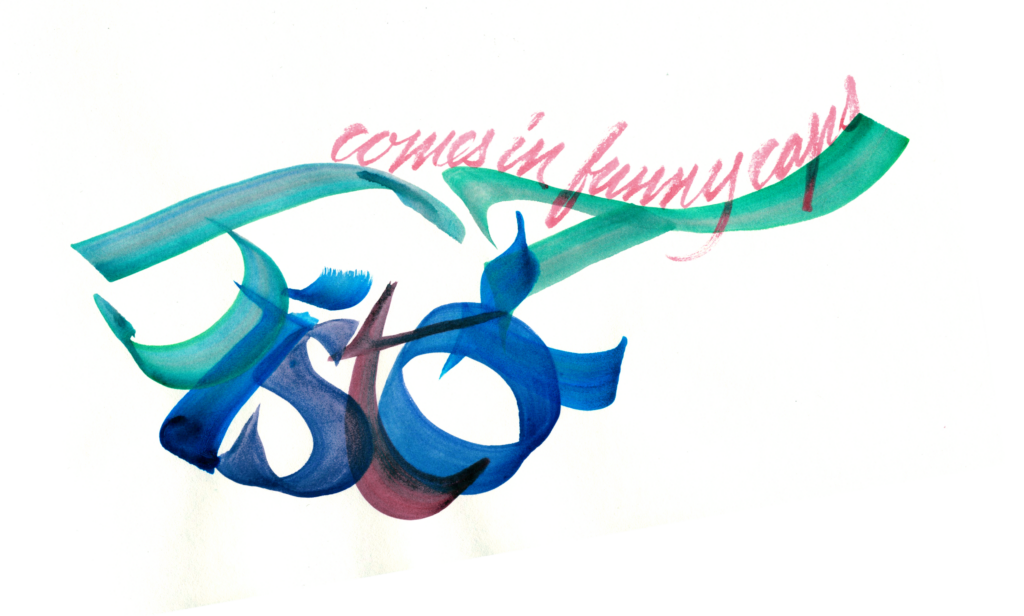
history comes in funny caps
That’s a funny looking cap.
,
3/13 Inktober 52 (2024), week 16
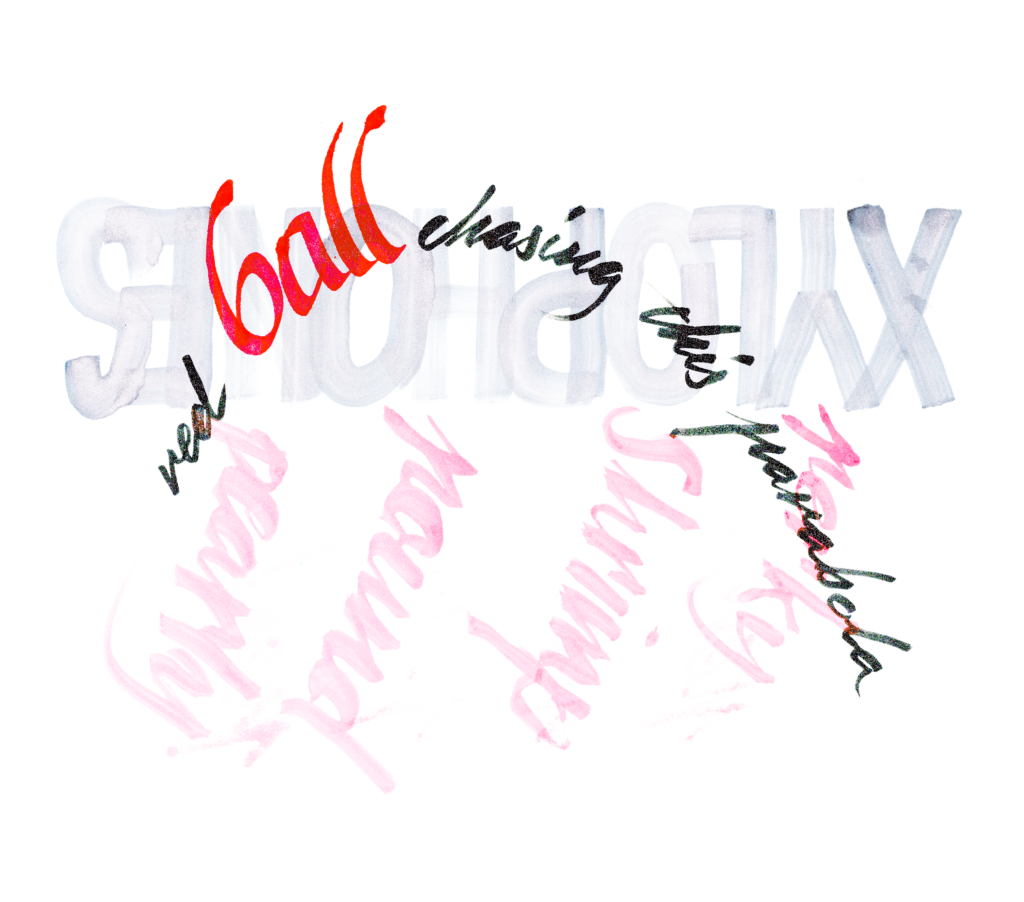
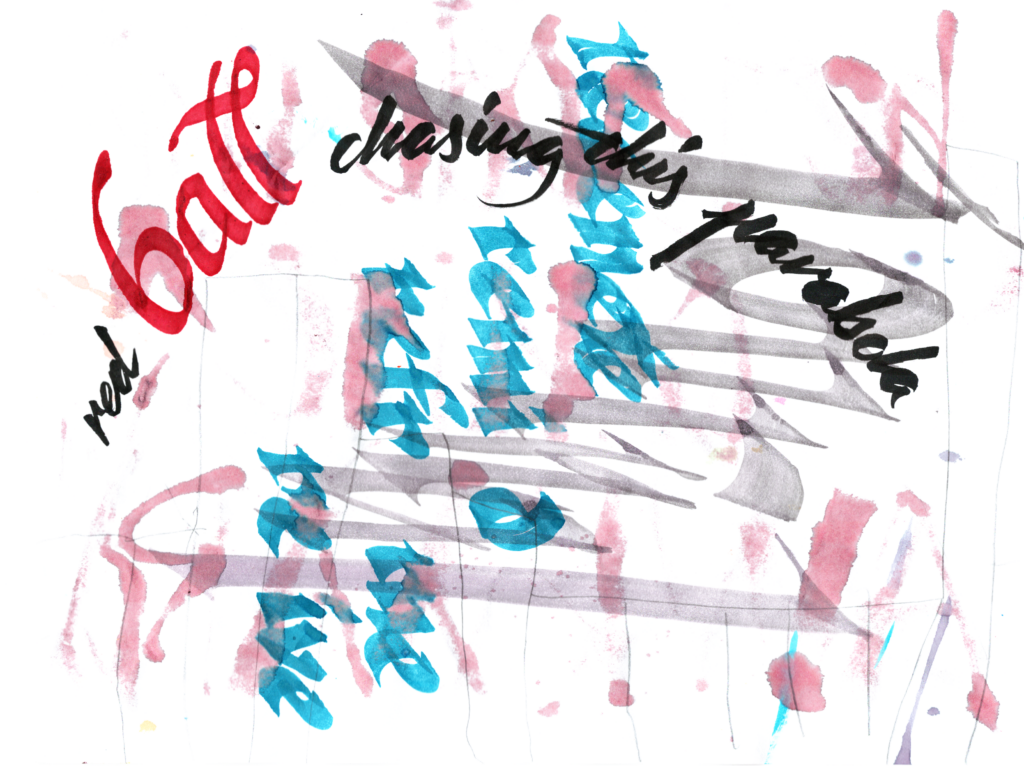
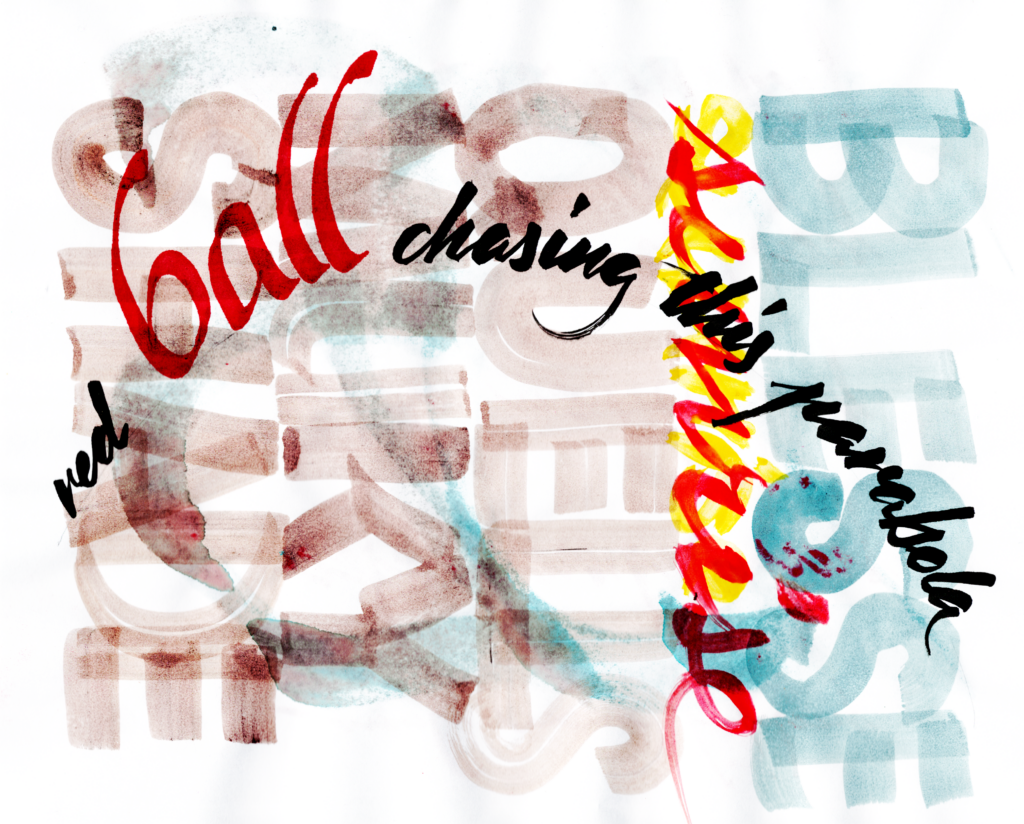
red ball chasing this parabola
I pulled the background way down for the final composition. Just enough for some visual interest, but not enough to compete with the 5WP.
,
3/14 Inktober 52 (2024), week 15
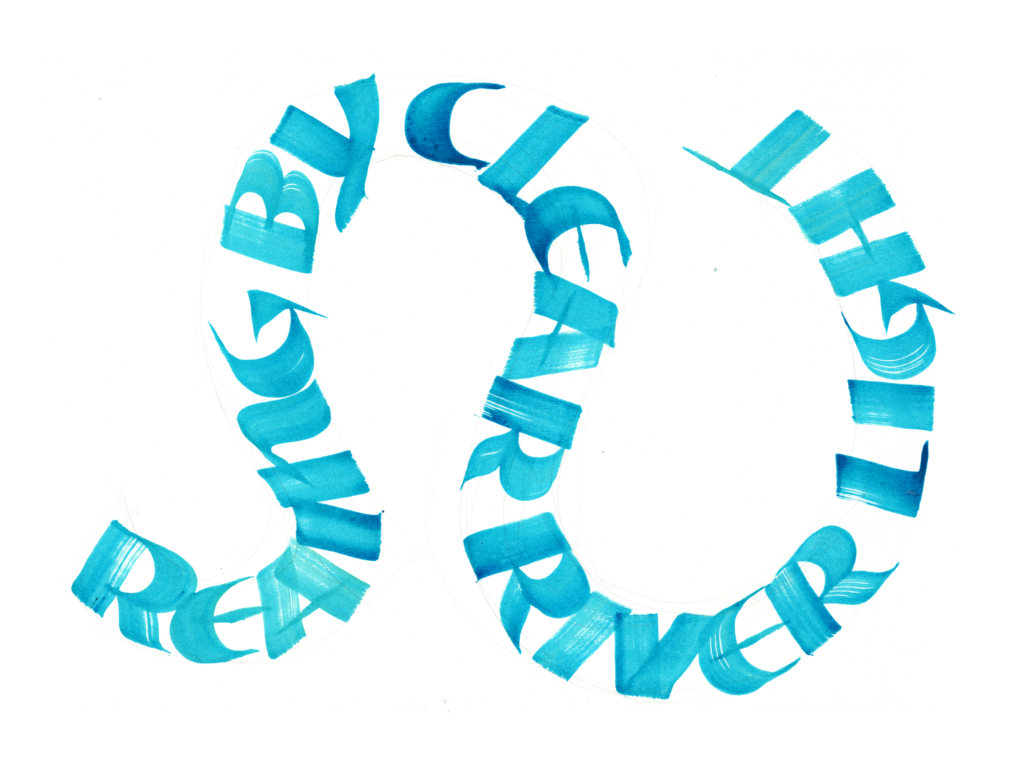
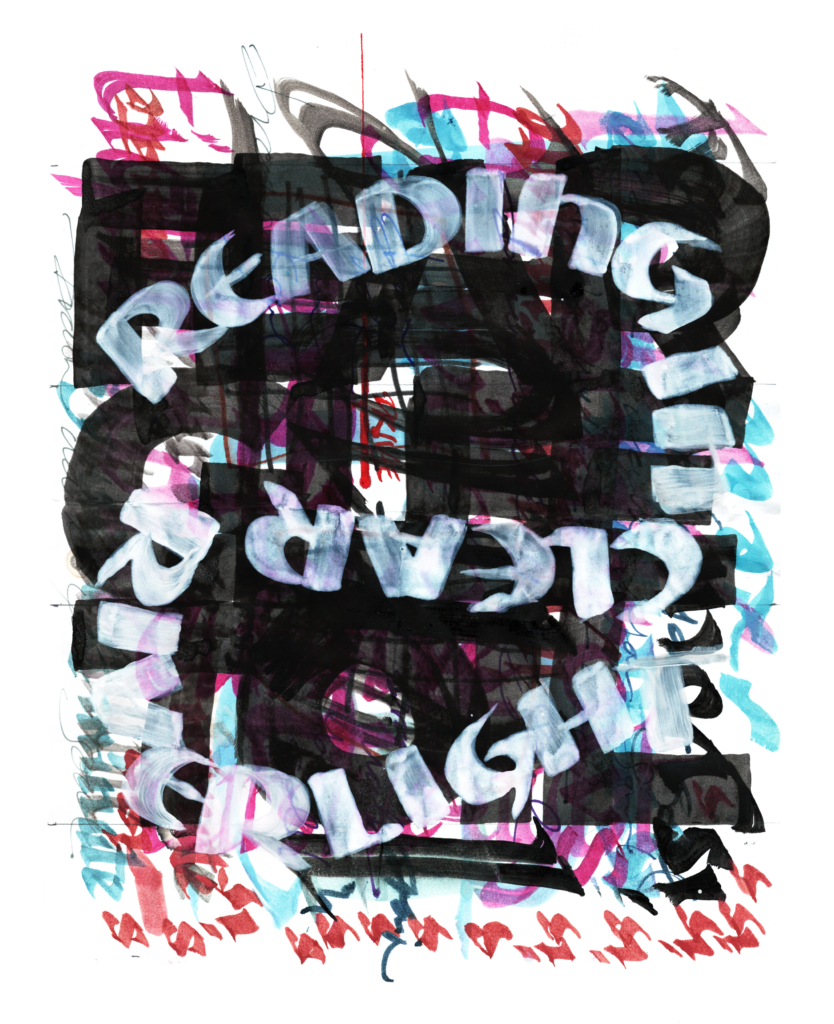
reading by clear river light
I studied abroad in Paris in the Spring of 2007. It was a glorious semester. I traveled a little, had a nice project, and spent a lot of time in the city of lights. One of my favorite moments was reading Raymond Chandler along the banks of the Siene on a glorious Sunday afternoon.
,
3/15 Inktober 52 (2024), week 14
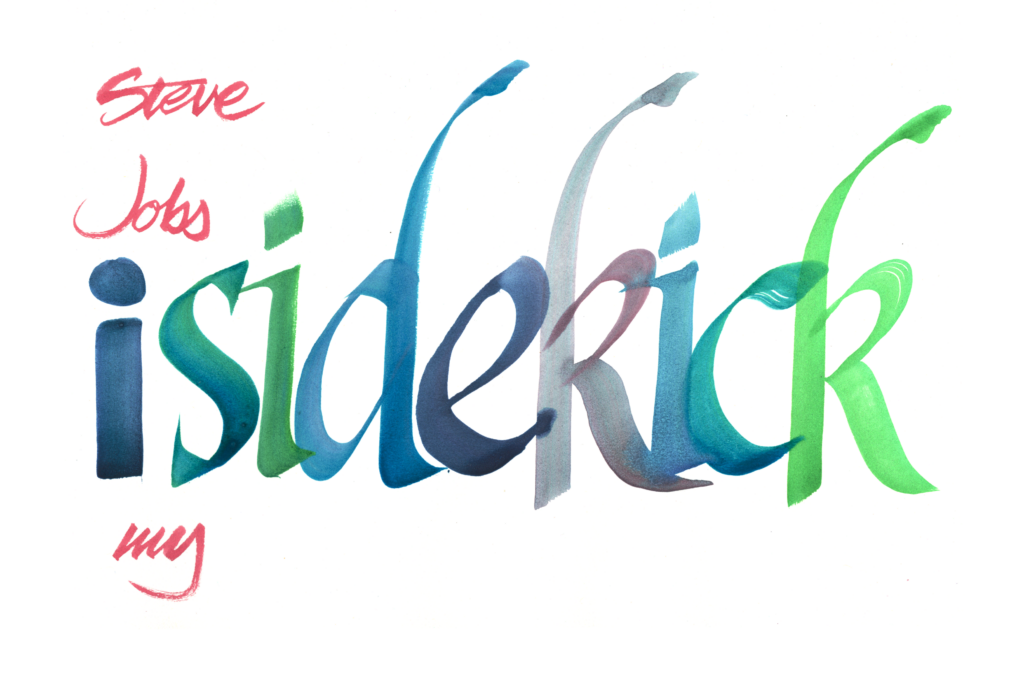
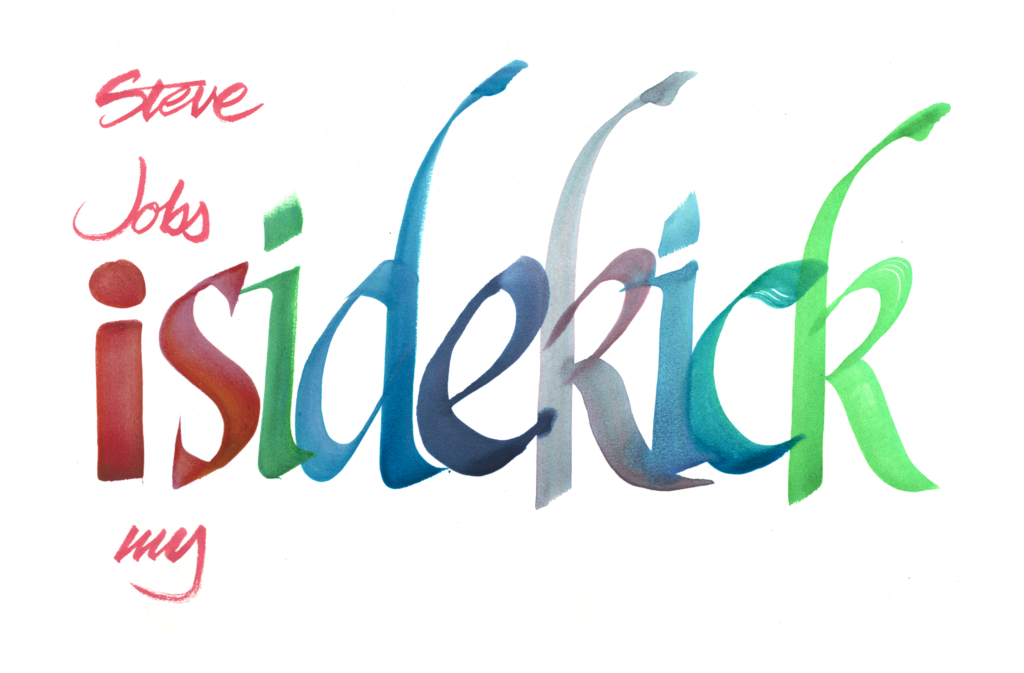
Steve Jobs is my sidekick
It’s crazy how addicted we are to these rectangles in our pockets.
Growing up in the 80’s, it’s crazy to think the guy behind the Apple IIe’s would take over the world with pocket computers, with unimaginable power and connectivity.
,
3/23 Inktober 52 (2024), week 10
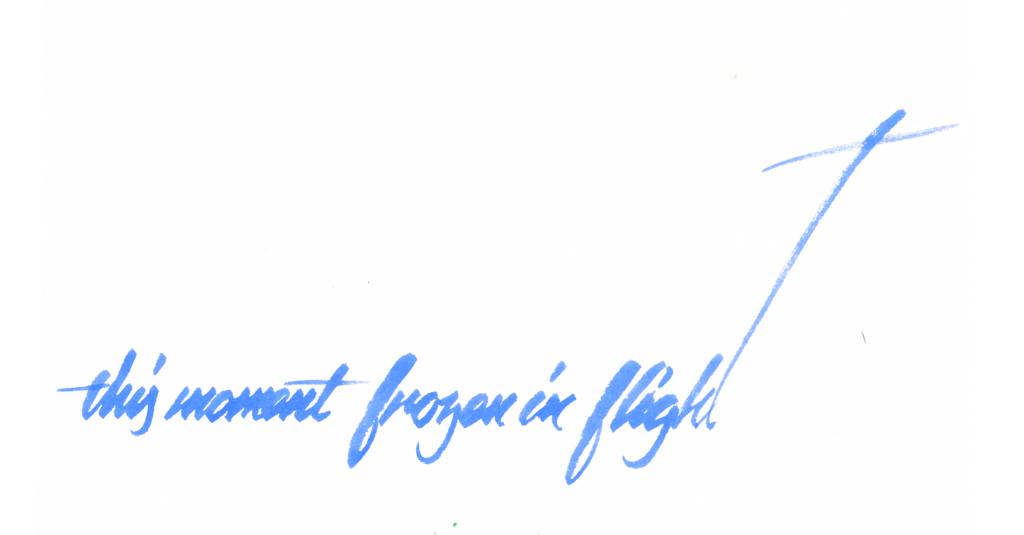
this moment frozen in flight
Once I have a good rhythm going, it’s really hard to go off script. So that last “t” was surprisingly hard, even though I had the cursive down pat.
,
I’m writing this a bit in advance, but I’ll have basically run through my second Inktober.
I’m sharing my pieces on Substack Notes and on Bluesky, but I won’t be using Instagram, where the whole exercise sprouted. I despise Zuck’s algorithms, so I’m not giving him any more “content”, especially since all I get in return are a few hearts on IG and no comments of substance.
There are very few clean transactions in this world—one day I’ll have to reconsider my usage of Substack and Bluesky, but I’ll enjoy the party for now.
Cya next time!
,
PS—Pokémon TV
It’s a kids show, boring for adults.
I was just old enough to miss the phenomena when it first hit America, but after winning a Pikachu stuffy at the claw in the Primm Outlet Mall, the kids wanted to see what the fuss was about.
Good lord, Nintendo created one heck of a merchandizing machine.
Gotta catch them all!
Toys, collectable card games, video games, books, plenty of gear, and endless TV shows!
A brilliant case study for late stage capitalism via a little yellow electric squirrel!
Pika pika!
—September 2023
,
PPS-Pokémon Go
A slight nudge to walk more Kilometers (to hatch eggs)
Kids love collecting! I had to set a screen time password on this game.
Eventually stopped using it, I don’t need more nudges to use a phone.
PPPS-Pokémon Sleep
I never tried a sleep tracker before. Interesting to see how badly I slumber.
The kids spent too much time playing with the game parts.
I stopped using it. It’s weird to have a phone on the bed next listening to me all night.
PPPPS-Pokémon Smile
Great timer for brushing teeth. Works for 44-year-olds too.
The kids spent a bunch of time with stickers until Mama put her foot down.
I brush my teeth in horse stance so my head is low enough for the iPad camera. 2-for-1 exercise!
—January 2024
,
PPPPPS—Pokémon Zeddemore (v0.1)
Years ago, I came across a single-deck format for Magic the Gathering by Seth Brown and Tom (no last name given).
After a fellow architect gave me a pile of Pokémon commons for my kids, I dusted off the ruleset to make a game out of these cards (since the little ones aren’t ready to construct their own decks).
We played it a couple of times this weekend and this format translates well to Pokémon.
Plagiarism alert: everything below is a copy of Tom’s original tumblr post with only minor revisions to adapt it to Pokémon—why rewrite rules that already work?
Winston is a draft format designed for two players by Richard Garfield. Here’s how it works:
A big shuffled deck of cards is put, face-down, in the center of the table. The top three cards are placed in a line next to the deck. I will refer to these cards as ‘piles’, because that’s what they may soon become.
The first player to draft looks at the first pile (currently just a single card) and decides whether or not they want to add it to their pool. Let’s say they don’t. They add a new card from the big deck to that pile and move on to the second pile, where they repeat this process. Let’s say they want this card. They take it and replace the now empty pile with a new card from the deck.
The second player looks at the first pile (which now contains two cards). If he wants them, he takes the entire pile – in this case, two cards. He replaces the empty pile with a new card.
If a player passes on all three piles, they take a random card off the top of the deck.
Continue until all cards are taken.
And that’s it. Simple.
What Zeddemore does is take the already fun Winston Draft, and spreads it throughout the game. You draft as you play. Your initial draws at the start of each turn become drafts.
Hopefully that gives you a sense for how Zeddemore plays, so let’s talk about how it works.
The Opening Hands
The original MtG Zeddemore starts with three rounds of drafting to construct your opening hand, which makes sense for sophisticated players. On the other hand, I’m just playing with my kids.
So I just deal seven to the hand (and six as prize cards).
And then start the first draft as the first draw phase of the game.
Changes to Pokémon
Before we start playing, I borrowed up two key rule changes dug up from the internet.
Any Pokémon can evolve into any other Pokémon of the same type, as long as the stage matches. Hoppip—Gloom—Venusaur, but not Hoppip—Vileplume—Venusaur.
You can use any Pokémon as an energy (turn it upside down to attach). The energy type is determined by the Pokémon type.
The Turns
Aside from the draw being replaced by a draft, turns work as they usually would. Drafting does, however, have one important rule. Only your first draw during your turn is replaced by a draft. Any other card drawing is handled in the usual fashion – straight off the top of the deck. You may only draft during your turn, and only once per turn.
The Deck
Much like with Cube, a bunch of cards will be needed. A great deal of creativity is possible in the construction of a Zeddemore Deck. Generally though, it follows these guidelines.
Energy – Since I use Pokémon cards as energy, there is no need for energy cards. However, this rule change came about because I wasn’t gifted energy cards. Maybe this will change at some point. (The original MtG Zeddemore recommends 25 to 30% of the cards in a Zeddemore deck should be lands, a bit less than normal, but they also start with a couple lands in their hand).
Milling – Cards that put cards from the top of a player’s deck into their graveyard are generally avoided. Players can’t lose by decking, so most of these cards simply don’t do much.
Singleton – Generally, Zeddemore decks are singleton, although this is by no means a requirement (I don’t have enough cards to go singleton, but it is a goal if I buy a bulk pack of a thousand).
Card Quality – One aspect of Zeddemore that Seth and I both hold dear to our hearts is the inclusion of both good and bad cards. I will explain the thought behind this in depth in the future, but suffice it to say that it serves an important mechanical need in Zeddemore, and an experiential one. If you have any cards that would cause you to recoil in horror if they should somehow appear in your opening hand, you should probably include them in your Zeddemore deck. Worry not – strong cards are welcome too. An equal number of good, okay, and bad works well.
Recovery – (I have no idea what is good or bad in Pokémon, but I’m keeping this here for future reference), Zeddemore has an aspect to it that can allow a player who’s ahead on the board to easily build upon their advantage, leaving their opponent in a situation that rapidly falls out of their control. For this reason, I like to include some cards that are not at their best in the hands of a player that’s winning. There shouldn’t be too many of the good ones, of course. Occasionally, players do have to lose.
Deck Search – For reasons I will explain below, cards that let you search your library, while allowed, should be approached with caution. (Unfortunately I don’t think this is suggestion avoidable in Pokémon).
Deck Size – The bigger the better. How small can a deck be? Well, you don’t want to run out of cards (though it’s not a big deal to just shuffle the discard pile and keep playing).
Random – Some of these guidelines can be ignored if players are willing to utilize the deck construction technique that is most in the spirit of Zeddemore – completely random. With this approach, not even the deck’s builder may look at the cards until the drafting begins.
Sundry – There is all sorts of other bits of advice and rules, often relating to specific mechanics, that I will share in the future.
The Graveyard
Traditionally, there is a shared graveyard in Zeddemore. This is not a requirement. If the builder of the Zeddemore deck feels that their deck would work best with individual graveyards, then that is their prerogative. Playing with a shared graveyard can make some cards better. Generally, this is fine. Zeddemore likes strong cards.
The Annoying Rules
Zeddemore alters some basic things in the game, and as such, some annoying rules are required. (Some of these rules might not be applicable to Pokemon, but I’m hesitant to delete them until I feel more comfortable with the Pokemon TCG universe)
Searching the library – If a card tells you to search your library for a type of card, you may only look at the top eleven cards of library. When done, cards that weren’t taken are shuffled and placed at the bottom of the deck. The overall deck is not shuffled. Zeddemore decks are often very large, with the number of cards currently on the table possibly only representing a small portion of the deck’s total size. Allowing players to search even 50 cards, which they may not be all that familiar with, for the one card that would be optimal for them, is simply too slow. Searching 500 is a nightmare. It would also run headlong into one of Zeddemore’s greatest strengths – an exploration of the unknown. This rule makes many cards worse than they would otherwise be. Generally, this is fine. Zeddemore likes bad cards. However, cards that will often not do what they say they’ll do can piss off almost any player. Tread lightly.
Card drawing – As already explained, additional card drawing never gives you additional drafts.
Card ownership – A card’s owner is the player who most recently drafted the card. This rule can be especially important with shared graveyards.
Tucking – Cards that are put on the bottom of the library or are shuffled into the library, should be put on the true bottom of the library. As already stated, the portion of the deck currently on the table may not be the full deck. In my case, it never is. Most of the library sits in a box, waiting to replenish the cards on the table. Rather than turn the timing of this replenishment into something that can be ‘gamed’ (a short library might advantage one player), never consider a portion of the library to be the full library. Cards that are put on top of the library, or in the top portion of the library, work like normal.
Drafting – The game essentially pauses while a player is drafting. Abilities can not be used. Cards that continuously reveal the top card of the library don’t work until the drafting is finished.
More on drafting – A single draft counts as a card draw, even if that player drafted five cards.
The Play
(a benediction from Tom)
And now it’s time to play Zeddemore. Zeddemore is fun. Seth, myself, and the dozens of friends that have tried it can attest to that. Something else Seth and I can attest to, however, is that not every game is fun. Sometimes a player won’t get the lands they need. Sometimes a bomb can’t be answered. What Seth and I found, in our marathon sessions of Zeddemore, was that these games ended quickly. The great games, though, the ones with shifting board states, barely-answered bombs, and the skillful deployment of some truly sub-par cards, can last quite a long time, especially in our memory. I hope you have as much fun with Zeddemore as we do.
Revisions
If we play this game more (which hasn’t happened in the past eighteen months), I’ll make a freestanding posts with updated revisions. However, I suspect, this moment will be a relic of a moment, as I continue (unsuccessfully) my quest to be a boardgamer dad.
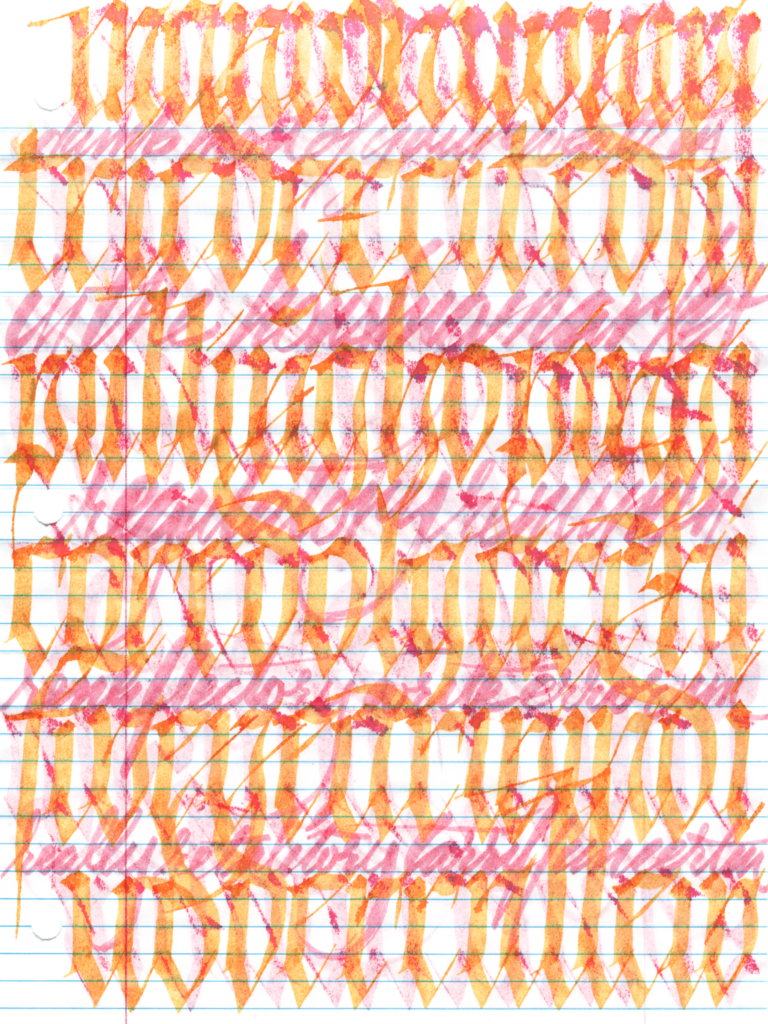
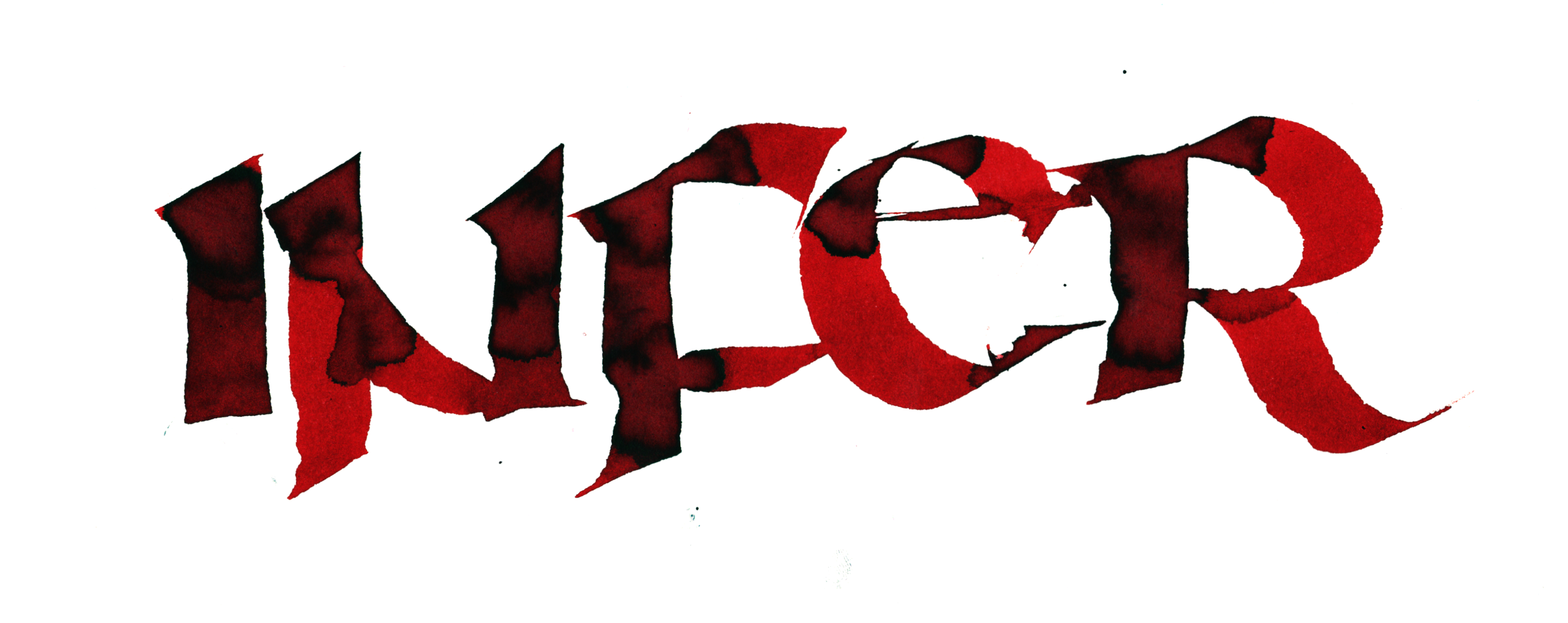
The gothicized italics was nice, but lacking. So added an extra layer.
,
10/26
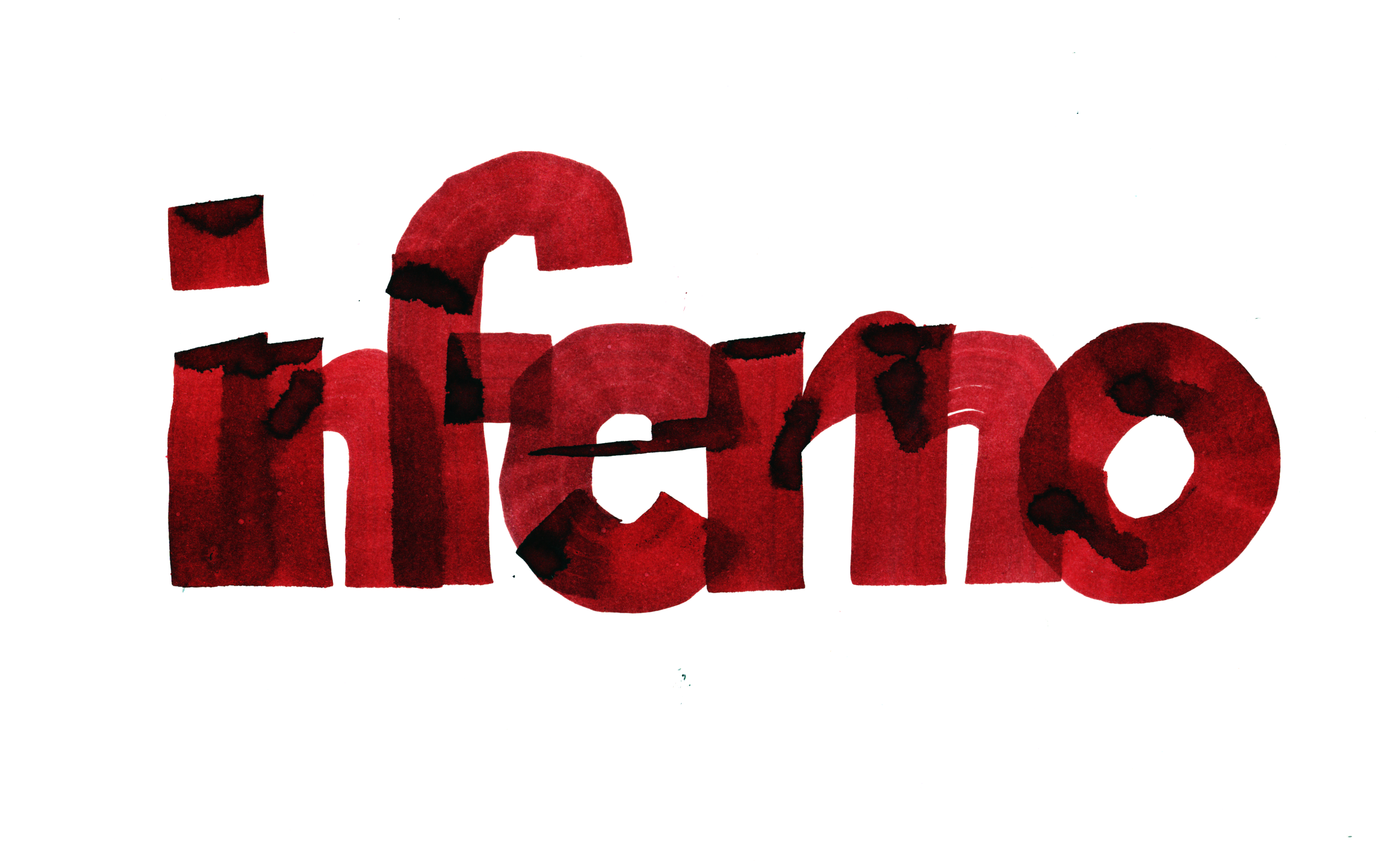
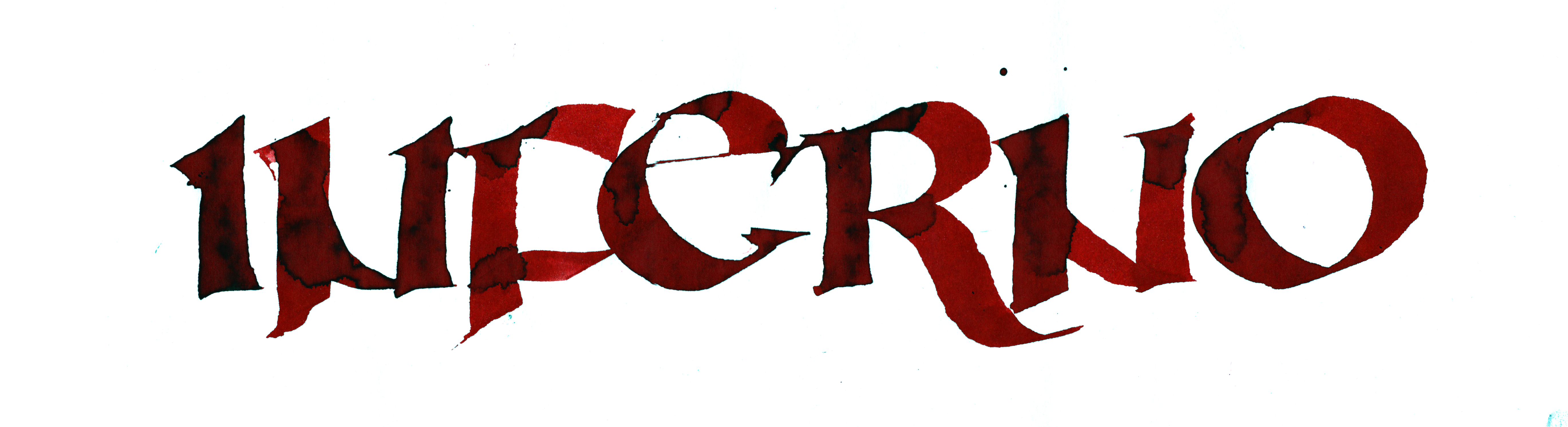
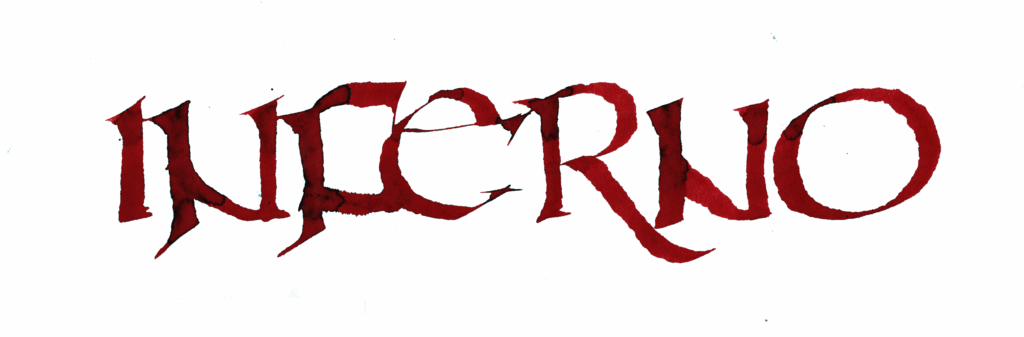
INFERNO
As a longer word, I slammed it together, but it didn’t feel right.
So I went in the opposite direction with uncial, a wider script. Even though the aspect ratio makes the final one look small, it’s actually from a long 6×18 sheet.
,
10/27
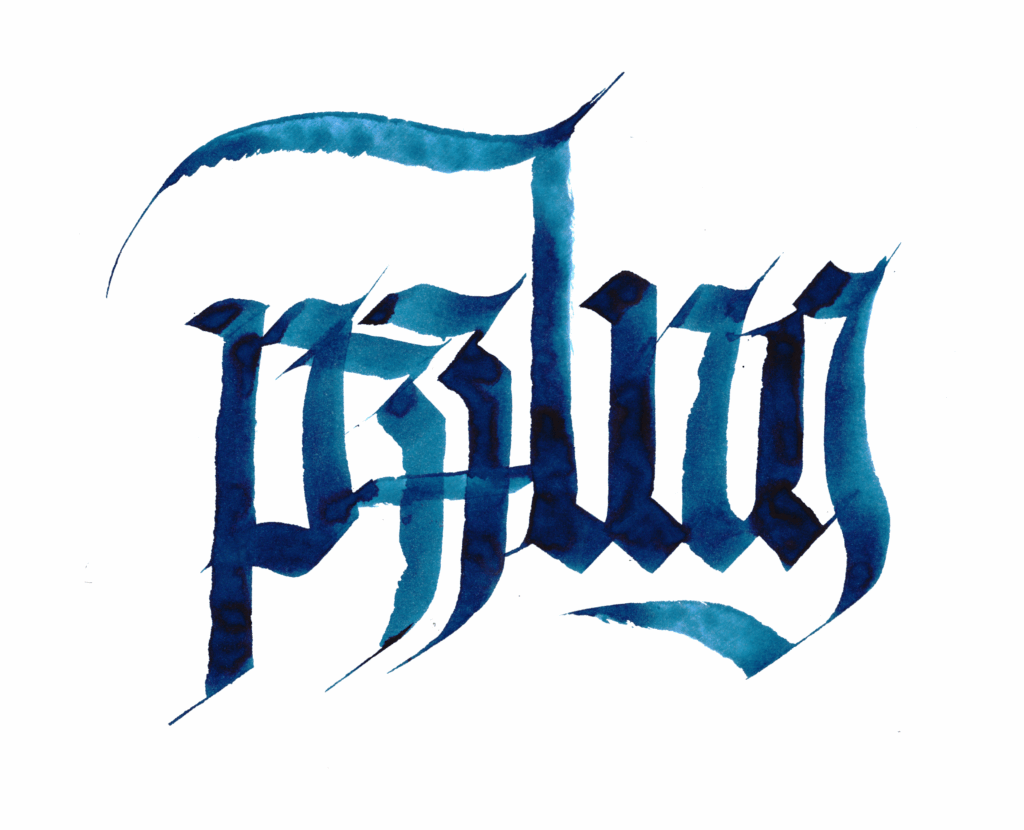
puzzling
Another tricky word. I dropped the vowels (saving width on the page) and went with gothic, which emphasizes vertical strokes at the expense of legibility, hiding the missing letters.
,
10/28
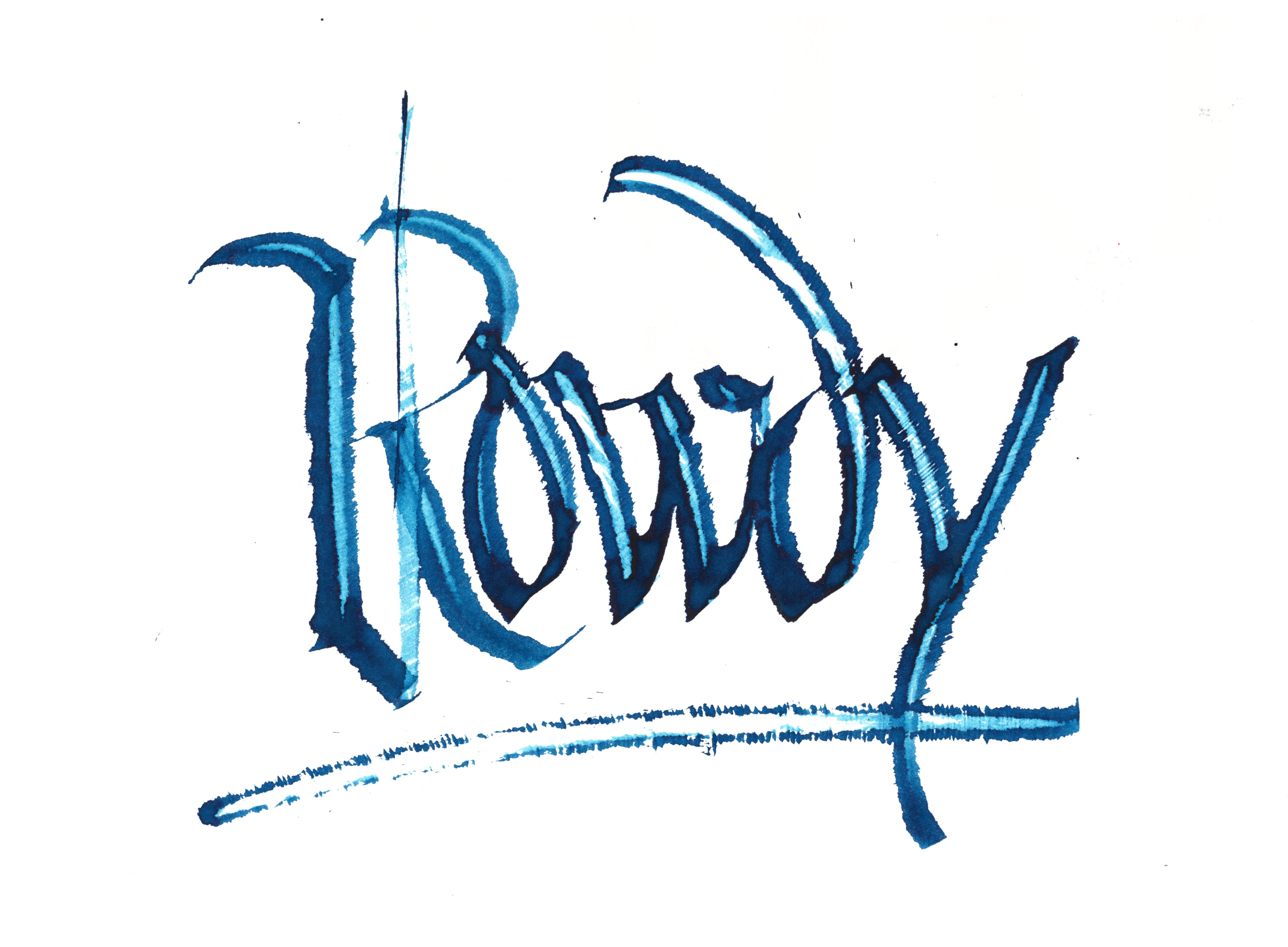
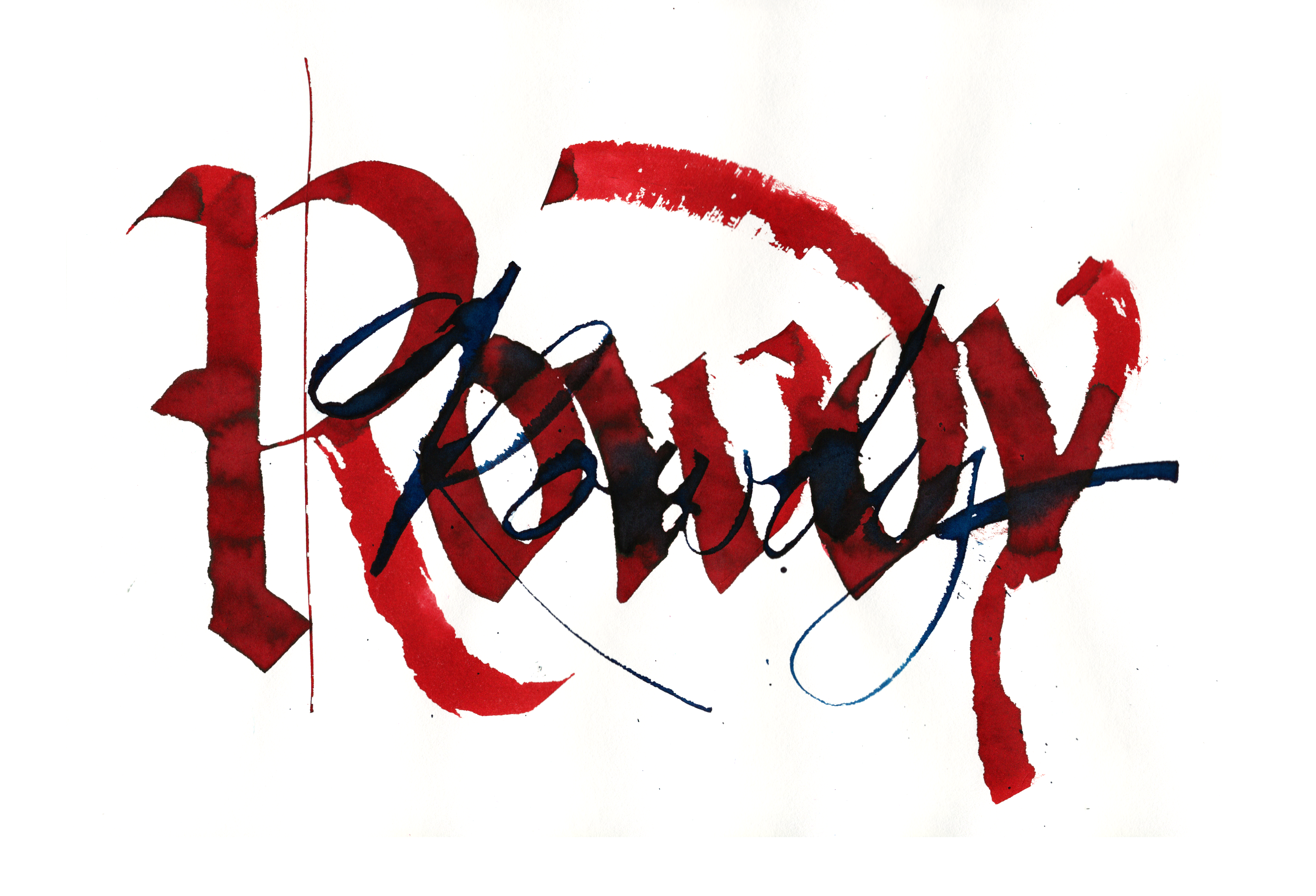
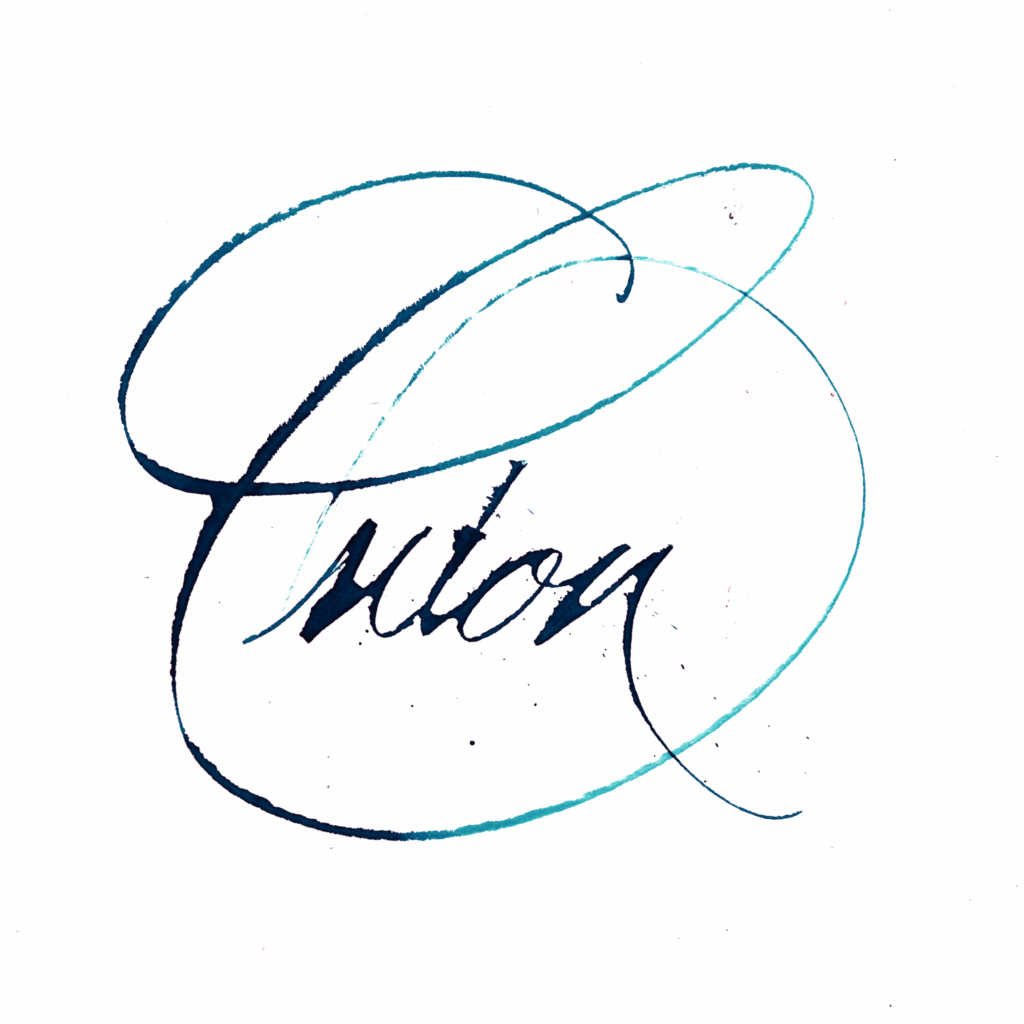
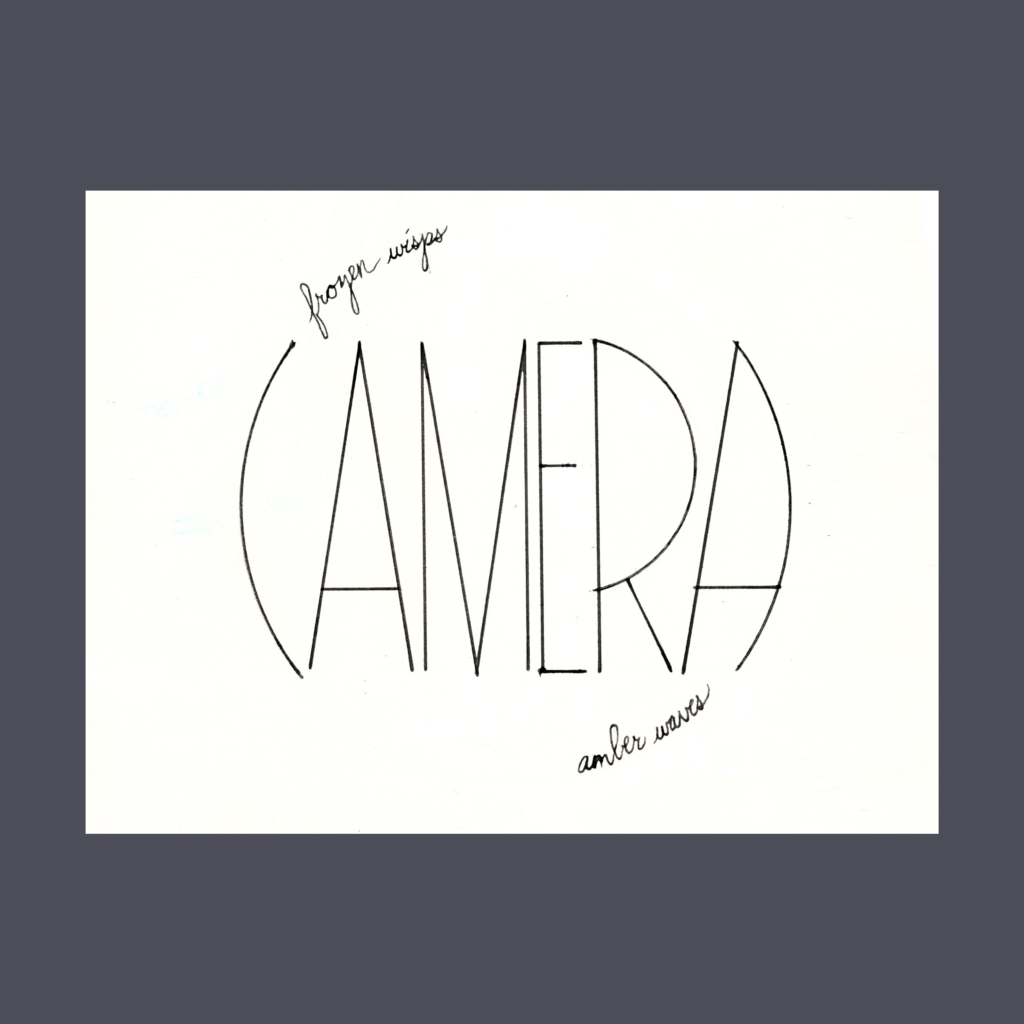
Onion
I might have been able to get the top version to work with a compass and straightedge, but I wasn’t feeling the effort, even though camera is one of my favorite pieces from last year.
So back to ruling pen cursive! I have several versions of this that I’m all fond of. I picked this one because the nion felt very comfortable inside the O.
10/26/2024
,
10/29
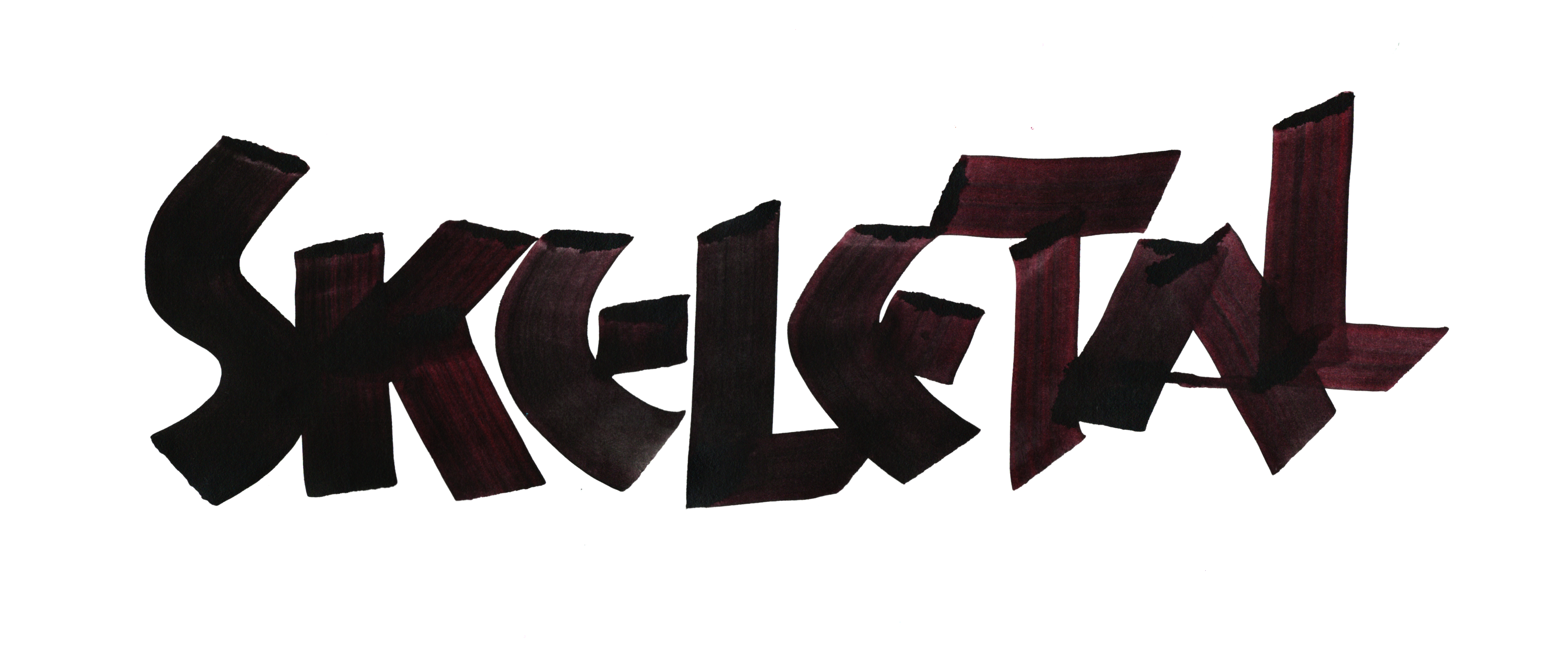
SKELETAL
After a couple horizontal tries, I realized this word wants to go vertical. After inverting arctic and seeing how it could be pushed to make overlapping letters more legible, I realized that it was even more applicable here!
,
10/29
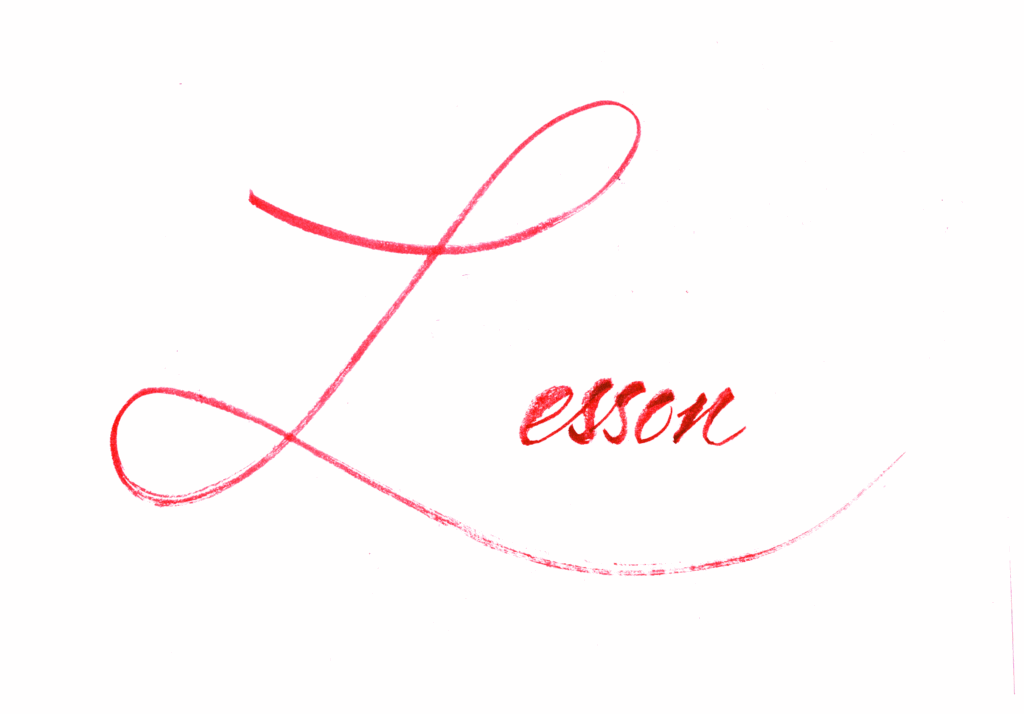
Lesson
I love the simple swooping capital cursive L.
It took a few tries to get right…turned out that I needed a guide line to keep esson lined up properly. I usually just wing it, but this was not one of those pieces.
2/5
,
10/30
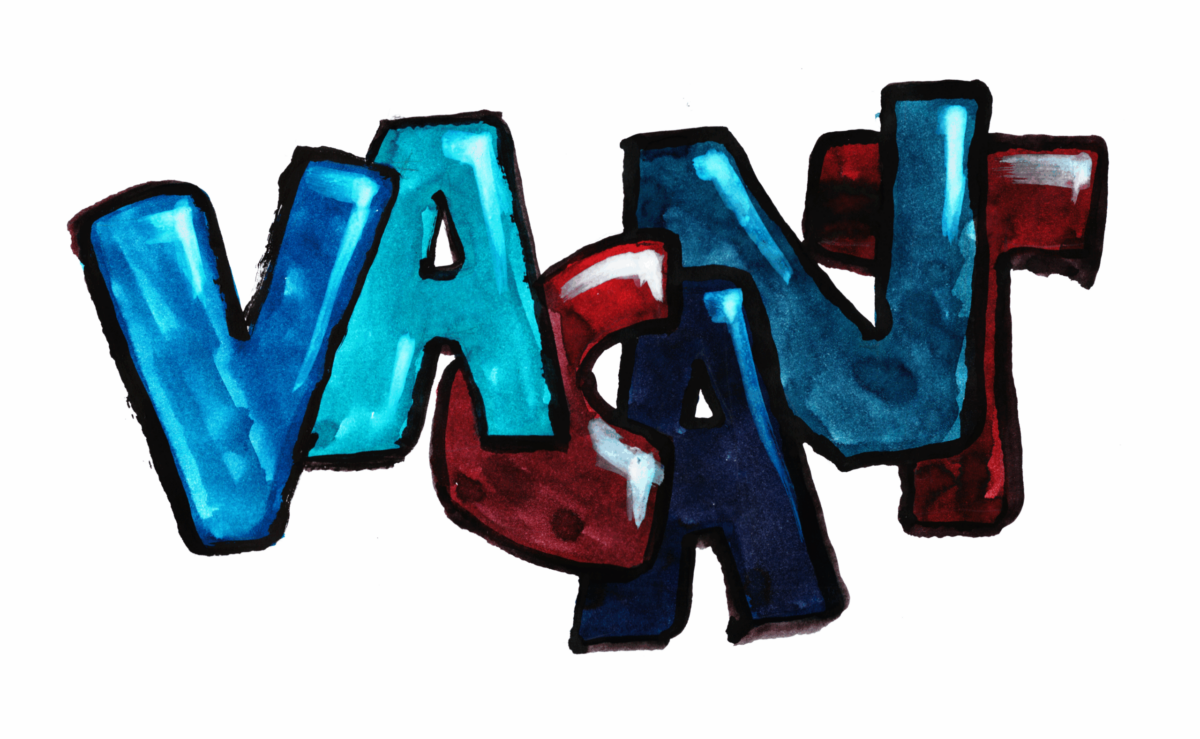
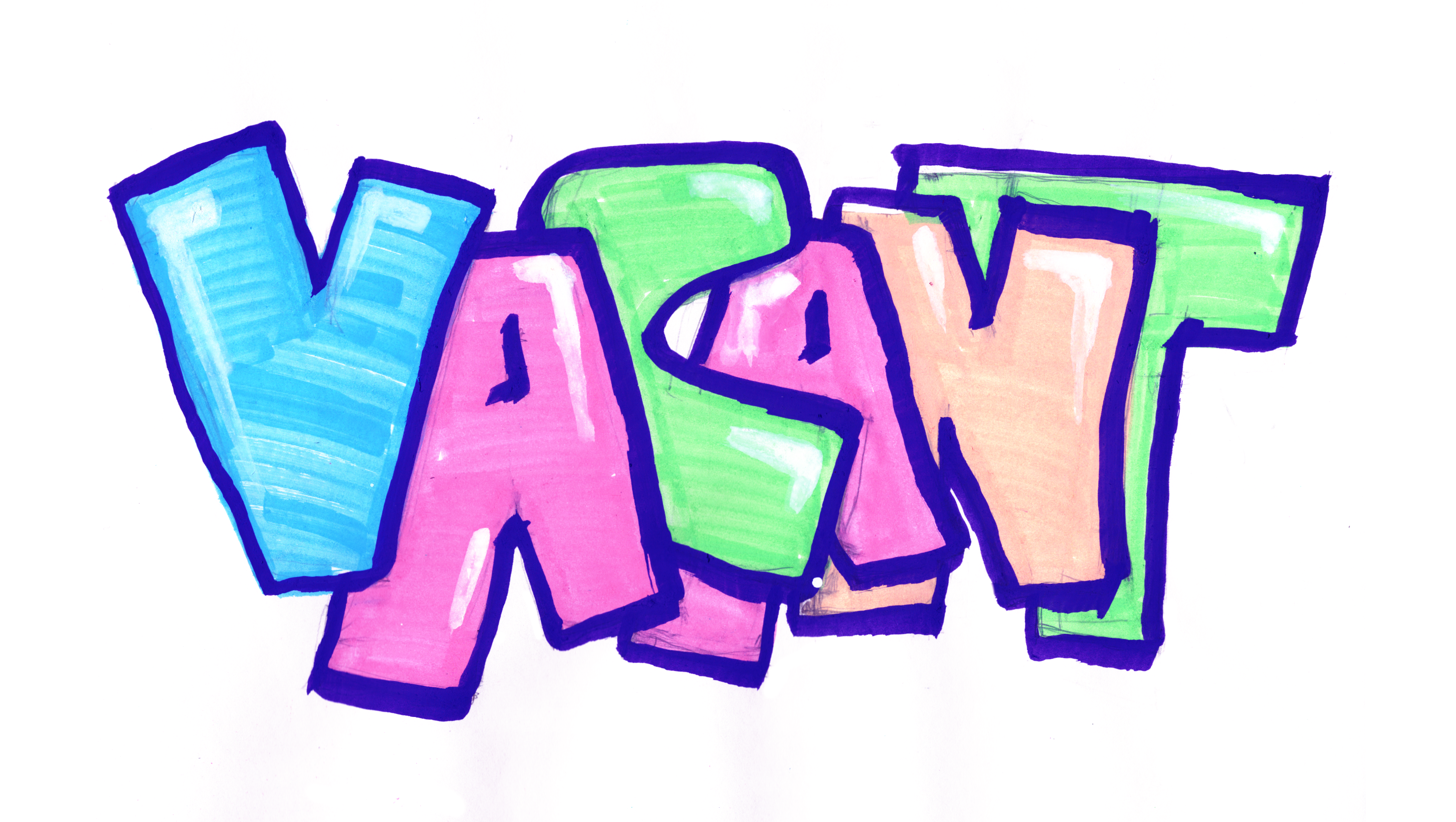
VACANT
I’ve been wanting to work in versal and the V got me thinking of this script that draws out the letters. But Roman Capitals weren’t the right fit so I dove into my book on graffiti.
I just realized the relationship between graffiti and vacant lots. Maybe it was hiding in my subconscious, but at the time I just felt this script looked bubbly and I had run out of ideas.
For the second version, I borrowed the the girl’s Posca markers from last Christmas. I might buy another pack this year.
,
10/31
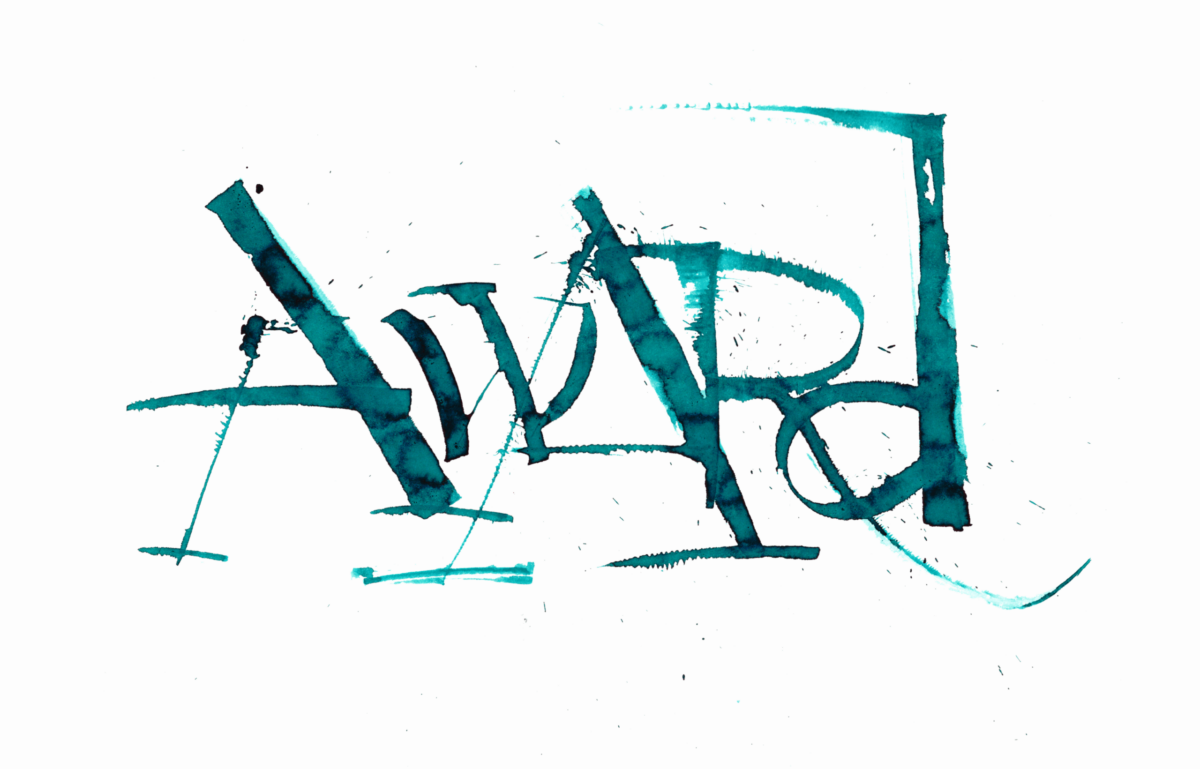
AWARd
I wrestled with this graph, until I switched to a lower case d.
It seemed fitting to close Inktober with another splatter, after a summer dominated by the ruling pen.
,
I always think that finishing a project will feel triumphant.
It never does. It’s always ends a whimper.
On to the next one.
Cya next time!
,
PS—Over the Moon, John Kahrs, Glen Keane, 2020
Good, mediocre, and bad.
The animation was nice, and it was great to see Asian faces. Unlike Mulan, the faces felt real and detailed. The family dinner scenes with the aunts and grandparents were as real as one could hope for in this idyllic country town. Yes, both moms were airbrushed, but the animators really put real soul into the ancillary characters.
Unfortunately, for all the good animation, the story was mediocre. This wasn’t a cheap knockoff, but it wasn’t a top-notch Disney imitation either. Classic Pixar would blatantly telegraph its game and still manage to tug your heart strings. Then again, Disney hasn’t been very good at imitating Disney for the past decade.
This movie has a similar structure to Coco, but it’s just clunky. They blatantly unalive Mom#1 in the first song. The songs and dance routines are inserted awkwardly. The other world seems gratuitously wacky. Along the way, they basically unalived suspension of disbelief.
Oh and, her dad did an awful job trying to blend the family. Dropping the news on the daughter right before a big family event. Geez.
—September 2021
,
PPS—The Painting, Jean-François Laguionie, 2011
This movie isn’t subtle as an allegory of God asleep at the wheel with the cold heartedness of mankind. But it’s still a good adventure, with love, exploration, justice, and ultimately freedom.
In spite of its straightforward messaging, it charms in a way that American animation fall flat. The early Pixar formula was great, but it’s predictable to the edge of dullness.
Even though this isn’t that avante garde, it’s fresh air in America. And the art is great with a bold painting style that contrasted against the CGI of the painter’s studio. Everything has been done, and this story’s tropes aren’t new. But the combination with the art direction make this a movie a fine 90 minutes.
—October 2021
,
PPPS—Tales of the Night, Michel Ocelot, 2011
This is a fun collection of short stories with the main characters in silhouette. In a world before Into the Spiderverse, anything that wasn’t the same 3D blob felt unique, and the flatness of the papercut characters made the backgrounds shine bright.
The movie raises the thorny question of cultural appropriation. I suspect it’s a hotter issue in American than France—referencing another culture might be more fraught in a pluralistic society. But over the past few years, I’ve decided that we should let storytellers set their stories in a diversity of fictions. They are taking a risk when they venture outside their known world, but that’s their problem. Why should I force them to stick to exactly what they’ve experienced?
And maybe the heightened sensitivity around cultural appropriation is a holdover from the mass-culture era. As media becomes diffuse and publication becomes democratized (even as the algorithms have become monopolized), it’s hard to feel strongly about any specific cultural product. If it fails, ignore it.
The culture is no longer mass. It’s a series of short stories connected only in our internal stage. Just like this movie.
I cheated a little in this one, moving some of the words in the box to fine tune the composition. I never feel great about digital manipulation, but as time passes, I feel less guilty about it.
,
3/6
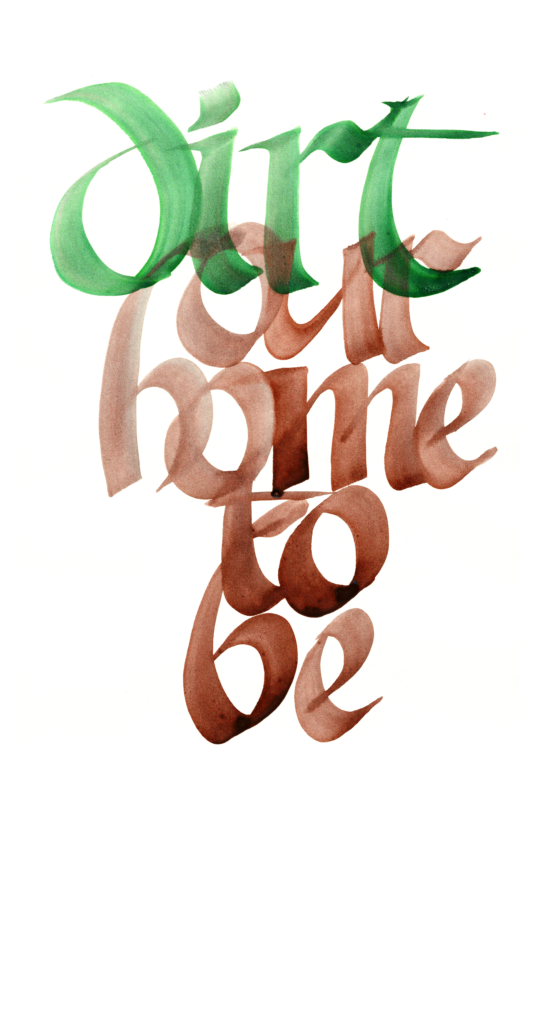
dirt our home to be
I love how the colors came out on this one, especially the inversion of the colors with the words.
,
3/8 Inktober 52 (2025), week 10
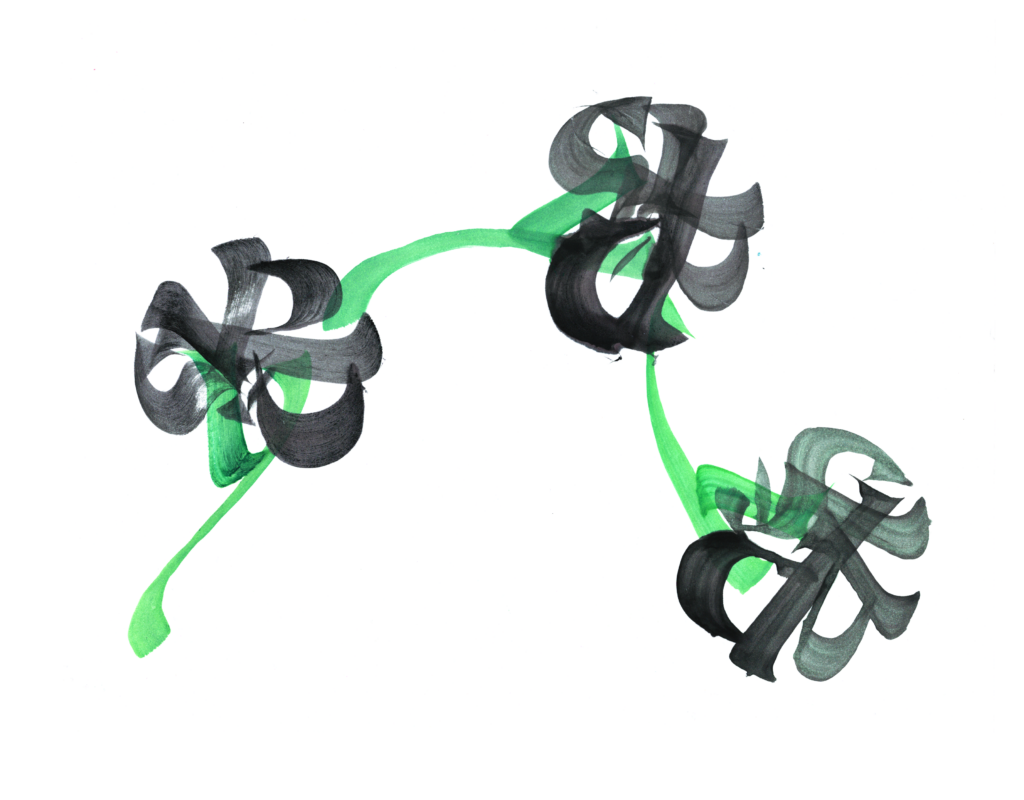
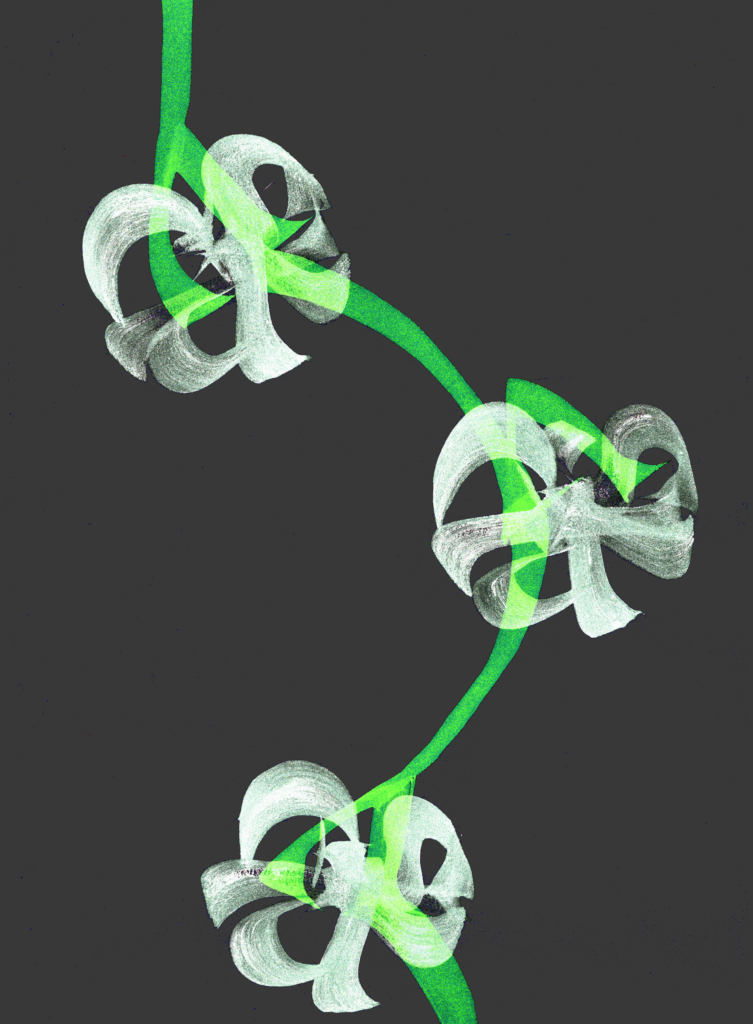
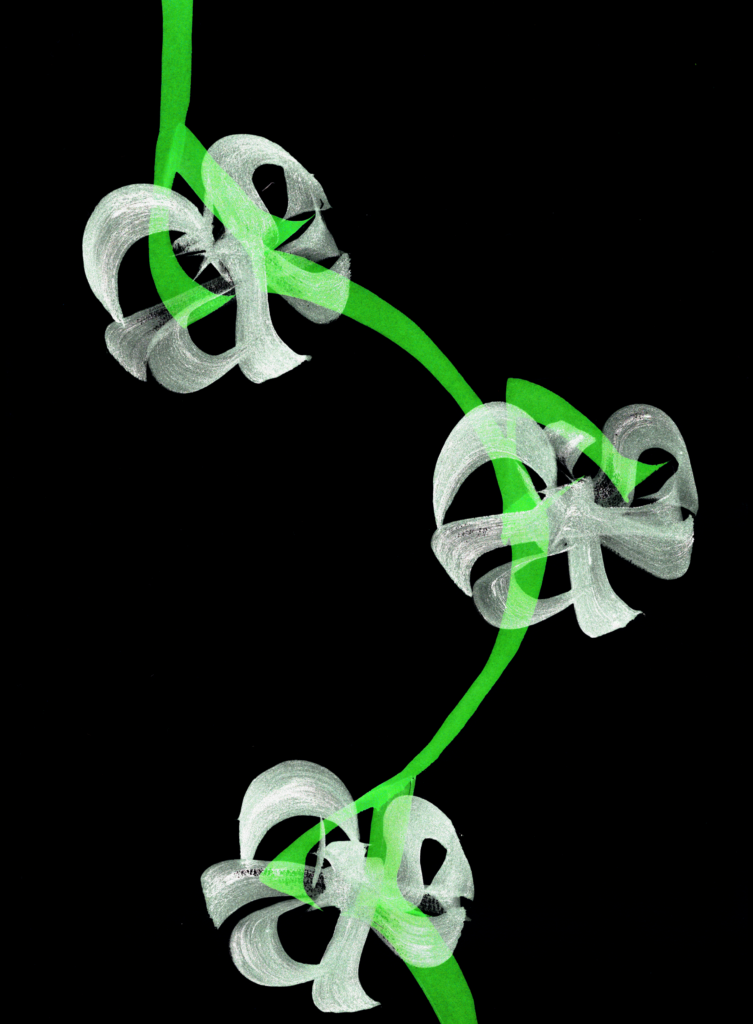
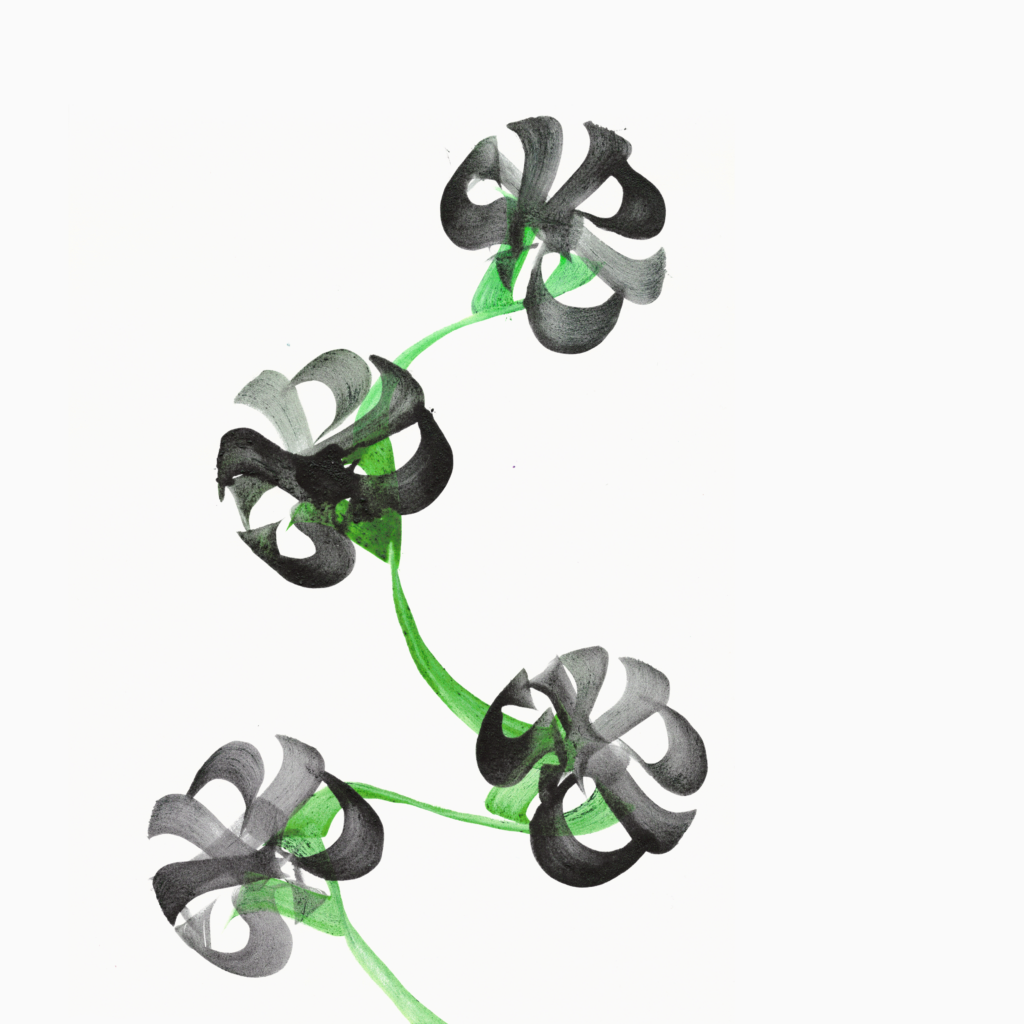
a chain of black daisies
This 5WP was banked on inverting colors in the computer, but the image of a black daisy won out.
,
3/9 Inktober 52 (2024), week 12
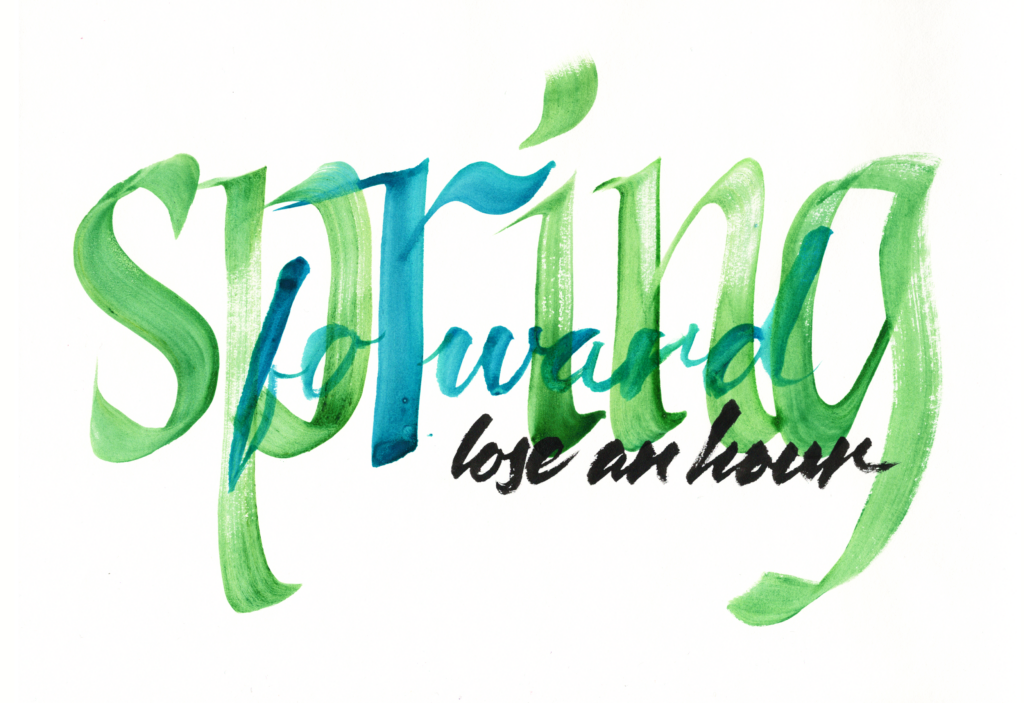
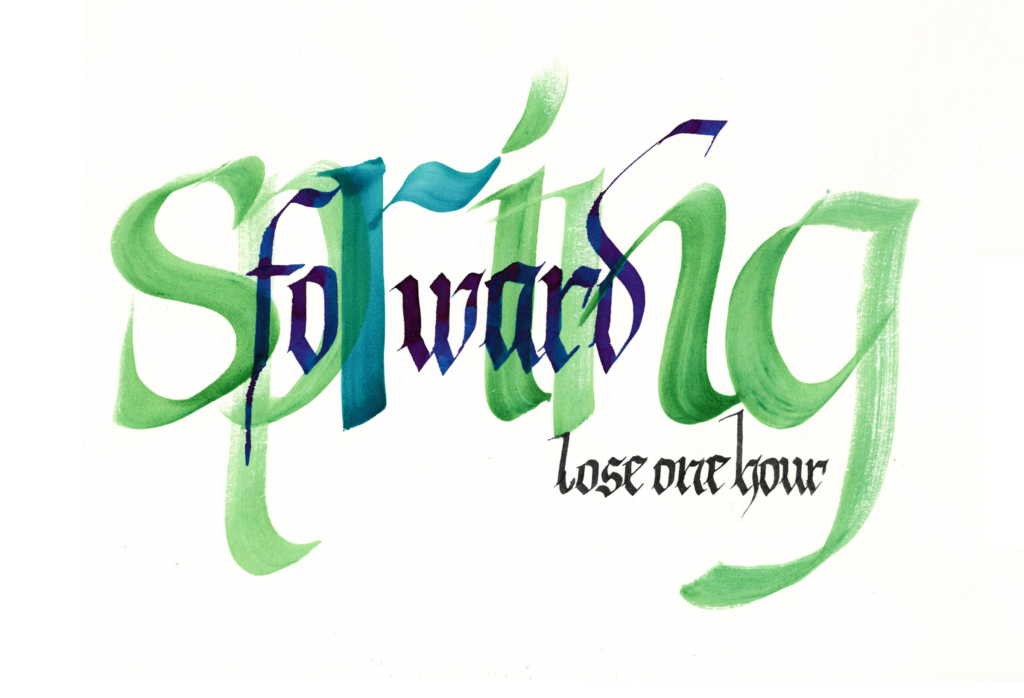
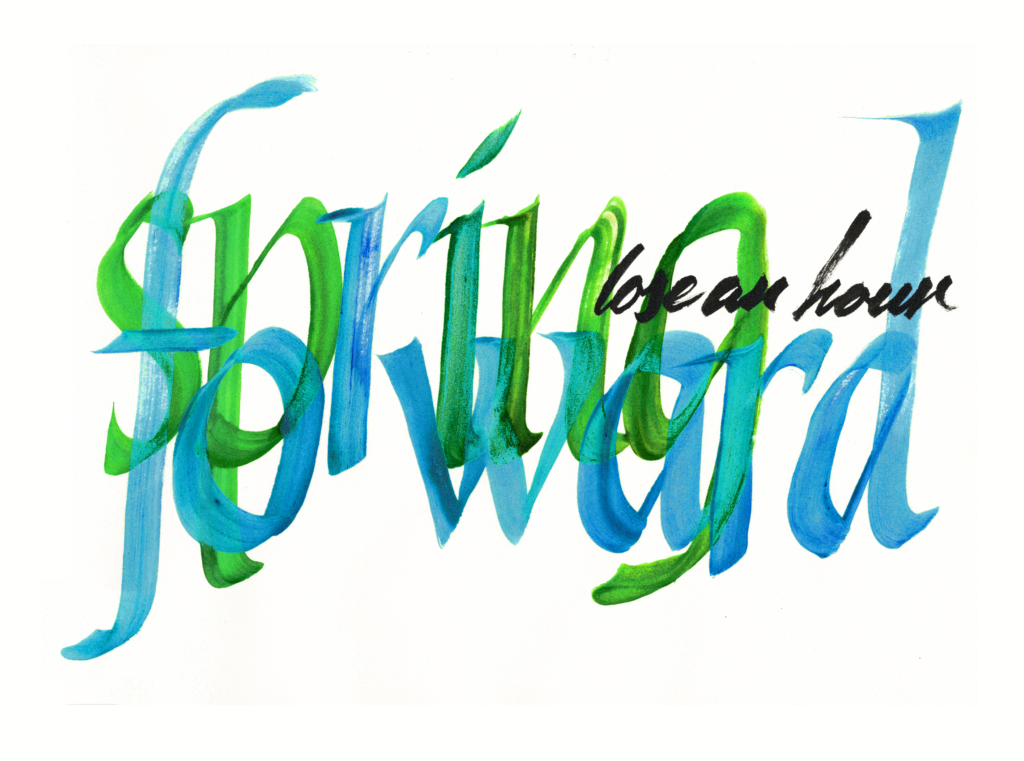
spring forward lose an hour
It’s interesting to revisit the layering of colored words months after graphing the pieces.. Clearly the top example was the best, but it took a few shots to explore the possibilities. I often compare calligraphy to hitting the slots.
The greatest thing about the constant practice is that once I land on a good composition, I am supremely confident than I can get it right. Unlike the previous Inktober, I don’t worry about whether I can replicate a good turn of hand from a practice sheet onto the final sheet.
,
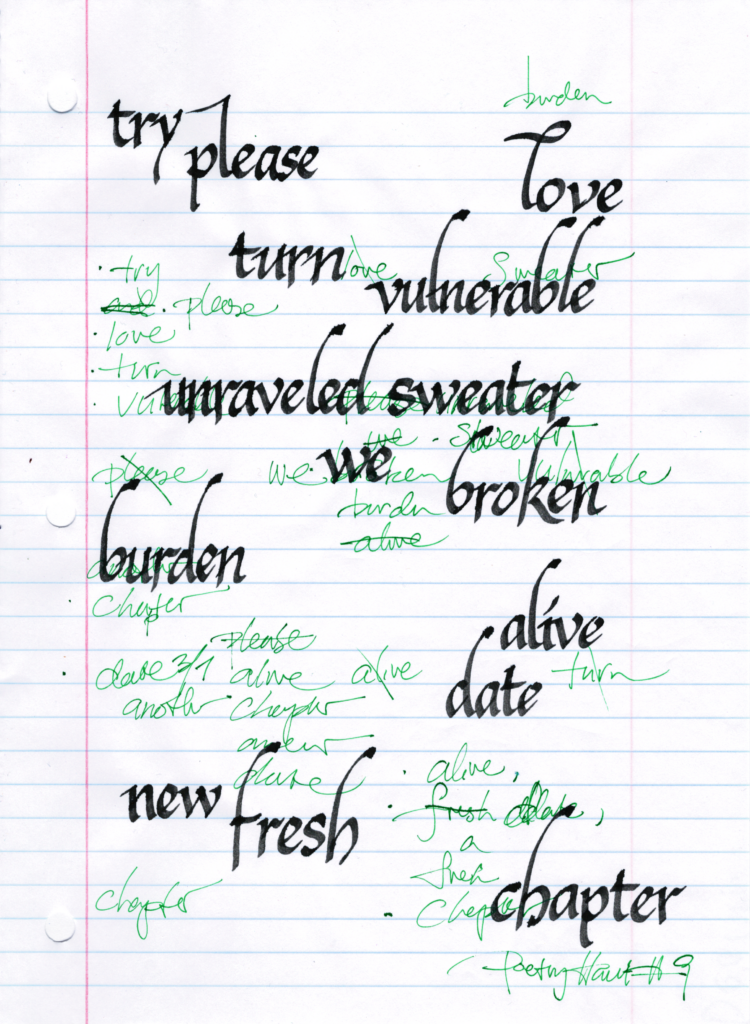
3/10 Poetry Haul #9
try please love turn vulnerable
unraveled sweater we broken burden
alive date new fresh chapter
More play with italics.
,
I am constantly in awe of the Monkey King. I never thought I had any affinity to superheroes until I saw my kids watch old Sun Wukong videos and read the books myself.
Then I realized I did have a favorite superhero all along, planted when my mom would read stories from old Chinese picture books to me and my sister when we were little kids.
Cya next time!
,
PS—Monkey King, Wu Cheng’en, trans. Julia Lovell, 2021
I’m typically too snobbish to read abridged versions, and now I’ve gone through two of them with the Walden audiobook and this Lovell translation.
In some ways it hearkens to the proscribed system in How to Read a Book where one takes multiple passes at varying levels of detail. I’m pretty good at skimming books, but it certainly helps when someone has done that work for you.
As for this book itself, it’s one heck of a story. The introduction warns you that this is satire, and it follows through on the promise. The Taoists are venal, the heavenly bureaucracy is minimally competent, the Buddhists aren’t much better, and I don’t think there is a single happy marriage in the book. Our gang of pilgrims are least dysfunctional bunch of the lot, which isn’t saying much.
As an abridged book, some of the stories are cut as was most of the poetry, which seems to be a distinctive aspect of the original novel. But that’s all good, it’s a fun read and it enticed me to read an unabridged version. Hard to give it higher praise than that.
After reading an unabridged translation by Anthony C. Yu, I must admit that cutting out the poetry quite impoverishes the experience. As much as I appreciate that this abridged version introduced me to the original, without the poetry it’s like reading a screenplay and ignoring the movie.
,
PPS—A Field Guide to Roadside Wildflowers at Full Speed
Any excuse to bring up this gem makes it a good day.
,
PPPS—New Tales of the Monkey King
I guess this TV show was a fun romp.
I don’t particularly mind the cultural appropriation because it’s way different than the original book and it’s Australian. I got enough problems in my own continent, I can’t get bothered over what they do on the other side of the globe.
But the first season was just OK. It certainly wasn’t anything that I would have watched without its nominal relationship to the 西遊記.
Yeah there’s a monk and his/her three disciples. The disciples are all gods in exile, and there are demons in this world, but then it goes off into its own universe.
Unlike the clear heavenly imperium of the original, the screen writers went for a good versus evil mega-battle—the bane of all superhero comic book movies. It’s a complete change from the original book. Instead of four folks on a long journey, they’ve been dumped into a Manichean struggle.
Even so, I enjoyed watching how they took an old story and modernize it to a contemporary popular medium. I can’t fault them for taking inspiration from the source and blazing their own trail.
But I must quibble with their depictions of Monkey and Tripitaka.
Monkey is depicted as a vain illiterate creature in this show. He’s certainly vain, but he’s a fucking badass. He’s quite literate, he should always be depicted as a Superman.
I’m fine that they recast Tripitaka a woman. One of the problems in the original story is that it’s a sausage fest. However, the screenwriters are much too kind to Tripitaka whose defining feature should be his helplessness. I dislike that she even learned kung fu in this show. I get that they are trying to avoid the damsel in distress, but if so, they should have chosen a different character to gender shift.
My the ultimate judgement?
I never watched Season 2.
I don’t regret the time spent on the first ten episodes, but if I want to know what happened on this TV show, I’ll just read the Wikipedia synopsis.