Thanks for reading. Please subscribe if you’d like the next letter in your inbox.
Transformational Transactions
My first two jobs after college were strict hourly – no benefits, PTO, or any other perks. By any metric, these were purely transactional arrangements. There were also the two most influential jobs in my career.
The first gig was as a laborer moving dirt in a landscape crew. This job taught me more about teamwork than any time spent at a desk.
The second was a draftsman in a sole proprietorship. Even though the terms of employment was a straight exchange of time for money, I continue to have a rich relationship with my old boss.
The trappings of transformational leadership and a cool culture pale against the simple act of caring deeply.
I wonder if trying to create a “transformational” work environment hinders our ability to fully live out our daily relationships. Maybe it would better to manage a company with simple “transactional” rules, respecting the fundamentally raw exchange of time for money that makes up our paid endeavors.
Strip away all the fluff and maybe we’ll be free to enjoy each other’s company.
~
One Question
What was the most influential job in your career? Who was the catalyst?
Hit reply and let’s chat!
~
Three Links
Seth Godin about how to attract more customers, a longer post compared to his pithy missives, but well worth the read.
Matthew Schnipper wrote an amusing essay for the New York Times about dressing our babies to impress others – of the parent’s fine taste!
Thanks for reading the OPM letter! I’d love to have a conversation if you have any feedback. I hope you found some prompts to stretch your craft and relationships as a curious Owner PM. See you next week!
Stay humble, be kind, and keep experimenting! Justus Pang, RA
A few months ago, I was on a web panel with four architects and an HR professional to discuss the changing relationship between employers and employees.
In preparation, I wrote responses to questions that were sent to us before the event. The conversation turned out to be more collegial than one might assume from the contents of this post. For better or worse, the written word is a sharp instrument.
I feel some trepidation in publishing this post because I’m contradicting statements I’ve heard from past principals I’ve met. However, I believe this alternate viewpoint should be given voice.
Thanks for reading. Please subscribe if you’d like the next letter in your inbox.
Is it management’s job to make the relationship work no matter what?
As business partners, the different parties play separate roles in the organization and have different responsibilites towards each other. That said, the employee is transient compared to management, so the incentives and the stakes will diverge. Management needs to juggle multiple relationships and competing interests within the firm while trying to maintain a harmonious environment. Conversely, an employee only has one job, so they are more dependent upon the whims of management than the firm’s dependency upon any specific employee.
How transactional is the relationship?
How transactional is any business relationship? Someone is hired to do work. They do it. They get paid.
What moderates the raw exchange is the context. A career is an “infinite game”. The definition of “winning” an infinite game is to keep playing. A small victory isn’t worth losing a seat at the table. Reputation and relationships are critical in this tight-knit industry.
Personal pride, firm reputation, employee retention, keeping your job, and company culture are all aspects of the infinite game that breathes life into the day-to-day grind.
How much commitment do staff owe management, and why?
How much commitment does a firm owe its client? Standard of care. As an architect, the life safety of the public is non-negotiable. Everything else should be discussed upfront.
Here is a juicy question. Youtuber CGP Grey worked several side hustles before settling into his current career. He is very open that he did his best work early in the morning before going to work as a teacher before going full time as a content creator. As long as they discharging their duties properly, do employees owe their employer their “holistically best” effort?
My answer is maybe. If architecting is just a job, then the standard of care is fair. If architecture is our profession, then coming to work at less than best is shortchanging ourselves in the long run.
Of course, there are shades of grey. After I had children, I chose to limit myself to a 40-hour workweek. I knew it would affect my market rate and possibilities for promotion, but I discussed it upfront in my job interviews and this request was respected by my employers.
What level of sacrifice should management make to accommodate a staff member’s preferences or weaknesses?
What level of sacrifice is management willing to make to retain that staff member’s services (or maintain an overall culture to support the morale of the wider team)?
Additional thoughts on this unequal relationship.
The employee gives 8 hours out of 24 every day, half of their waking day. That’s a pretty big ratio. Within the company, this employee’s salary is only a small percentage of their budget.
Would a firm look kindly on an employee who repaid two months of 50 hour weeks with eight weeks of 30 hour work weeks?
Between the Dotcom Bust and the Great Recession, we’ve lived through a couple of moments of sudden mass layoffs. Why do employers believe that calls for loyalty still have resonance?
The analogy of the firm as a family is tenuous at best. What do people do with their family members when funds run tight?
Employees aren’t owners. They don’t get a cut of the pie. They have minimal say in how the business is run. (Admittedly, employees also don’t live with sleepless nights worrying about how to make payroll.) Why should they be expected to act like it?
Summary
Management needs to get work done and turn a profit. The employees need to get work done and keep their jobs.
Getting work done is the basis of the relationship, but life is complicated. It takes earnest effort to keep the two parties in alignment.
The employee-employer relationship is best served with a cold understanding of the nature of this business arrangement, tempered by the infinite nature of this game.
~
One Question
Is this perspective on employment too transactional? Is there a better mental framework for these relationships?
Hit reply and let’s chat!
~
Three Links
Jeff Eaker points out the future of the office is outside the office. And we’ve been living it for the past year and a half.
Congrats to the Journey to the West Podcast! Every week, Richard Tseng and James Young discussed the Chinese novel, Journey to the West. 100 chapters and two years later, they’ve completed the project. In the era of dystopic social media, this project is a reminder of the decentralized internet at its best.
Thanks for reading the OPM letter! I’d love to have a conversation if you have any feedback. I hope you found some prompts to stretch your craft and relationships as a curious Owner PM. See you next week!
Stay humble, be kind, and keep experimenting! Justus Pang, RA
Thanks for reading. Please subscribe if you’d like the next letter in your inbox.
(notes on) The Leadership Pipeline
Despite its title, this book did not improve my leadership skills.
It was more valuable than a collection of tips and tricks. This book helped me plan my career path by forecasting the unique pressures that confront leaders in each level of the hierarchy.
The key premise is simple. There are seven different layers of leadership, and they are fundamentally different from each other. Success after a promotion does not merely require more from one’s previous position. Each step requires a qualitatively different type of work.
The book describes the responsibilities from (1) leading oneself (2) leading others (3) leading leaders … all the way to (7) the top of a global mega-corp. In my career, I’ve had few opportunities to manage staff. By becoming an OPM, I suddenly skipped a whole level, jumping from leading myself to leading leaders, without the intermediate step of leading others.
By naming the hierarchies and their specific pressures, the book gave foresight into this unique position. It also prepared me for navigating the hierarchical governmental organization, quite a change from my time in small firms. It made me aware of the challenges that confront our client agencies and my own management team.
The greater empathy for my supervisors has framed my internal dialogue concerning what I want to with my career. Going from architect to OPM was an obvious paradigm shift. However, I couldn’t have guessed that paradigm shifts of similar magnitude accompany each step up within the division.
Promotions obviously come with greater stress and commitments. Less obviously, promotions include a sacrifice of enjoyable work tasks.
In private practice, such tradeoffs are cushioned by financial compensation, but pay grades in the public sector is constrained. Is the extra stress worth just a nominal bump? The higher status is nice, but is it worth giving up pleasurable tasks at work?
The Leadership Pipeline is highly recommended for someone who has recently entered management. The practices that helped us reach the next level won’t automatically translate to success. Excellence in management is achieved by adjusting properly to these new realities. This book gives fair warning that each step up the ladder involves a paradigm shift of fundamental responsibilities.
There is another concept from the book that I’ve often pondered. It recommends that companies develop a parallel technical track for promoting individuals who don’t want to join the ranks of management. I’m happy that I hopped into management, but architecture would be greatly served by developing clearer career paths for technical folks who have no interest in managing other humans. In private practice, it often feels that technical proficiency is merely optional. Architects are devalued within our own profession, and I have no idea how to fix this problem.
~
One Question
How do you manage the tradeoffs of changing responsibilities as you’ve earned promotions up the leadership pipeline? Have you ever turned down a promotion?
Hit reply and let’s chat!
~
Three Links
The Growth EQ has a good post about using Science, History, and Practical experience to evaluate the suggestions of others.
Five questions from Seth Godin to knock you out of the comfort zone, especially if you’re in a rut tackling little tasks with raw efficiency.
Loes Heerink has a stunning photo series of merchants with bicycles overloaded with produce and flowers.
… and a photo.
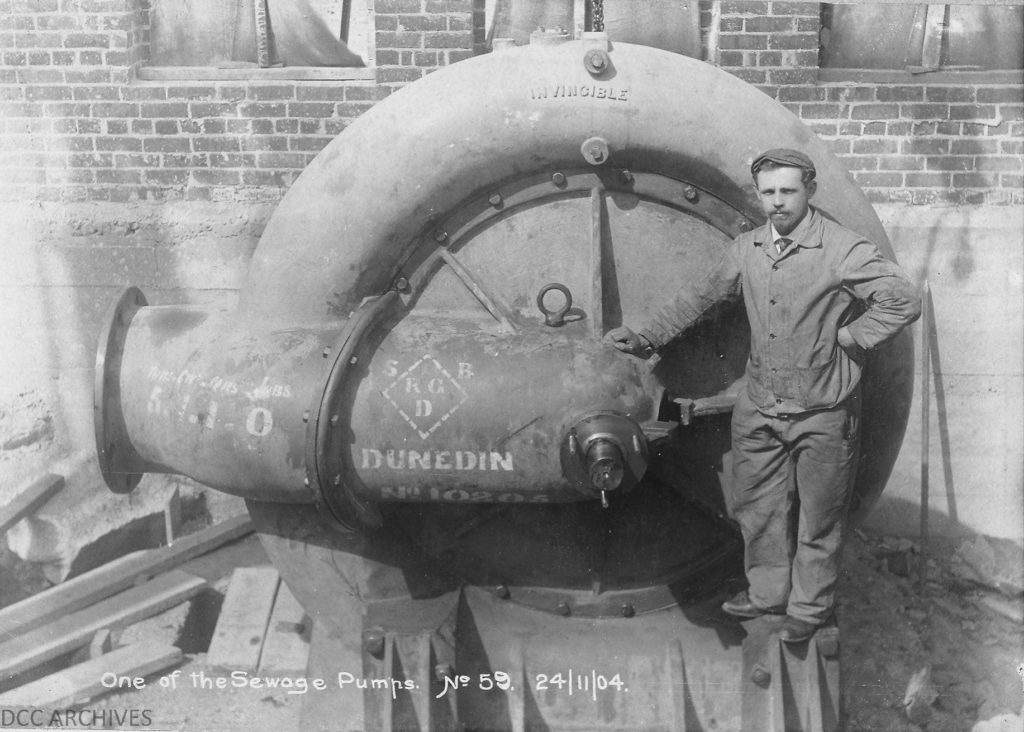
Sewage Pump, Dunedin City, New Zealand, November 1904
~
Thanks for reading the OPM letter! I’d love to have a conversation if you have any feedback. I hope you found some prompts to stretch your craft and relationships as a curious Owner PM. See you next week!
Stay humble, be kind, and keep experimenting! Justus Pang, RA
Thanks for reading. Please subscribe if you’d like the next letter in your inbox.
Learning Teamwork
Ten years ago, the corporate office held a go-karting a teambuilding event; I still reminisce about it fondly as I push my boy around on his tricycle.
However, my real education in teamwork came two decades ago as a laborer in a landscape crew. There was a true camaraderie in that small group of six guys moving dirt up and down the Oakland hills. We had our roles, and we worked hard together.
We were also paid hourly; we only made money when we showed up. There was no luxury of missing time, even if our bodies weren’t 100%. If someone wasn’t feeling great, we’d cover and carry a little extra load until he got better.
I was the beneficiary of this informal arrangement on the single public project during my six months with that crew. A week before the big project, I hurt my back moving mud up a hill. It was bad (I would feel its effects for several years).
I could barely walk, but for prevailing wage I made it to the job site. The guys covered me, handing me the easy tasks – shuffle tools around, signal traffic, etc.
Trust is created when the team rallies around its weakest member, when that person is most vulnerable. Reciprocity is earned by favors truly earned.
Weekend events may be a perk of working a desk job, but real teams are forged on Monday through Friday.
~
One Question
How can we create great teams when they work on multiple (slightly adversarial) entities?
Hit reply and let’s chat!
~
Three Links
Cal Newport on the eureka moment that is typically often built upon long grinding frustration. How can we keep fighting the difficult low-visible tasks that really pay off in our profession?
12 Rules for Creativity. The comics of Grant Snider are consistently enjoyable, even when thye skirt the edge of being overly precious.
Philipp Schaerer’s exhibition “Ornament & Découpage” (2019) is a stunning series of composites set in historical landscape photos.
… and a photo.
Bark on a long felled trunk, Mount Charleston, July 2021
~
Thanks for reading the OPM letter! I’d love to have a conversation if you have any feedback. I hope you found some prompts to stretch your craft and relationships as a curious Owner PM. See you next week!
Stay humble, be kind, and keep experimenting! Justus Pang, RA
Moderate at council should a man be, Not brutal and over bearing; Among the bold the bully will find Others as bold as he.
Thank you for reading. Please subscribe if you’d like the next letter in your inbox.
~
(notes on) The Hávamál
In this polarized moment, it is easy to forget that we share more than we diverge. Each individual is unique, but we are all human, and functioning societies have evolved to rhyme with each other.
Proverbs blend the universal with the specific. These sayings give us a glimpse of the humanity of those outside our tribe, separated by distance and time.
Recently, a friend shared some quotes from the Havamal on social media. The memes didn’t fit my mental stereotype of hard-charging, harder-drinking Vikings. Intrigued, I dug up a translation by W. H. Auden. The Havamal was indeed a delightful compilation of such proverbs, akin to the wisdom books in the Bible.
Given my love of aphorisms, I was particularly drawn to the first half – a mix of world-weary proverbs advising honor, caution, cynicism, and practical wisdom. The second half changes in tone and holds a visionary power, especially the passage of Odin sacrificing himself to himself.
To be fair, it isn’t all roses; a couple of passages are demeaning towards women. However we are not slaves to the ancients, and these sayings can be recast as relevant as gender-neutral warnings to be wary of our own urges.
As our society becomes more secular, we risk identifying ourselves too tightly with our professions. We see ourselves as vessels of our income-generating activities. Even worse, we might view others in light of their utilitarian offerings.
These proverbs remind us that each person is a tapestry far more richer than a canned response to “what do you do?”
In my three years as an Owner Project Manager, I have been constantly reminded this is a relationship profession. The final goal is an edifice of glass, steel, and concrete, but the art is in working with people who carry their own hopes, dreams, and fears.
At our best, an OPM should push this temporary tribe towards excellence in moment, leading them towards greater opportunities in the next project.
A kind word need not cost much, The price of praise can be cheap; With half a loaf and an empty cup I found myself a friend.
~
One Question
What are are the references of wisdom in your life?
To ask well, to answer rightly, Are the marks of a wise man: Men must speak of men’s deeds, What happens may not be hidden.
Hit reply and let’s chat!
~
Three Links
Peter Hayashida wrote a lovely meditation his career and life in general as he was wrapping up his work at UC Riverside.
Writer CJ Chilvers has a post of Personal Publishing Principles. Each of us should do create a similar manifesto for our work.
The Voyager satellites included a golden record of sounds from earth. It is also posted on youtube.
… and a photo.
Mahjong Tiles, Las Vegas, August 2021 My son spent an afternoon building up and knocking down walls of these tiles. My grandparents gave me this Mahjong set twenty-five years ago.
~
Thanks for reading the OPM letter! I’d love to have a conversation if you have any feedback. I hope you found some prompts to stretch your craft and relationships as a curious Owner PM. See you next week!
Stay humble, be kind, and keep experimenting! Justus Pang, RA
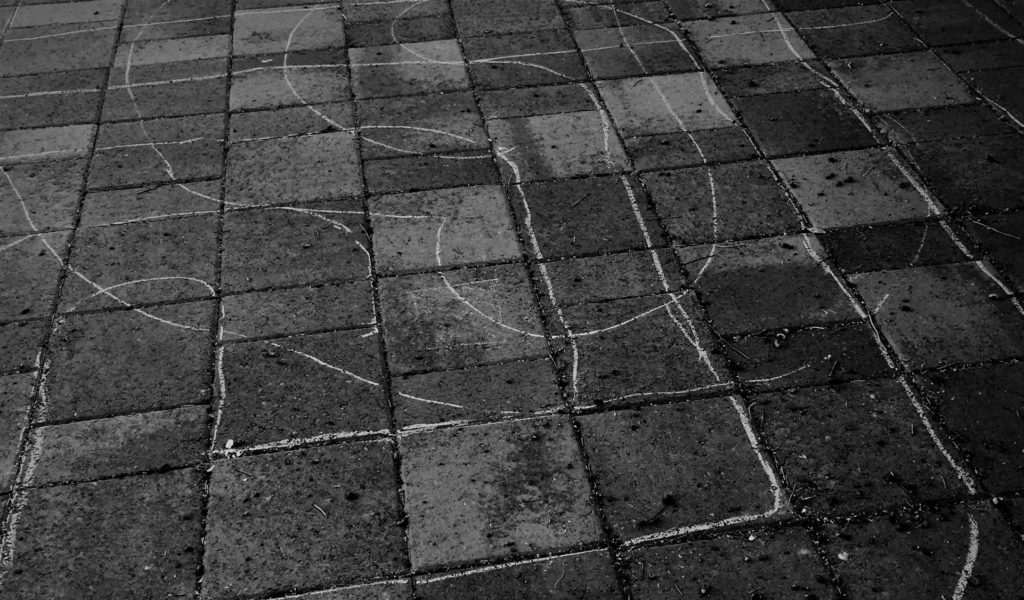
Who knew a little chalk could reshape your morning routine!?
Thanks for reading. Please subscribe if you’d like the next letter in your inbox.
Labryinth Lessons
My daughter and I drew a labyrinth on the backyard patio. Unlike a modern maze, the classical labyrinth is a single continuous path that continually loops upon itself until you reach the center.
I started to walk the labyrinth every morning as the kids played in the yard. A week into this new routine, I noticed that my mind was craving its morning roundabout on the patio – I had unconsciously slipped into the practice of a daily walking meditation.
What other rituals should we instill for ourselves and our teams? It may seem daunting, but our fears could be overblown. Our psyches might quickly adopt the new routine.
~
It rained as I wrote the first draft of this post. The morning after, we redrew the labyrinth. As I retraced the lines, my daughter added little drawings inside the path. She designated special powers to these sketches, sending us to various parts of the yard if we stepped on them. This simple path became the armature for a new outdoor game.
Don’t be afraid to take the first, imperfect step. The new endeavor could be the foundation for future continual improvements.
~
After further rainstorms, we are now on iteration #4. The game is gone, the labyrinth rotated 90 degrees, and the path has been widened to fill the entire patio. Even so, we are at least one version away from perfection. The impermanence of the chalk has been a feature, not a bug. Indeed, the impermanence of the chalk is why we drew the labyrinth in the first place.
Don’t fear temporary changes. A collection of minor tweaks could lead to something bigger. Our buildings may be permanent, but our processes are ephemeral. We should constantly experiment and try something else tomorrow.
~
One Question
What big problem needs to be tackled with a series of small steps? How are you gonna take the first step?
Hit reply and let’s chat!
~
Three Links
This labyrinth experience was an unintended example of creating a Tiny Habit. Even though I have not been successful at manufacturing new tiny habits on command, BJ Fogg’s book is still worth reading.
A few weeks ago, Arnaud Marthouret shared a few lessons from racing motorcycles. He recently followed up with three more lessons. They remind me of lessons I learned from a much slower activity – Tai Chi.
Check out the Laughlin Labyrinths, created by Wes Dufek. Park safely and find your center in the desert and enjoy views of the backside of some cheesy casinos. It’s a moment of pure Nevada.
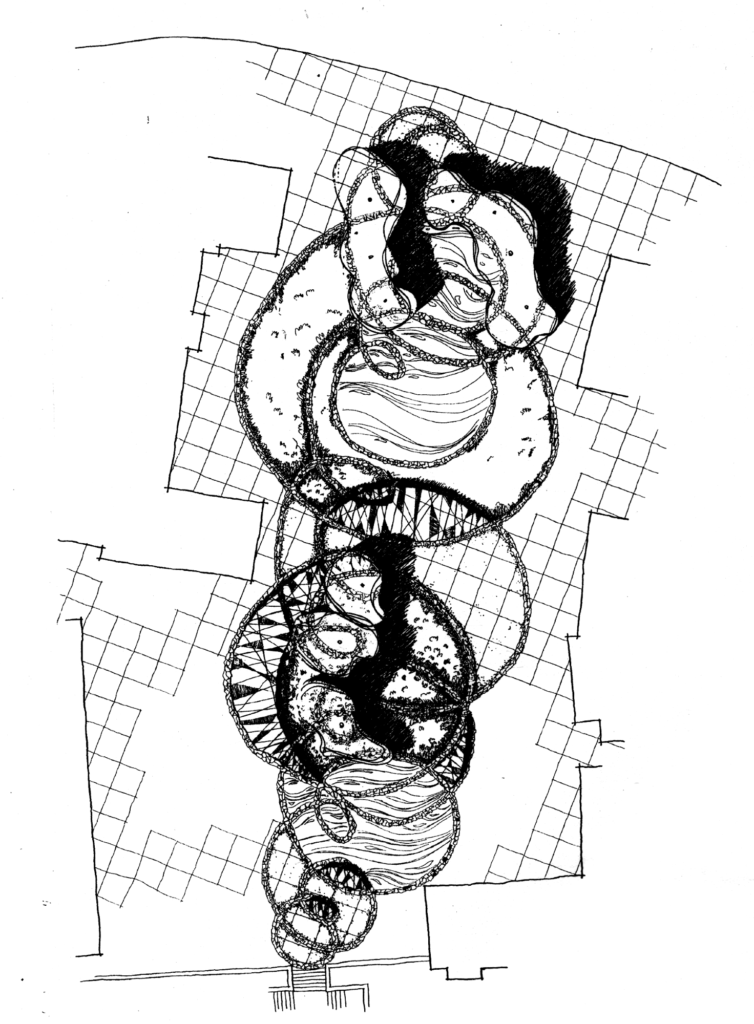
… and a drawing.
Maze, Landscape 103, 2000 I was first introduced to the classical labyrinth in a studio taught by Chip Sullivan. It’s interesting to see what stray errata have stuck from my time in undergrad. Two decades ago, labyrinths wouldn’t have been on that list, but here we are.
~
Thanks for reading the OPM letter! I’d love to have a conversation if you have any feedback. I hope you found some prompts to stretch your craft and relationships as a curious Owner PM. See you next week!
Stay humble, be kind, and keep experimenting! Justus Pang, RA
The start of the new school year reminds me of distance learning last year. My daughter’s school posted a video every morning with news and a recitation of the pledge of allegiance.
This daily practice was a powerful mantra, sinking into my subconscious of a government worker.
This letter collects mottos from key institutions in my life, starting from the federal government down to mottos I’ve chosen for myself.
I highly recommend going through such an similar exercise for yourself. It doesn’t take long and it is powerful to regularly contemplate the sayings that were important for our predecessors.
Thanks for reading. Please subscribe if you’d like the next letter in your inbox.
A Few Mottos to Start your Mornings
United States of America
I pledge allegiance to the Flag of the United States of America, and to the Republic for which it stands, one Nation under God, indivisible, with liberty and justice for all.
State Nickname on our flag (Most folks think this is our official Motto)
“Home” means Nevada, “Home” means the hills, “Home” means the sage and the pines. Out by the Truckee’s silvery rills, Out where the sun always shines, There is a land that I love the best, Fairer than all I can see. Right in the heart of the golden west “Home” means Nevada to me.
Mission To serve Nevadans and help our customers by providing efficient and effective solutions.
Priorities Be responsive to customer needs. Continually improve leadership and promote teamwork within the Department. Support customer goals through innovative solutions and strategies. Improve efficiency through continual review, automation, and improved transparency. Support agency performance through workforce development.
Mantras are great. Who would disagree with “liberty and justice for all”?
So why are the pledge and the flag such contentious symbols? Because our aspirations also remind us of our current failures, and partisans have exploited these gaps to create divisive chasms of identity.
But we shouldn’t abandon a mantra due our shortcomings. Instead, lets use these regular reminders of our shared destination to fuel our efforts in closing the gap between ideal and reality.
~
One Question
Is there an awesome motto that I’ve missed? If so I’d love to hear it!
Hit reply and let’s chat!
~
Three Links
Cal Newport neatly summarizes Quentin Tarantino’s writing routine, which rolls a daily rhythm, eschewing raw frenzy.
How Mimi Dixon navigated our fraught culture to launch the Colors of the World crayons with Crayola.
Yumi Janairo Roth has a cheeky installation project with professional sign spinners working Sol Lewitt quotes. It reminds me of the Marquesse Scott video that introduced me to this niche.
… and a photo.
“…by the rocket’s red flare…”, Mount Charleston, July 2021
~
Thanks for reading this OPM letter! I’d love to have a conversation if you have any feedback. I hope you found some prompts to stretch your craft and relationships as a curious Owner PM. See you next week!
Stay humble, be kind, and keep experimenting! Justus Pang, RA
Its amazing that the summer is over already. Our local school district starts the new year next Monday!
Thanks for reading. Please subscribe if you’d like the next letter in your inbox.
Creative Boredom
Summer in Vegas is an indoor, sedentary affair. In response, we’ve been starting our mornings in the backyard with a simple rule.
“Don’t sit down for 20 minutes.”
One day, the kids followed a roly-poly for ten minutes before running around.
Another morning, they drew petroglyphs on the CMU wall.
They made a maze of rocks on the patio. Then a chalk labyrinth.
They made daisy chains out of dandelions.
My daughter climbed a step ladder and proclaimed she was on the mast of a tall ship.
Ahoy Mateys!
One morning, we walked boring loops in the backyard until they noticed the leaves collecting in the side yard. They swept up a pile and jumped on it enthusiastically.
Watching the kids make the most of these morning impositions made me consider our big people’s jobs.
How much of our days are filled by busywork? Have our imaginations been crushed by endless todo lists of marginal tasks?
Maybe we should schedule a quiet twenty minute block every morning, so the mind can climb the mast and jump into a pile of leaves.
~
One Question
Before the pandemic, I’d spend an hour every Friday morning at the coffeeshop to sort out my mind. Do you have any regular rituals of stillness?
Hit reply and let’s chat!
~
Three Links
Hilary Levey Friedman wrote a short article about organized youth sports, reminding us that many of our cherished institutions are recent in origin.
In this busy world, we all need a little more slack. Trying to fit all the work into increasingly tighter boxes is a recipe for making regrettable mistakes.
This “delicately perforated Corten steel” façade at the Manchester Jewish Museum is gorgeous.
… and a photo.
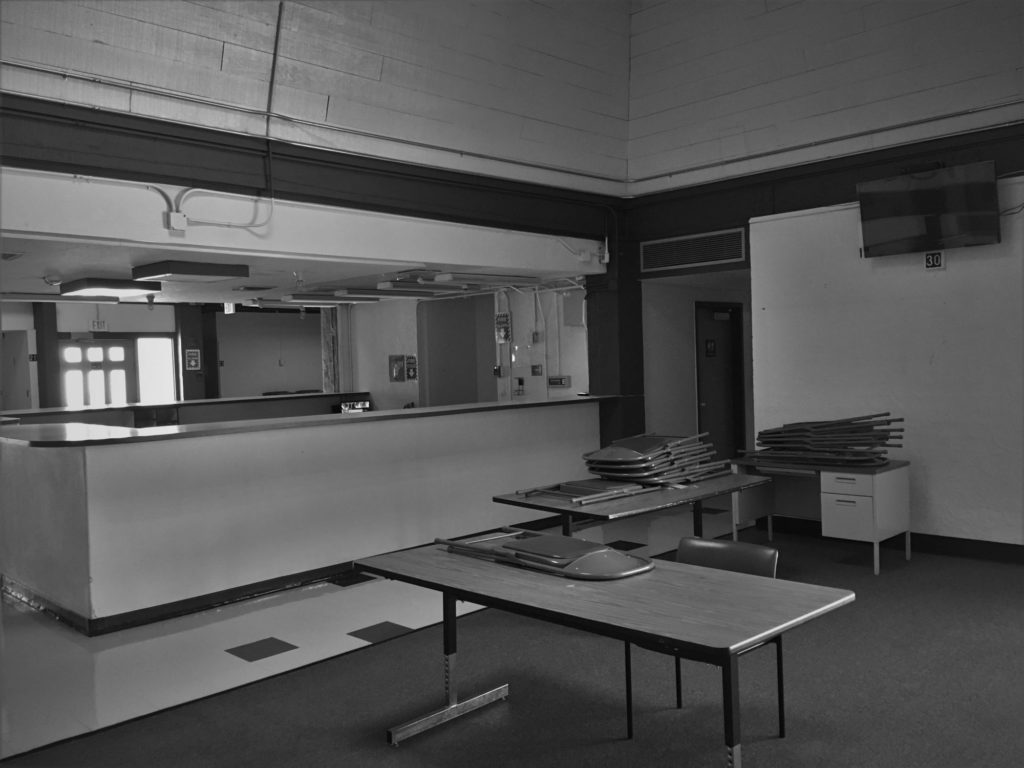
Television 30, Las Vegas, July 2021
~
Thanks for subscribing to the OPM letter! I hope you found some prompts to stretch your craft and relationships as a curious Owner PM. See you next week!
Stay humble, keep experimenting, and be kind! Justus Pang, RA
As a good architect, I made another change! I’m going weekly now.
Thanks for reading. I’d love to hear some feedback on this letter! Please subscribe if you’d like the next letter in your inbox.
(notes on) A World Without Email
I’ve been a fan of Cal Newport after reading So Good They Can’t Ignore You a couple years ago (quickly followed by devouring Deep Work and Digital Minimalism). Accordingly, I borrowed his audiobook from the library as soon as it was available. The book did not disappoint. It is a great distillation of Cal’s current ideas on email and productivity.
Like many self help books, the first part sells the problem with a narrative detailing the road to our current “hyperactive hive mind”. This section is necessary, but is a bit drawn out. Fortunately, the second part of this book is full of actionable ideas and is highly recommended. You can find all this advice by listening to hours of his Deep Questions Podcast, but this book perfect for someone who isn’t already a Newport acolyte.
Some of his key recommendations include:
be wary about the dissipation of our attention, mental switching costs are incredibly detrimental to high performance in knowledge work.
a mix of practical tips for increasing productivity (such as batching similar tasks on various days)
go outside of email for managing work. Use processes and systems for workflow coordination, such as using taskboards.
don’t assume the simple and easy makes for the best process in organizing your work flow. A little friction may result in long term efficiencies.
Based on the recommendations in his podcast, I’ve already initiated weekly check-in’s with my architect and my immediate supervisor, which have worked spectacularly well. For my next projects, I plan on imposing a communication protocol.
I normally try to avoid enjoying the my status as an Owner. However, I shamelessly exploit the Owner’s prerogative to push the Architect’s workflow beyond our industry standard “fire in the inbox” method of management.
Maybe my first step will be to assign them this book.
My reaction to this book is muted because I was an avid listener to Cal’s podcast last summer. As such, I had already implemented many of his recommendations in his book. If I was ambitious, I would borrow the ebook from the library to carefully re-read the recommendations in the second part of the book. However, I’ve recently turned away from self help books towards classic literature, focusing upon the eight waking hours outside of the office. As such, I haven’t felt an urge to return to this book.
~
One Question
Do you have any workflows that may seem circuitous but actually help you manage the work more efficiently?
Hit reply and let’s chat!
~
Three Links
Arnaud Marthouret wrote three lessons from racing a bike too fast. His third lesson about no distraction resonates tightly with the aim of The World without Email.
Seth Godin’s Wayfinding gives us permission to be inefficient, because the murky is where the innovation is most needed.
The paintings of Torsten Jovinge (1898-1936) are a real treat. Thanks to Daily Dose for introducing me to this artist.
… and a photo.
Tree Stump, Mt. Charleston, June 2021
~
Thanks for subscribing to the OPM letter! I hope you found some prompts to stretch your craft and relationships as a contentious Owner PM. See you next week!
Stay humble and keep experimenting! Justus Pang, RA
As a good architect, I’ve already made a change! I’ll publish this letter every other week for a few months until I start commuting again. Let’s see where we go!Thanks for reading and I’d love to hear some feedback! Please subscribe if you’d like the next letter sent to your inbox.
My Comedy of Errors
June 30th was the end of the State’s fiscal year.
Purely by coincidence (my project budget money doesn’t expire this year), I processed a purchase order on June 29.
My vendor was having a problem with this PO. He was in meetings all morning. So was I.
He was sneaking emails during those meetings. And I was responding in the middle of mine. His emails were terse. He wasn’t reading my responses carefully.
We were writing, but we weren’t communicating.
I became irate. I pinged his manager. After the vendor finally got out of his meetings, we solved the problem over the phone.
The PO is resolved, but now I feel awful about my hasty appeal to his boss. I should have been patient and waited to calmly resolve the situation.
What went wrong?
First, being an OPM can get to your head. I need to work on my ego so I don’t get easily triggered when I feel I’m not being treated me with the “proper” respect.
Second, the vendor was under a lot of stress with an insane quantity of work due at 5 pm because of the fiscal year-end. I need give others the benefit of the doubt, especially when we’re working together for the first time.
Third, I should have stopped the email exchange when it became clear that we were going nowhere. I could have left a voicemail and waited patiently. This PO was not urgent, but I had gotten caught up in the rush of the moment.
Every time I get on my high horse, I end up with egg on my face. Self-righteous indignation is a short-sighted play. I felt great for a moment but regretted it soon after.
The challenge is to remember this lesson before I lose my temper.
~
How do you slow down before frustration boils over?
I’ve been pretty lucky in my career. Even my two obvious tangible mistakes came with payoffs that I cherish. I often repeat the line that an architect is paid in money and experience. I haven’t been at good negotiating money, but I’ve been given memorable experiences along the way.
~
Three Links
My friend Arnaud Marthouret of RVLTR wrote a beautiful meditation about death, passion, and motorcycles.
Photographer Thom Hogan on snapshots, storytelling, photography, and memory. A great essay on balancing fast and slow in one’s craft.
Beautiful drawings depicting a semi-apocalyptic future.
… and a photo.
Overlapping Labyrinths, Las Vegas, July 2021
~
Thanks again for reading this OPM letter! I hope you found some thoughtful prompts for becoming a sharper OPM Architect.