Having worked in small firms, I’ve always been the young guy. Even that time I went corporate, I ended up being the junior staff member on a major project.
That’s fine. I learn more from the experienced folks.
So it was a bit odd turning Owner and suddenly becoming an old guy. In the few cases where I’m younger, it was by a year or two, not decades.
Middle age is odd. They say architects don’t blossom till they are fifty. That was forever away, now just three years out.
I’ve gone through the stereotypical “now what” moment, but I’m also comfortably confident in my skills. There’s still plenty to explore, but I have much to share with the next generation.
Maybe this OPM letter was a my way to share some notes along this journey.
~
Some Links
Over the past few years I’ve fallen hard for calligraphy. It’s why this letter took a long hiatus. You can graph with the most simple of materials, but here are some things that stand out.
The Pilot Parallel was my introduction to calligraphy. As a lefty, I had long thought it impossible, but once I got my hands on one of these pens, I just had to try (with the help of YouTube). It’s an inexpensive pen with none of the hassle of dip pens. If you’re not sure what size to get, go big with the 6.0mm.
What to graph on? Anything will do, but normal printer paper will bleed, as will binder paper. The best value I found was acid-free sulfite paper from Blicks, which is usable on both sides.
If you get deeper into the hobby, then splurge with the Brody Neuenschwander Handwritmic Ruling pen. I also enjoy the Dreaming Dogs ruling pens (especially for alternative shapes), but the Handwritmic has the best build quality with a nib that can handle a variety of scripts.
LED light tables are super cheap now. Mine is just a non-name brand from Amazon. Print out guidelines on paper and now you won’t have to rule your sheets all the time.
And finally books, books and more books.
- Any edition of the Speedball Textbook is a good start (I’ve got 12, 16, and 20-25).
- I’m fond of Arthur Baker’s Foundational Calligraphy Manual because he elucidates a technique of twisting the nib, which feels really weird until it’s natural. At this point I’ve picked up all of his books.
- For good clear overview of scripts over history check out Julian Chazal’s Calligraphy a Complete Guide and David Harris’s Art of Calligraphy.
- I also love Harris’s early book Calligraphy: Modern Masters, a survey of contemporary work around 1991.
- A wild card, out-of-the-box gem is Scott Kim’s mind twisting Inversions.
- And no list of books would be complete without grand matron Sheila Water’s epic Foundations of Calligraphy. I find this one intimidating—high standards are great, but for a hobby, fun comes first. But when you get serious, it’s a must-have.
~
~
Goodbye
Now it’s time to close out this project.
If I was feeling frisky, I’d do a post mortem report of the OPM Letter with my four questions:
- Was the objective clear?
- What went wrong, how do we avoid it in the future?
- What went well, how do we keep it going?
- Did we miss any opportunities?
But life isn’t always work, so I’ll let these questions linger. Instead, here is a parting gift, a collection of calligraphy, 100 Words on Design.
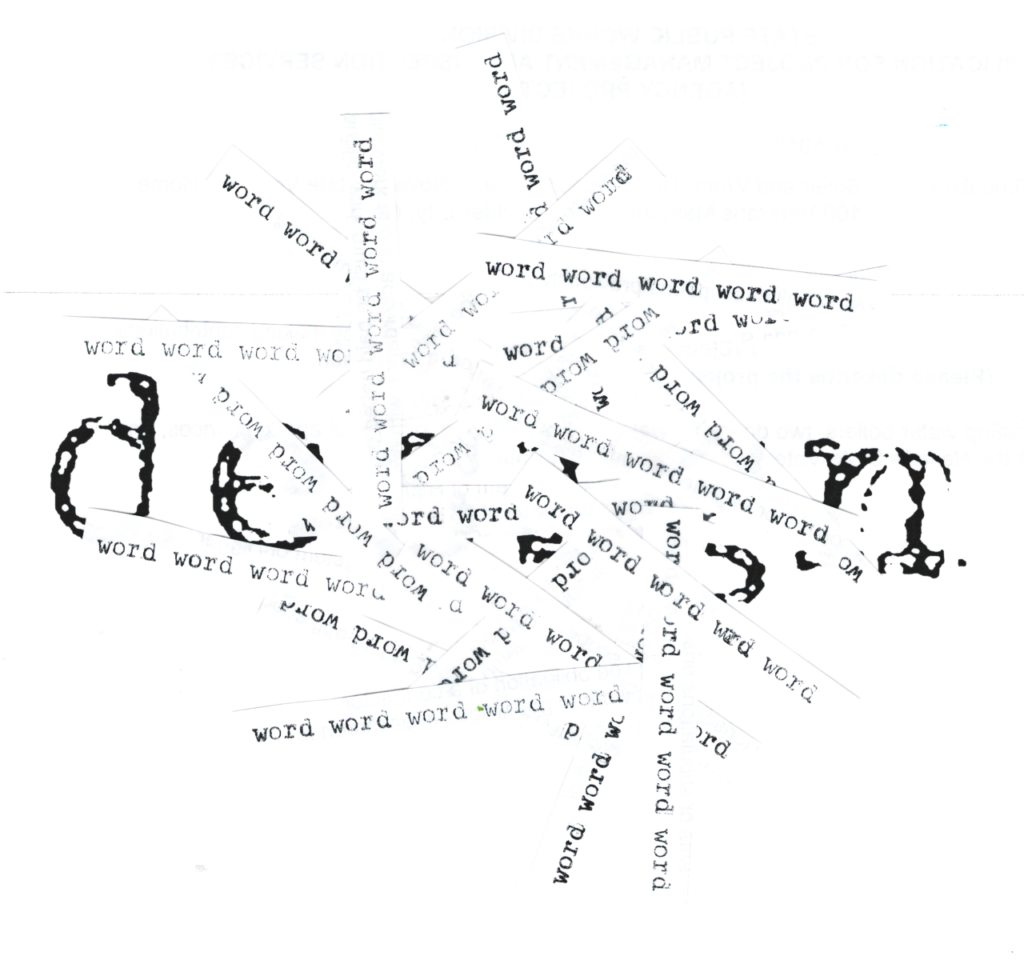
Thanks again for reading this on-and-off newsletter.
Please shoot me an email, I’d love to catch up.
Cheers!
Justus