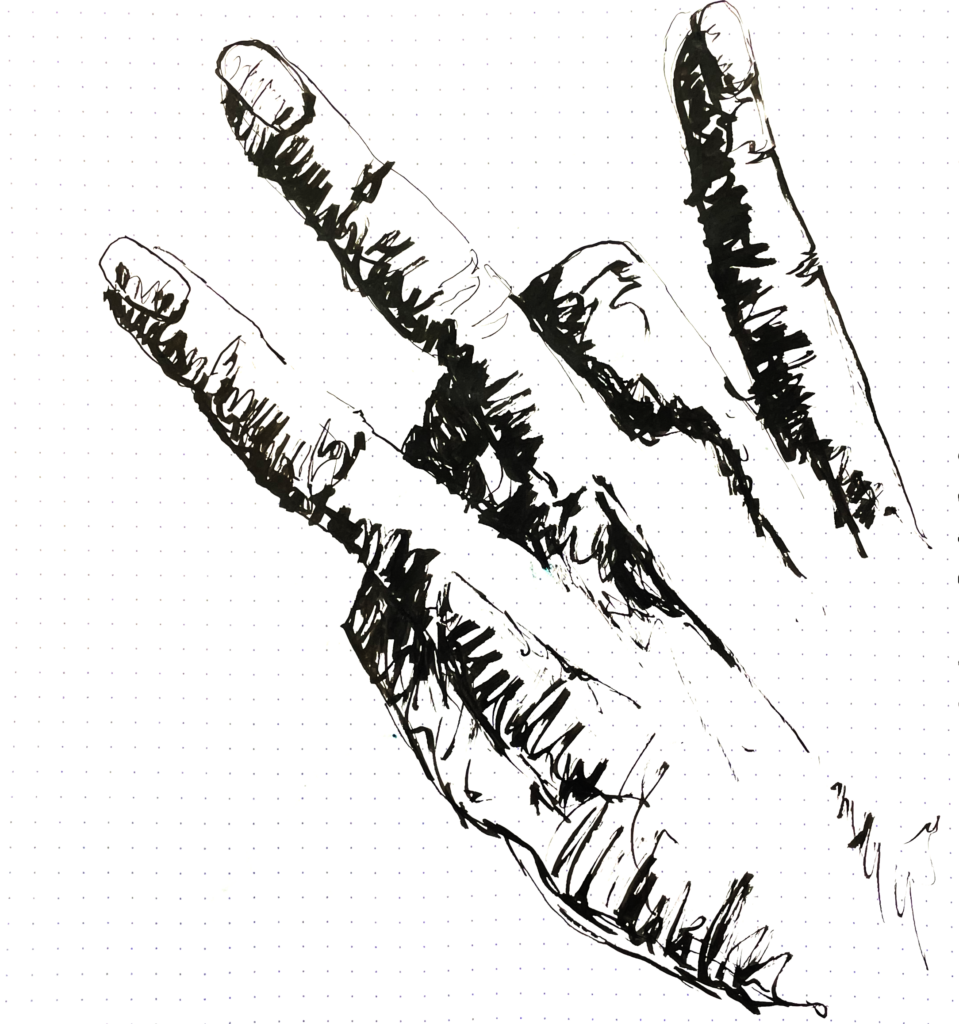
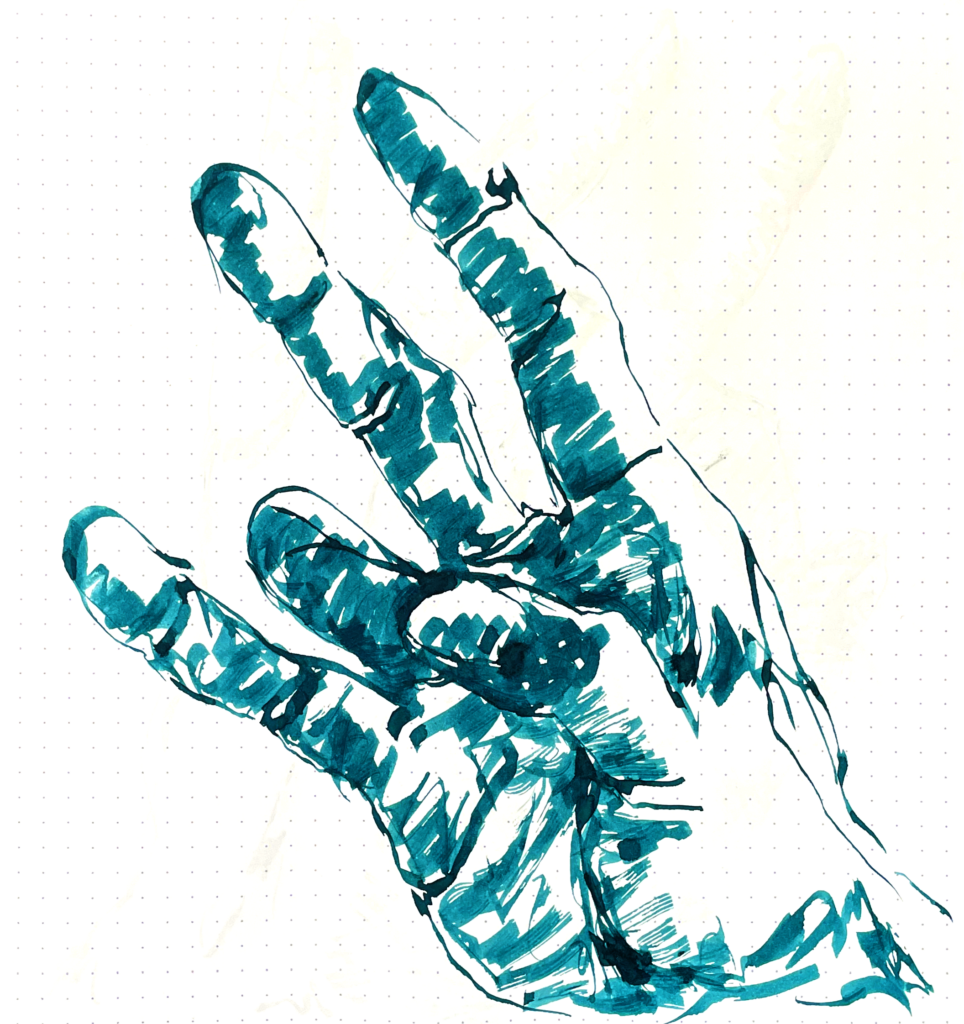
I walked a renovation with my Architect and the Using Agency.
It was strange to traipse through the building. Construction had started a couple of months prior, but it all felt theoretical.
As an Owner, my job is to manage budget and schedule. I’m here to make the process move smoothly; it’s all so abstract, not solving the problems in the field.
Yes, it’s less stressful than the technical day to day grind in private practice.
But we don’t get to enjoy the scenery either.
~
Some Links
I’ve always been fond of for folk music, and YouTube is a treasure trove of artists.
I found Daoiri Farrell from an impromptu flight delay session, and the Creggan White Hare has been on regular repeat ever since.
Nicolas Campin anchors a haunting Mazurka, but if you’d rather have your players separated, here is a captivating Scottish à Cheillé on dining tables.
A captivating pairing of 十面埋伏 with A Change Is Gonna Come by Charles Yang. His soulful singing is a pleasant shock after playing the high pitched pipa tune on the violin.
Before wandering into the world of pop up cards, here are five last 5WP’s…until we get back into poetry again!
,
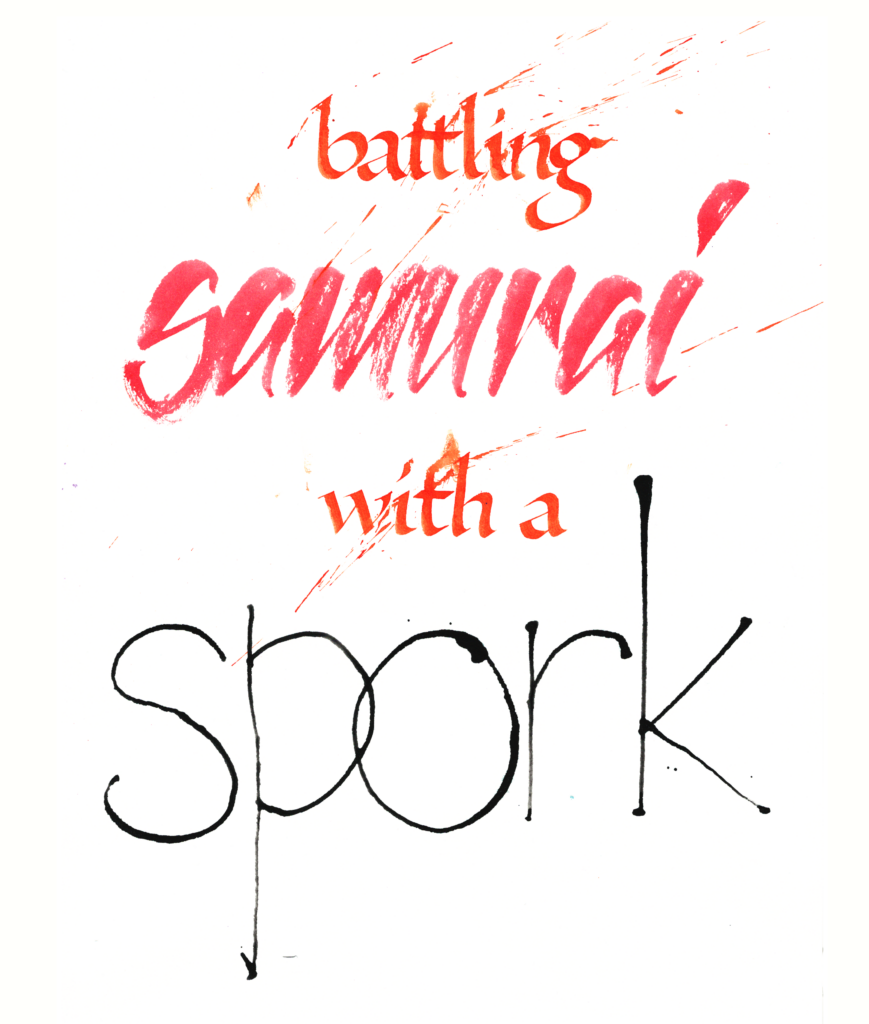
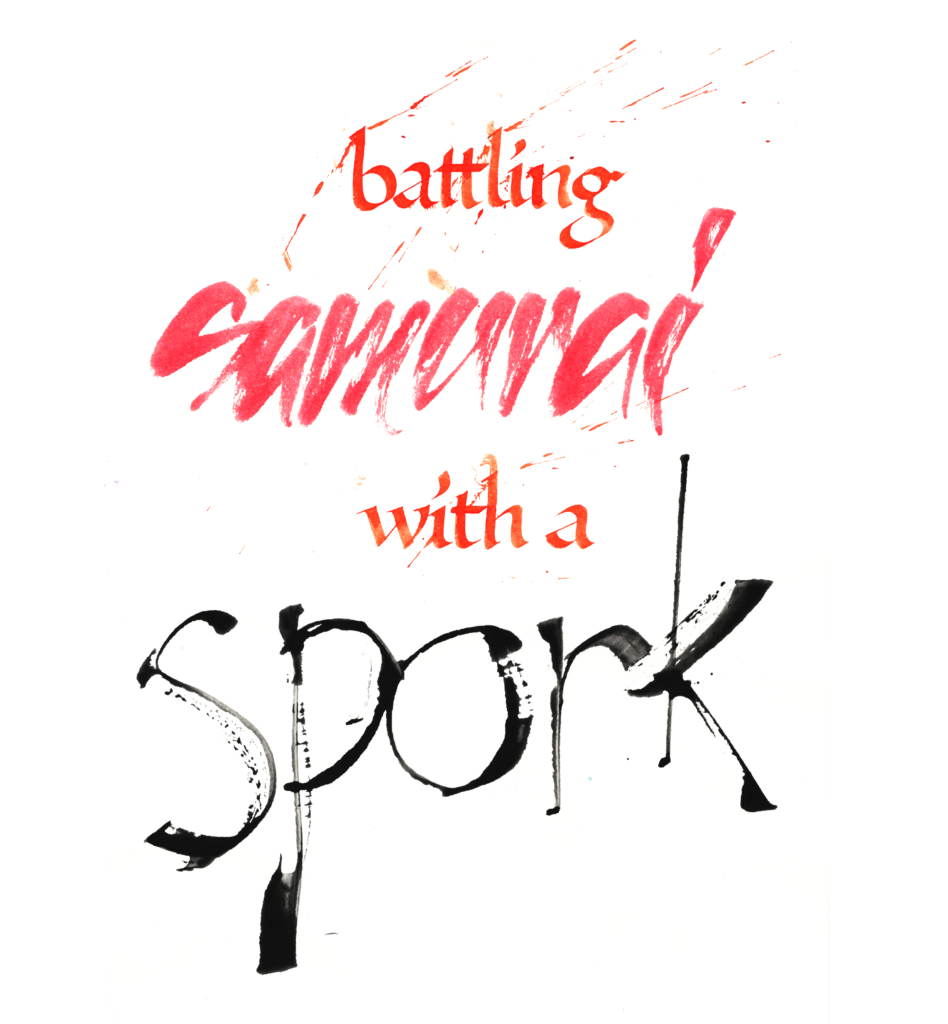
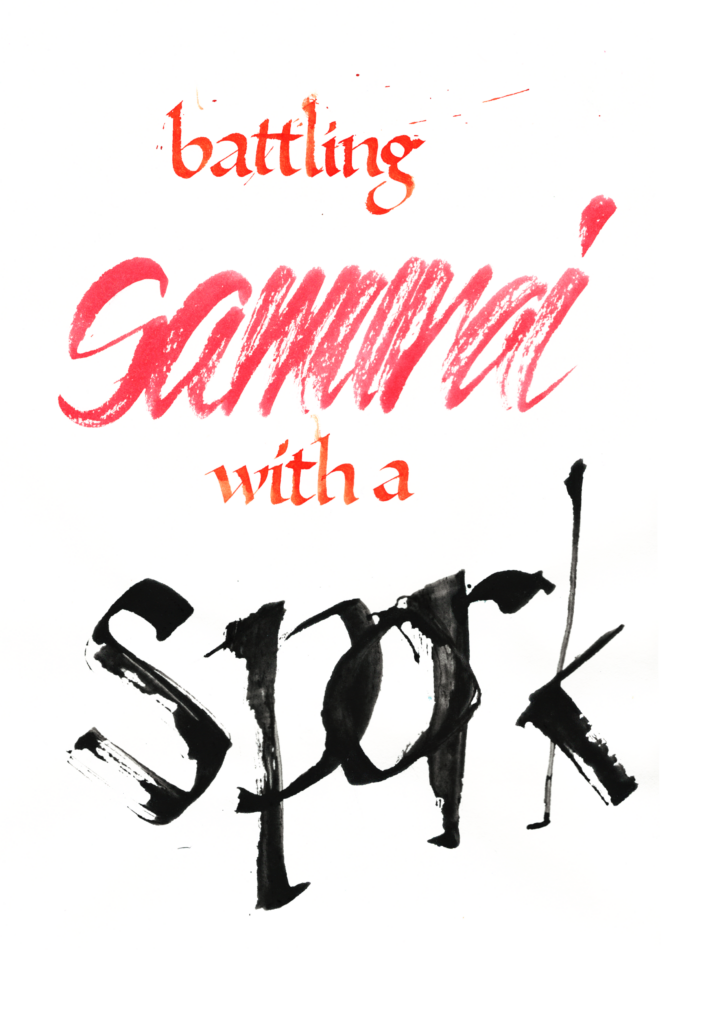
3/24 Inktober 52 (2024), week 13
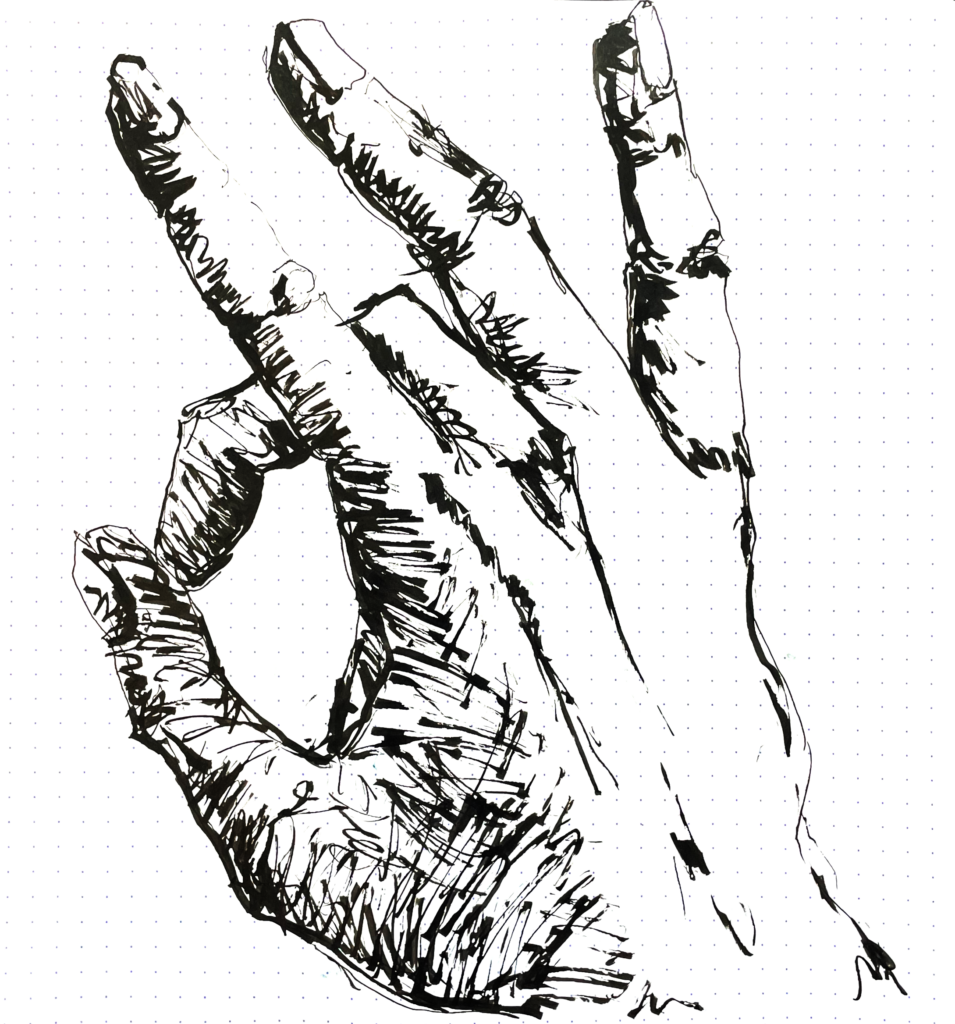
battling samurai with a spork
I tried a few lineweights with this Spork. The simple clean version one felt most spork-y.
,
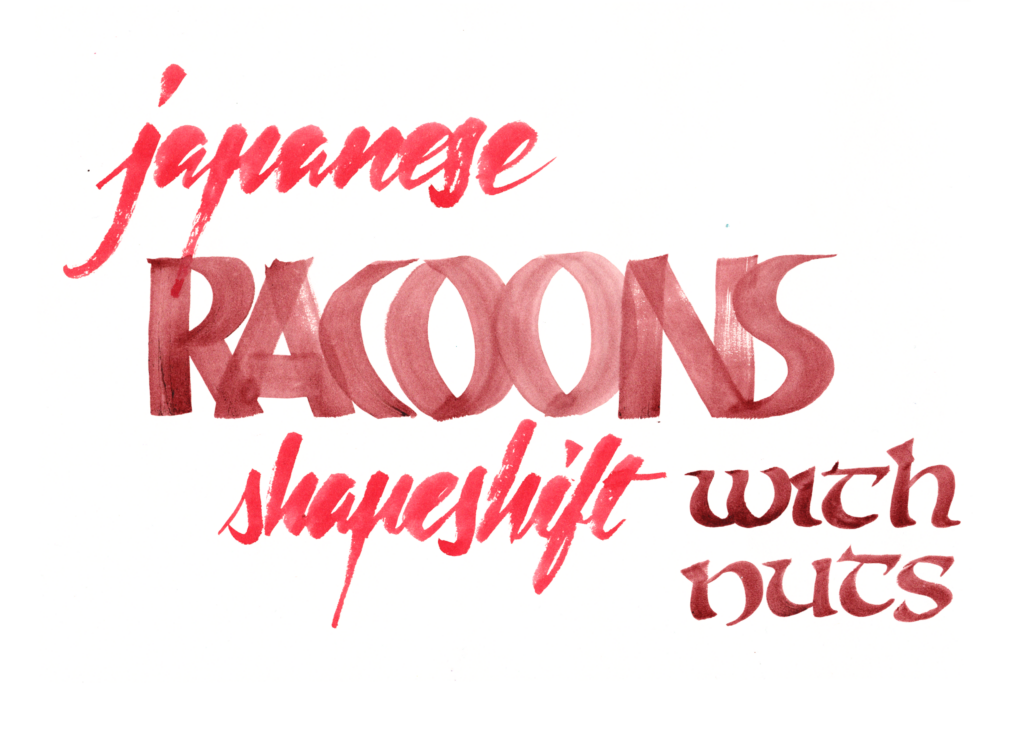
3/28 Inktober 52 (2024), week 11
japanese racoons shapeshift with nuts
A reference to the brilliant Studio Ghibli movie Pom Poko, a fun commentary on fighting our inevitable exploitation of nature. An early scene showing the development of the rural land around Tokyo is one of the sharpest satires I’ve seen on film.
I can’t remember for sure, but with the spacing so perfect, I suspect it was tweaked in the box. Nothing crazy, just a nudge here or there.
,
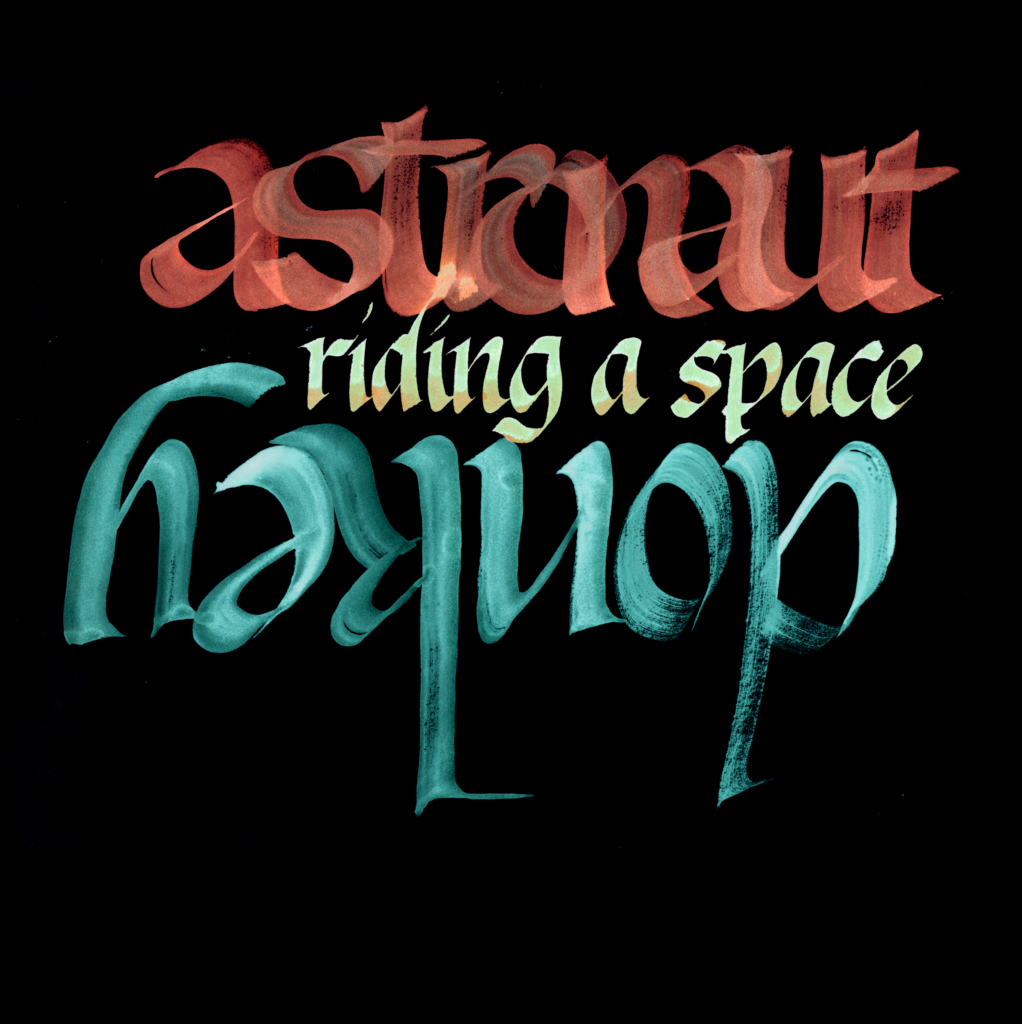
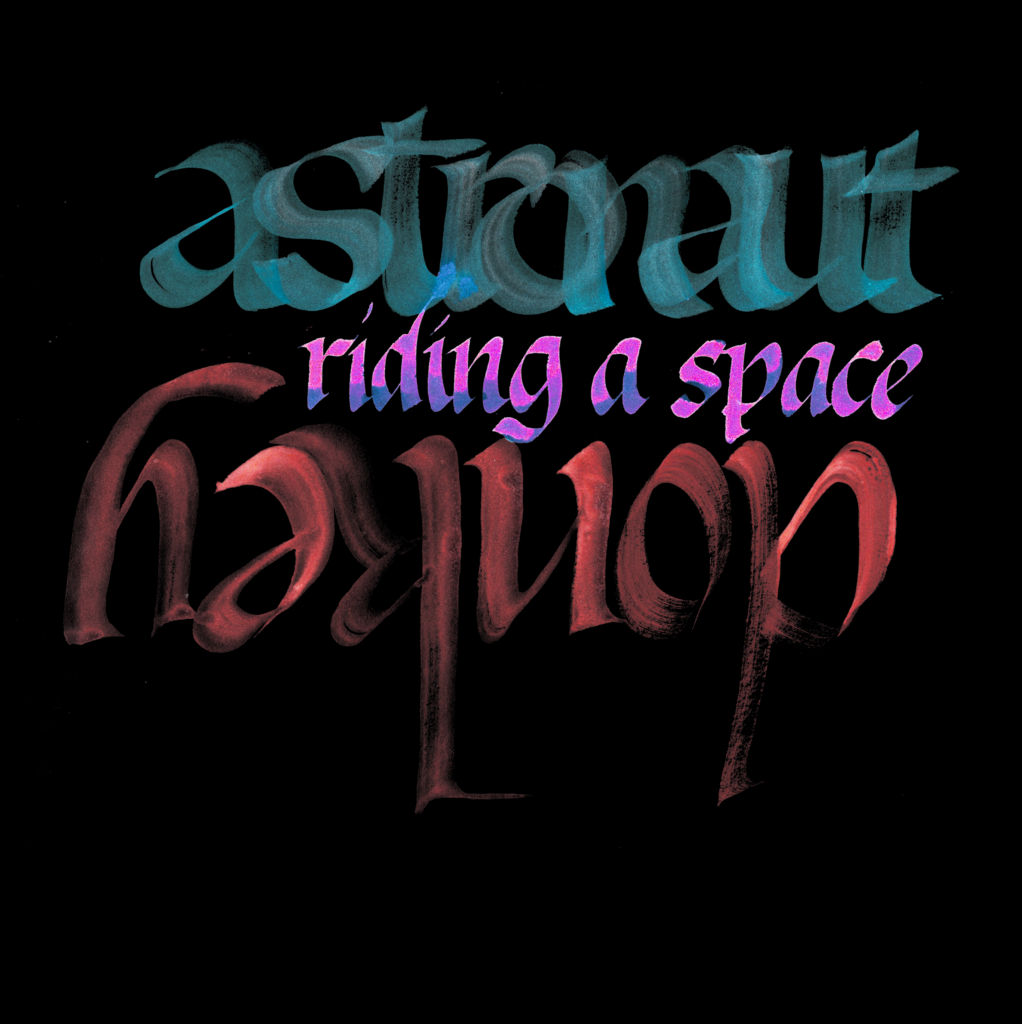
4/3 Inktober 52 (2024), week 8
astronaut riding a space donkey
An early experiment with inverting the background and playing with colors (using the Hue-Saturation filter). One day I should start experimenting in IRL with gauche on colored paper.
,
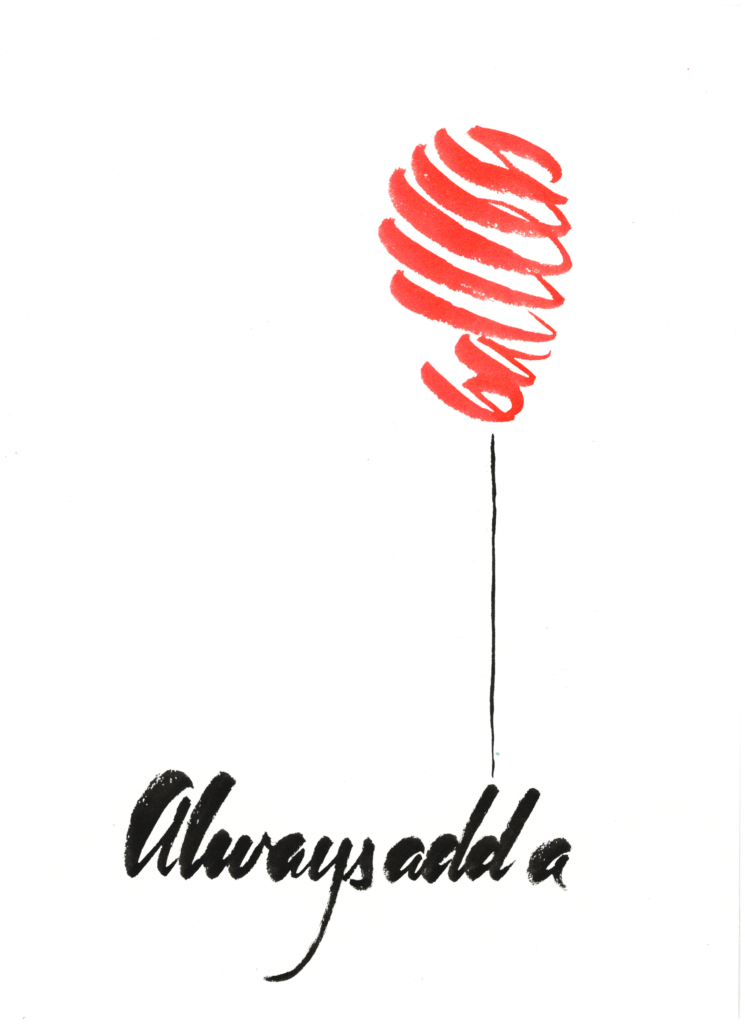
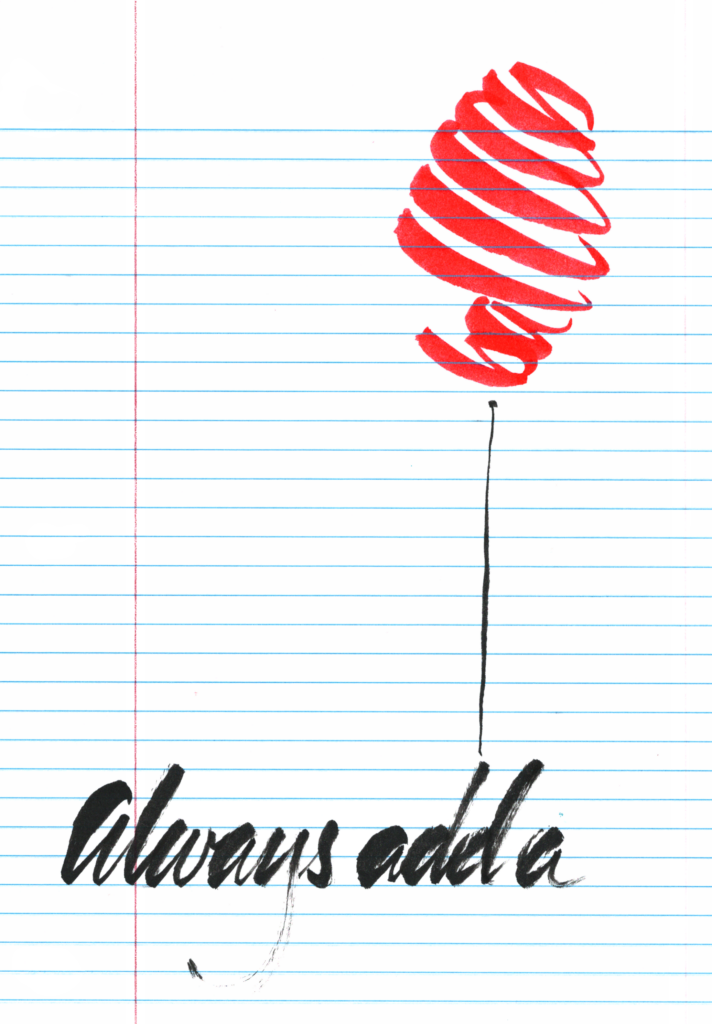
4/4 Inktober 52 (2024), week 9
always add a red balloon
The version on blank sheets was fine, but ruled binder paper felt like a relevant background for something that references a red-balloon (and as always a little extra noise can make a huge difference).
This was a reference to the architectural rendering trope adding a child with a red balloon. It gives a pop of color in the sky and a sense of playfulness to an otherwise staid image.
,
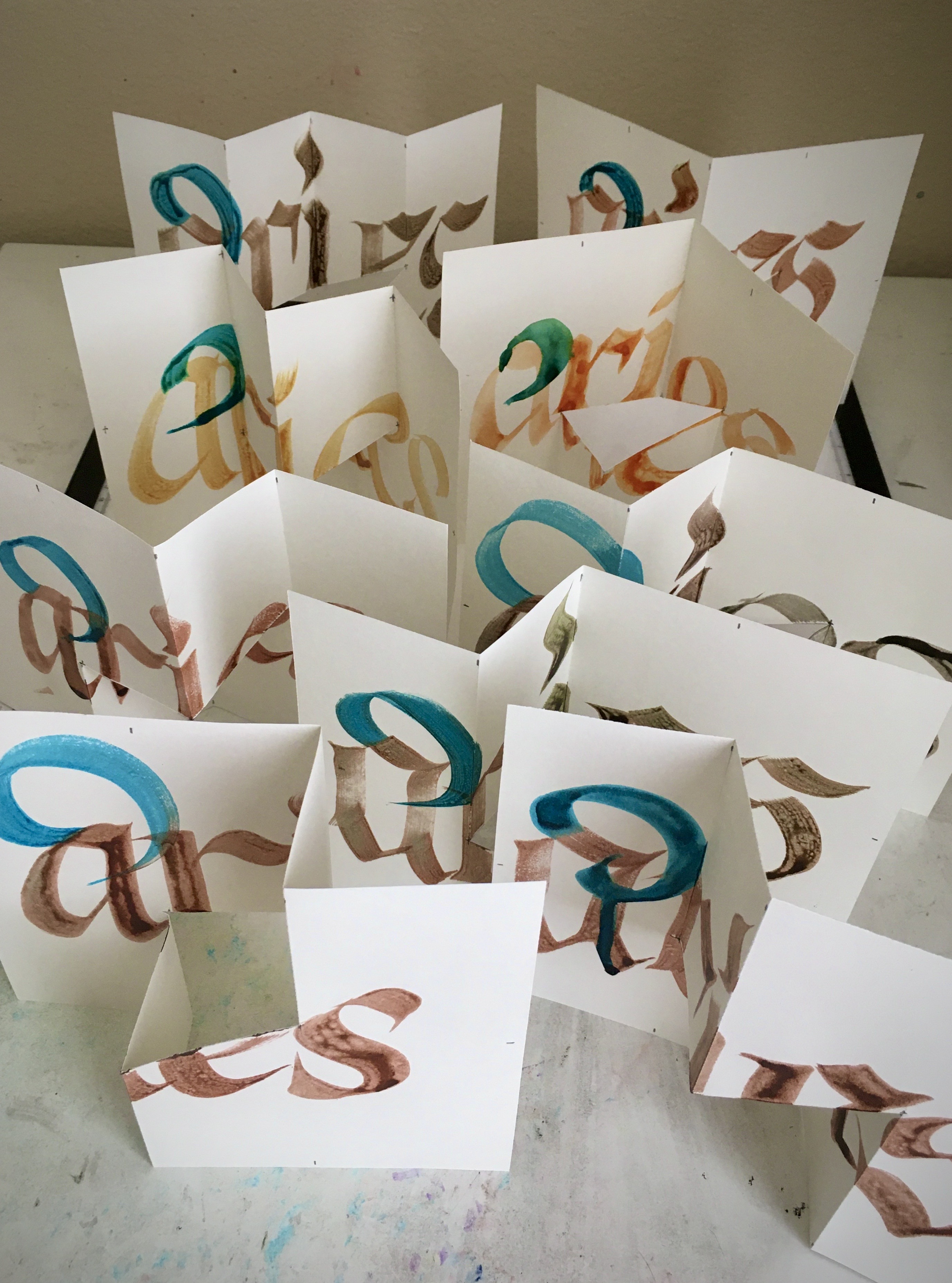
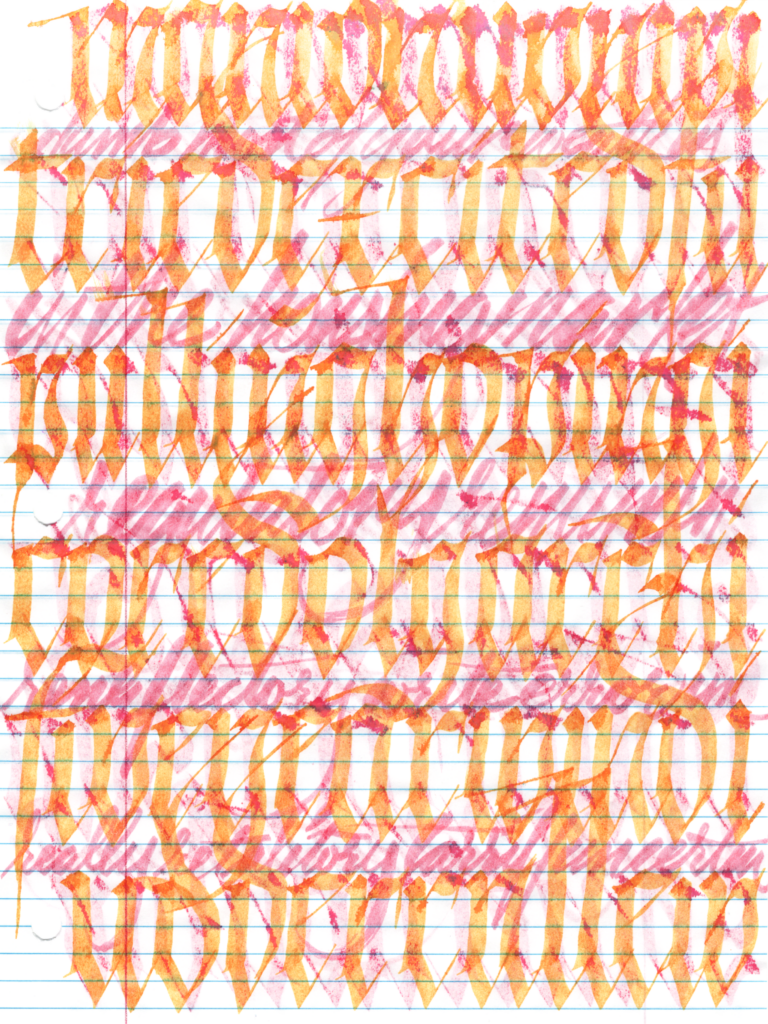
3/29 Inktober 52 (2025), week 13
a flock of folded rams
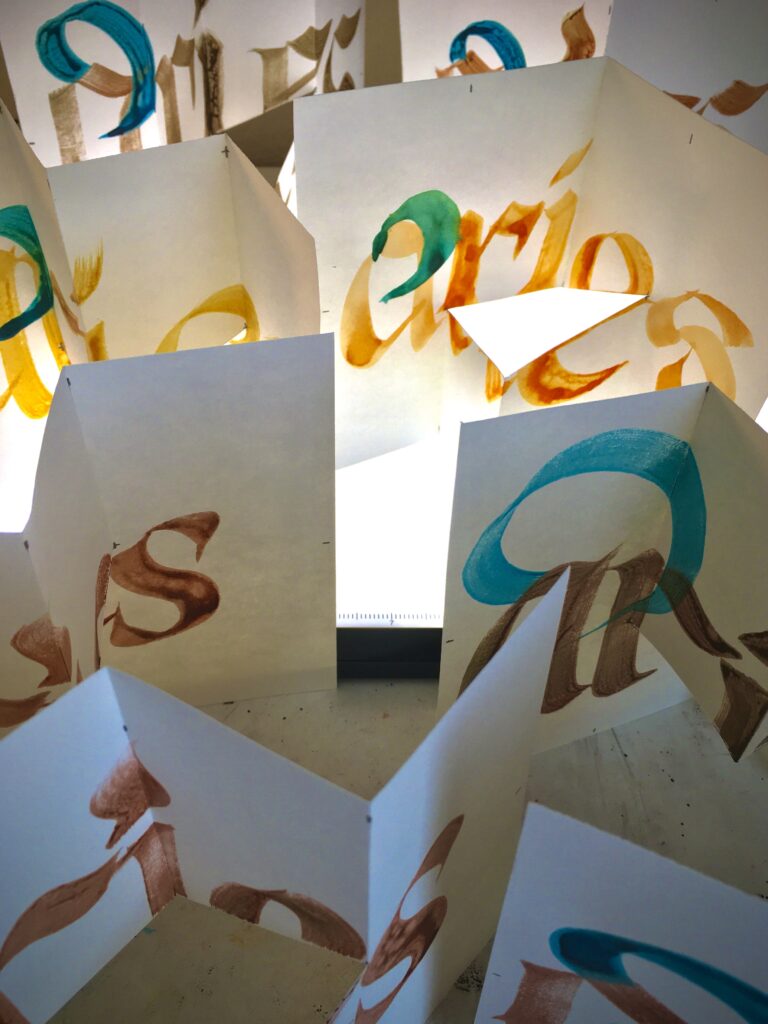
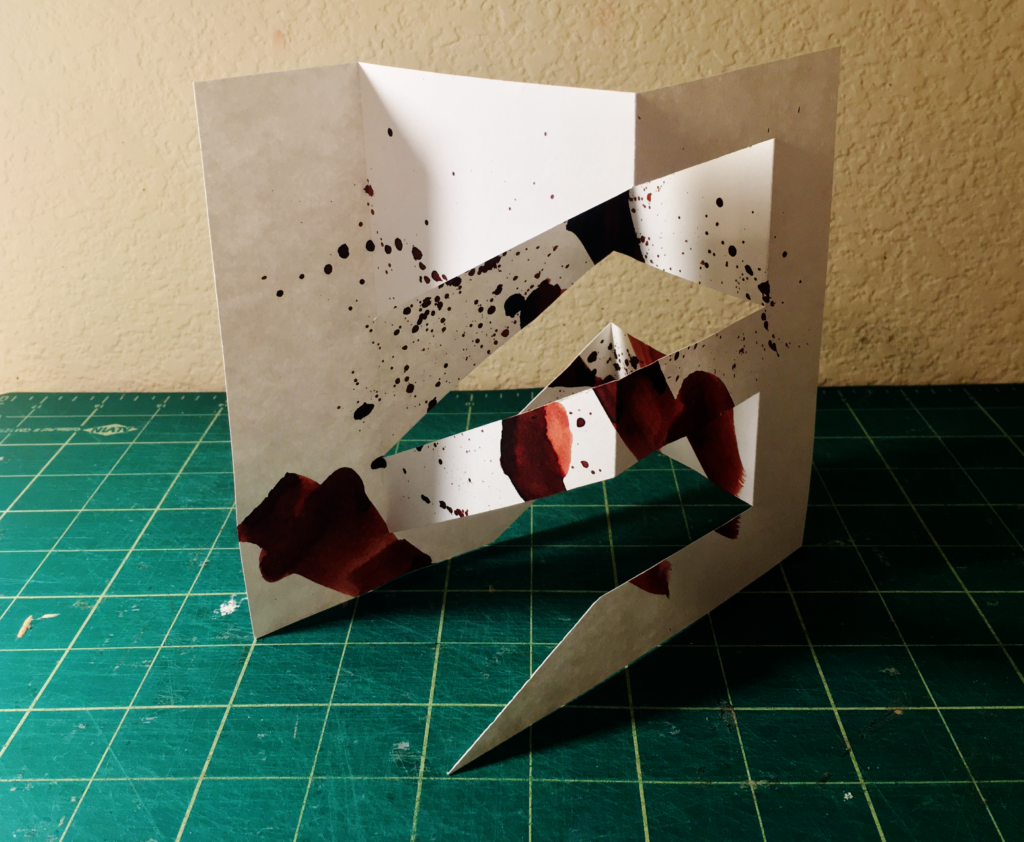
With this I detoured heavily into the world of pop-up cards. We bought Paul Jackson’sCut and Fold Techniques for Pop-Up Designs for the boy’s birthday, but I stole it as soon as I saw it. There would be a few more 5WP’s, but dealing with the third dimension and the constraints of the paper sucked all my creative energy for a while.
After summer, I returned to flat paper with the ruling pen but focused on a single word at a time. I’d like to return to poetry and pop-ups (and maybe both at the same time!), but struggling with a word itself is challenge enough for now.
,
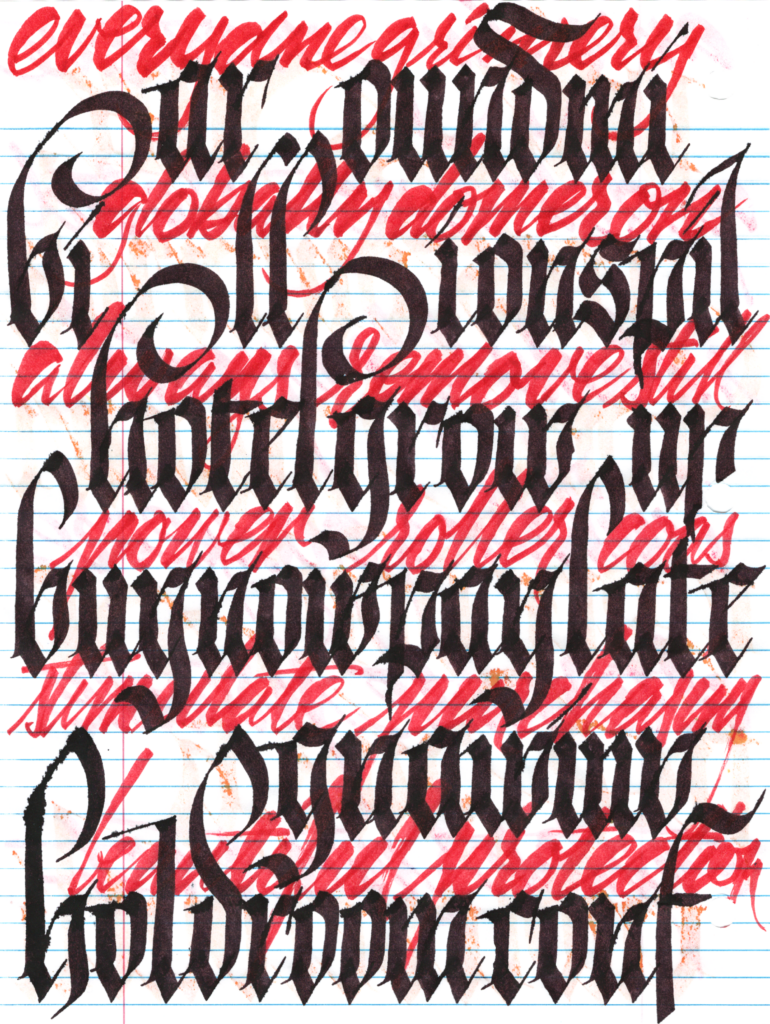
As we head into this season of year end summaries, it’s interesting to think that this post covers the first half of 2025 with my “standard” 5WP format, practicing with a brushpen on ruled binder paper, and folded pop-up cards.
The second half of the year (assuming no surprises after I draft this in late October) was dominated by the ruling pen, a month off due to illness, embracing a focus on just one word at a time, and finally pushing out some old blog drafts.
I wonder what the new year will bring? All I know is that I don’t.
It’s gentle, but dang if your arms don’t get tired! And it’s easy to crank it up if you’re feeling it.
For me, it is cultural tourism, exer-dancing with a group from the exotic orient. I guess it’s not totally foreign since I’m of Chinese descent. The music is familiar, even though I don’t understand the words to the songs. While the megalopolis Asian urban setting is strange, the faces are not.
I would prefer to hang out at the local Kung Fu gym for my exercise. But that time that has passed. I don’t have time to slip out to practice with kids who are a just a few years older than my children.
Unfortunately, Tai Chi by myself gets old after a while, but partaking in the kitschy music and oddly familiar foreign group movement with the family is a nice change of pace for a day’s exercise.
—May 2021
,
PPS—Rubber Balloons
My daughter wanted helium balloons for her birthday, but we ordered a bag of regular balloons from Target.
She quickly got over her disappointment after my wife inflated a couple of them. Human air doesn’t float, but gravity makes for play. They spent a couple of hours batting them around the house. Up and down the stairs, over the dividing walls, in the bedrooms.
I hadn’t heard the boy laugh like this in a while. All over fifty cents of rubber.
It pained me to think of all the kids who can’t afford such a fleeting luxury. And I was reminded of a fellow father riding in the Vegas heat with a foil balloon for each of his kids.
—October 2021, soon after, they discovered the manual mattress pump. We had hours of fun inflating the balloons and letting them fly through the house.
.
PPPS—Pac-Man
Our daughter is growing up fast. She was reading a book with snippets from American History and asked about “Pac-Man”.
We watched YouTube videos and played Scratch versions of this classic. I also explained the concept of “arcades” where people had to pay coins to play computer games, and how the value of a quarter has been debased over forty years.
This weekend I pulled out a “Pac-Man Connect and Play” that plugs into the TV. Even though they didn’t enjoy Pac-Man, the boy loved a driving game where you left oil spills to spin out the pursuer. She preferred a flying game shooting coins out of the air.
After TV time was up, we played Pac-Man in person, using deflated balloons for the smaller buttons and inflated balloons for the ones that made Pac-Man eat the ghosts.
Then we took another YouTube break for the The Go! Team’s Ms. Pac-Man music video. That led to watching more music videos, TV advertising, and discussed how TV used to be appointment viewing.
Basically, we covered the last half century of American culture in a weekend through a yellow lens.
Long ago, boardgaming was my primary form of entertainment.
I would read rules while riding the bus into downtown Houston for my corporate gig. I was trying to internalize the rules and visualize the game experience. Of course, great games stand out because they create complex dynamics that can’t be visualized in a steel tube crawling through city traffic. But what’s the alternative? Buy a game without thought?
Beyond the acquisition decision, this turned out to be was a powerful mental exercise. I was focusing on a complicated text in a variable environment, applying words to a future self. In mentally playing a game, I sat in each opponents’ chair, visualizing their competing interests—different goals leads to different actions, creating that elusive the gameplay dynamic.
Years later, I’m doing the same thing as with contracts tackling difficult situations. The stakes are a bit higher, but that’s all. People generally act according to the set up. So I try to empathize with their pressures to understand their motivations. How can I navigate this mix to discover an optimal outcome?
There might have been less frivolous ways to spend the commute, but reading boardgame rules turned out to be a solid choice.
~
Some Links
Our son prefers cooperative games, and Matt Leacock is the giant who designed Pandemic that popularized this genre. In simplifying his classic for a wider audience, he designed Forbidden Island with a board made out of tiles. This twist created a game where the board would disappear over time.
He developed the idea further with Forbidden Desert, where the tiles would shift and and move. I haven’t tried Forbidden Sky, but we just purchased Forbidden Jungle. Here, the players are required to shift the board around—while managing a bunch of grouchy aliens.
This series is a fun case study of a designer developing a simple game mechanic (tiled boards in a cooperative setting) over several iterations. All three are highly recommended.
One thing going from employee directly to client is the continued awareness that we are all still customers.
In private practice, I noticed that some long-time owners had a sense of entitlement over the employees because they were paying us.
Bullshit.
Yes, I owe them my full effort while I’m there. But why do I have a heavier obligation to be grateful to this business partner? I thought this was supposed to be a fair exchange.
If the boss is doing their job, they should be making a profit off my labor. So maybe they owe a debt of gratitude.
Mutual entitlement / victimhood isn’t going to take us far. We need to reframe of our partnerships as a barter. Money is valuable, but we’re buying time.
As an owner, I’m holding the cash, but I’m taking years of these architects’ careers.
That’s a BFD.
~
Some Links
I don’t think anyone is reading this in Vegas, but if you will be partaking in Giving Tuesday—think local!
A couple years ago, we saw a performance of A Midsummer Night’s Dream at the local library and I’ve been hooked ever since. It’s awesome to watch the Nevada Shakespeare Festival perform these classics with an absurdist flair. Their most recent performance of Titus Andronicus was a dark hilarious affair with a brutal body count.
After joining government, I realized the importance of state and local news. Unlike the print newspapers (both owned by one company), The Nevada Independent is truly independent. If nothing else, their judicial election guides (surveying local lawyers about candidates) are worth a donation!
When I first came to town, I found the Lohan School of Shaolin. The kids came soon after so I haven’t practiced there in a long time, but they continue to be an anchor in this town.
~
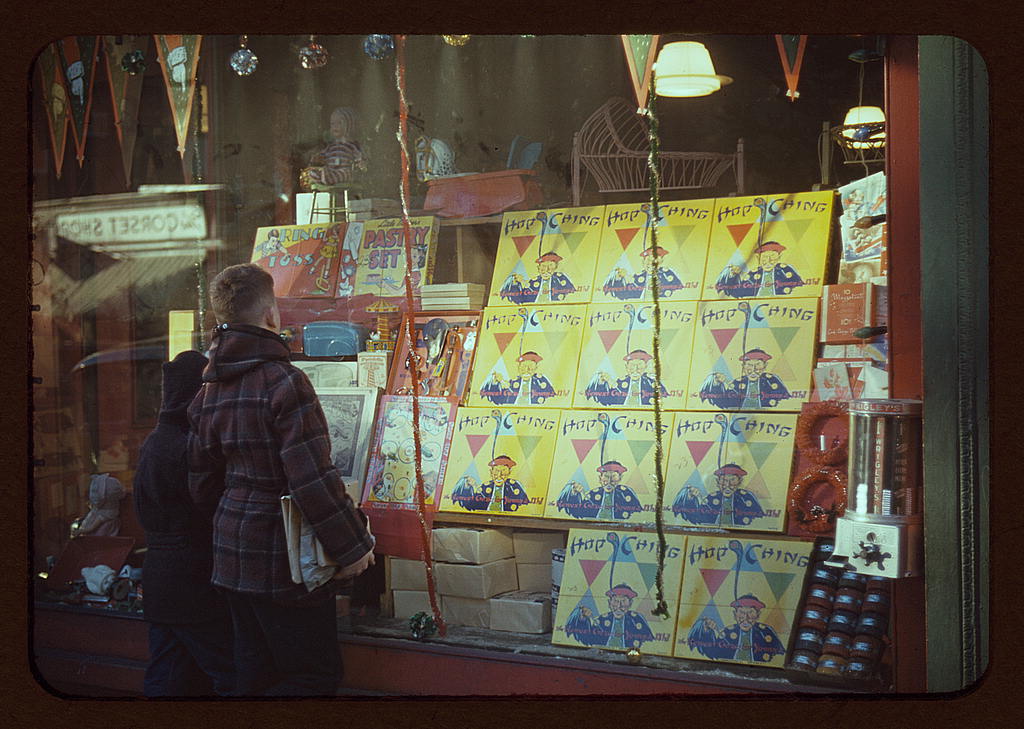
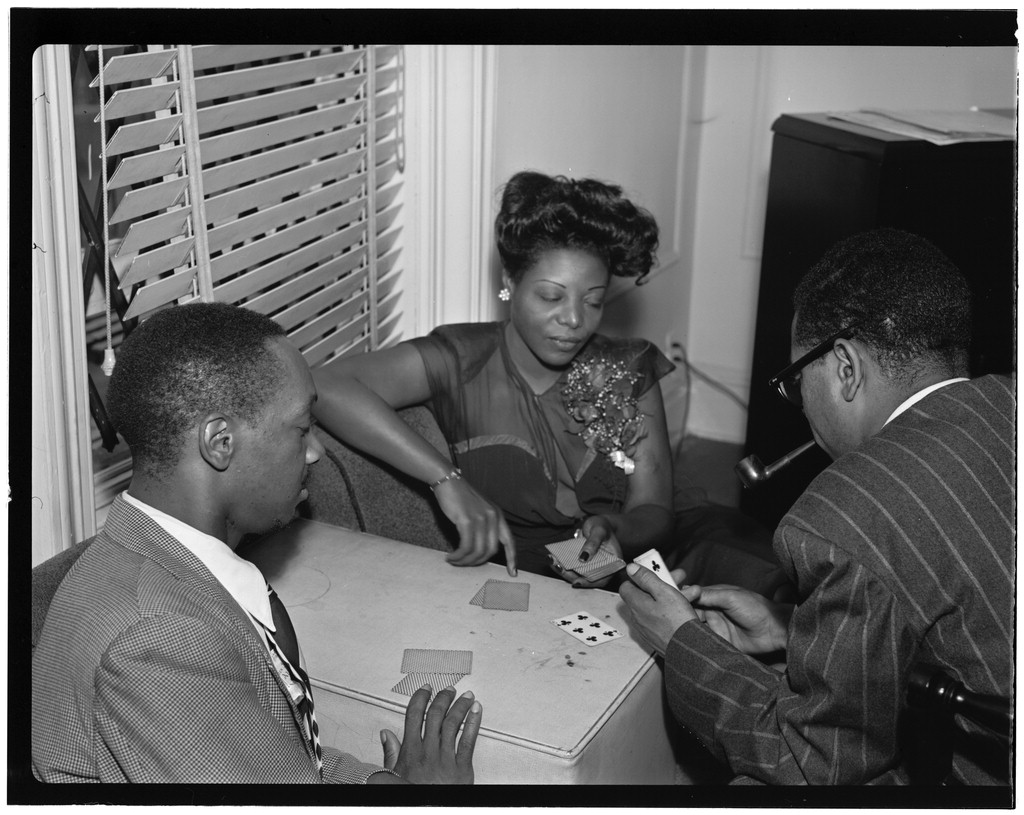
Window Display, from the U.S. Office of War Information, 1941-1942
Oh, I don’t want to watch Pokemon. Cleaning up takes energy and I only have 1 energy left.
8/28/2023
,
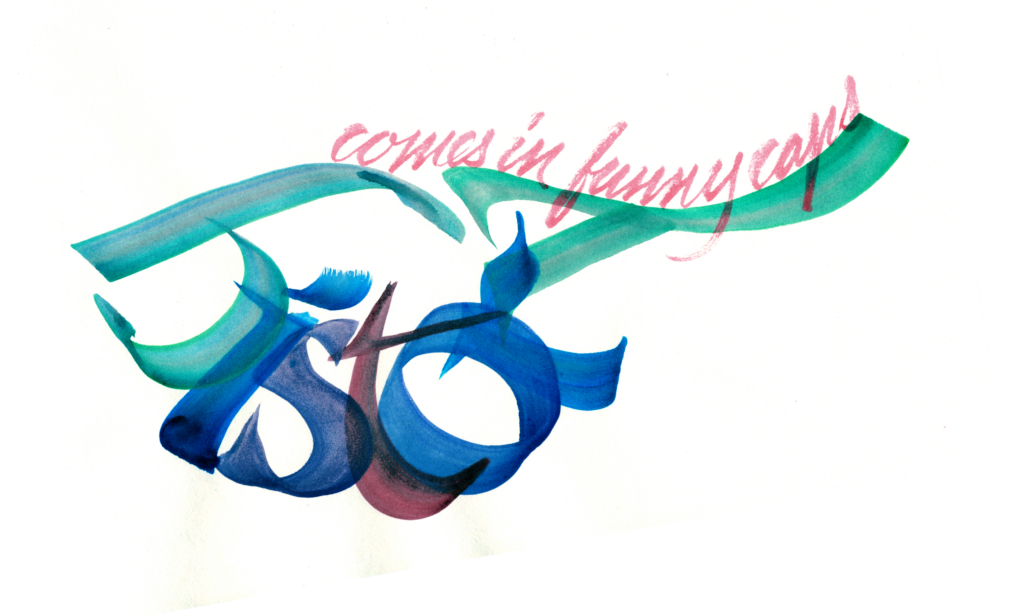
3/11 Inktober 52 (2024), week 17
history comes in funny caps
That’s a funny looking cap.
,
3/13 Inktober 52 (2024), week 16
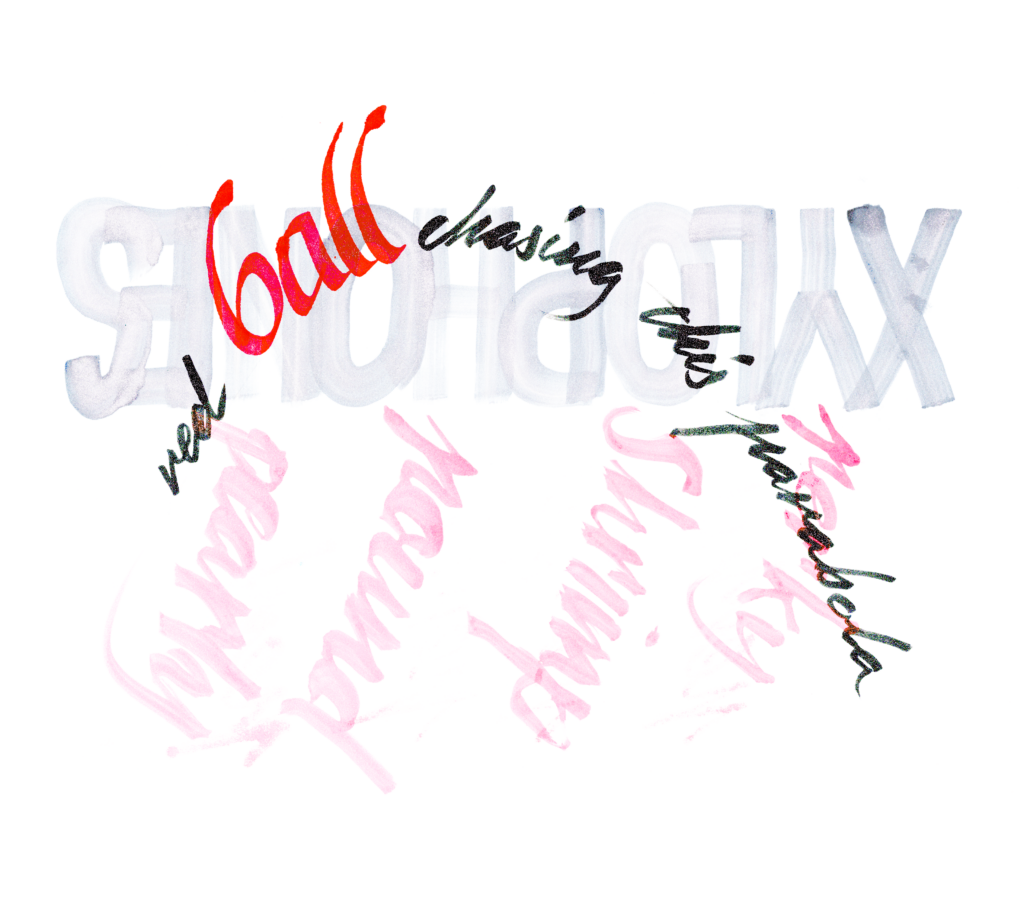
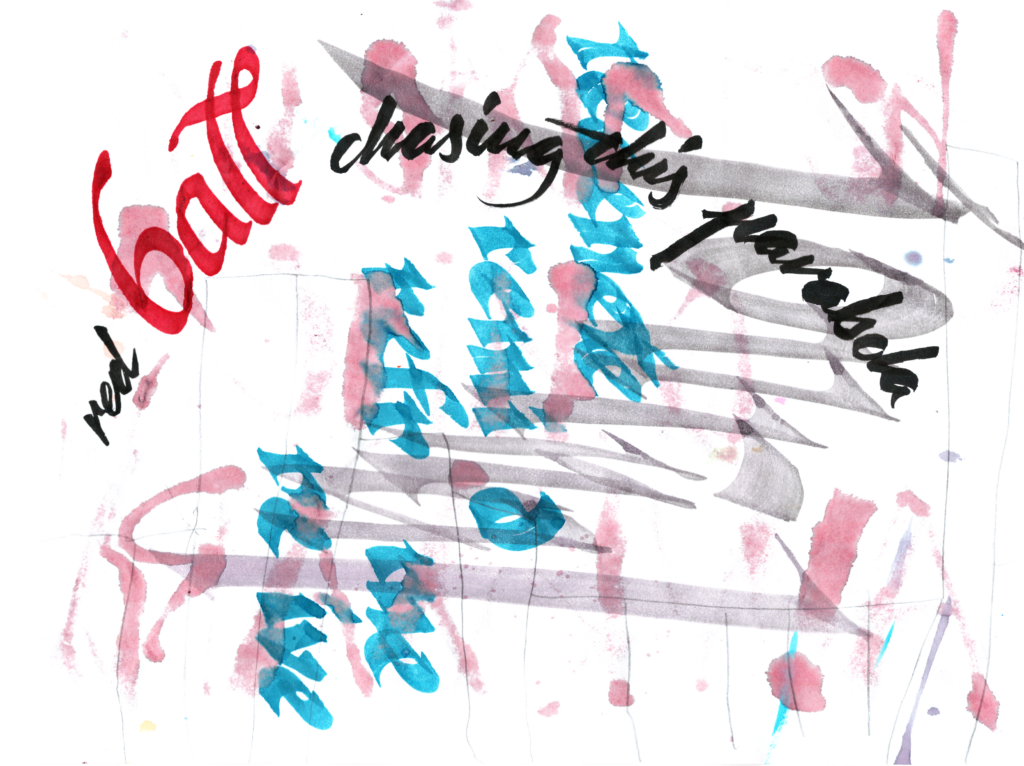
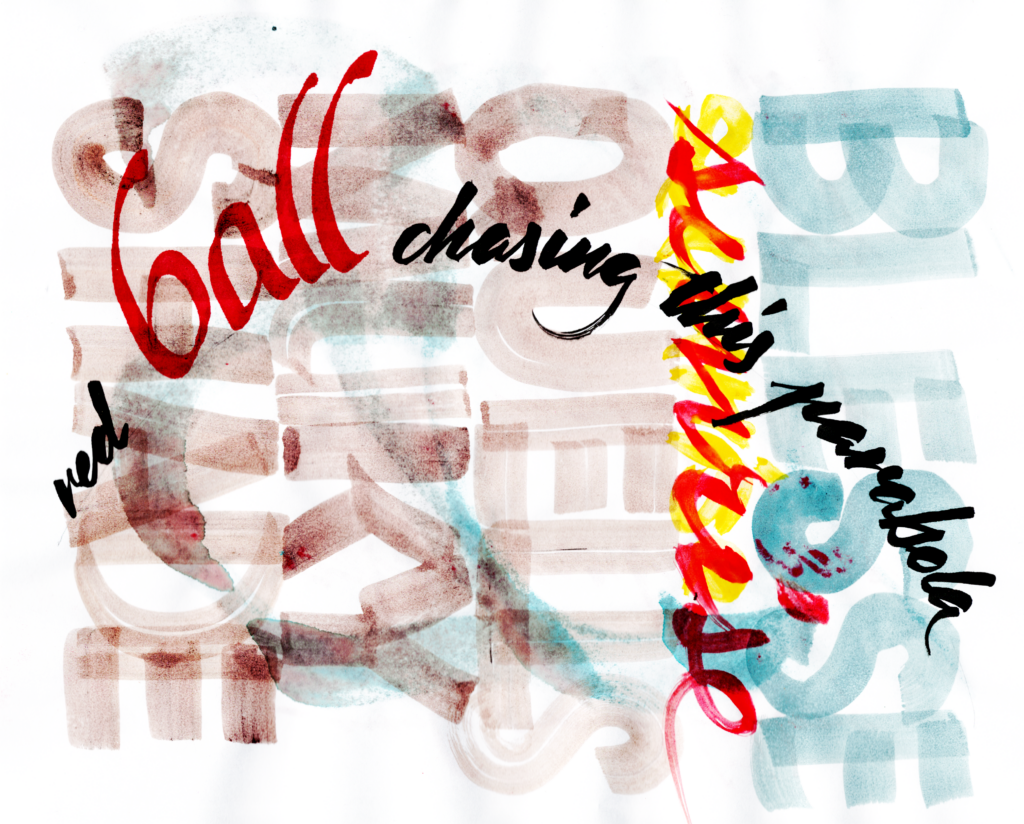
red ball chasing this parabola
I pulled the background way down for the final composition. Just enough for some visual interest, but not enough to compete with the 5WP.
,
3/14 Inktober 52 (2024), week 15
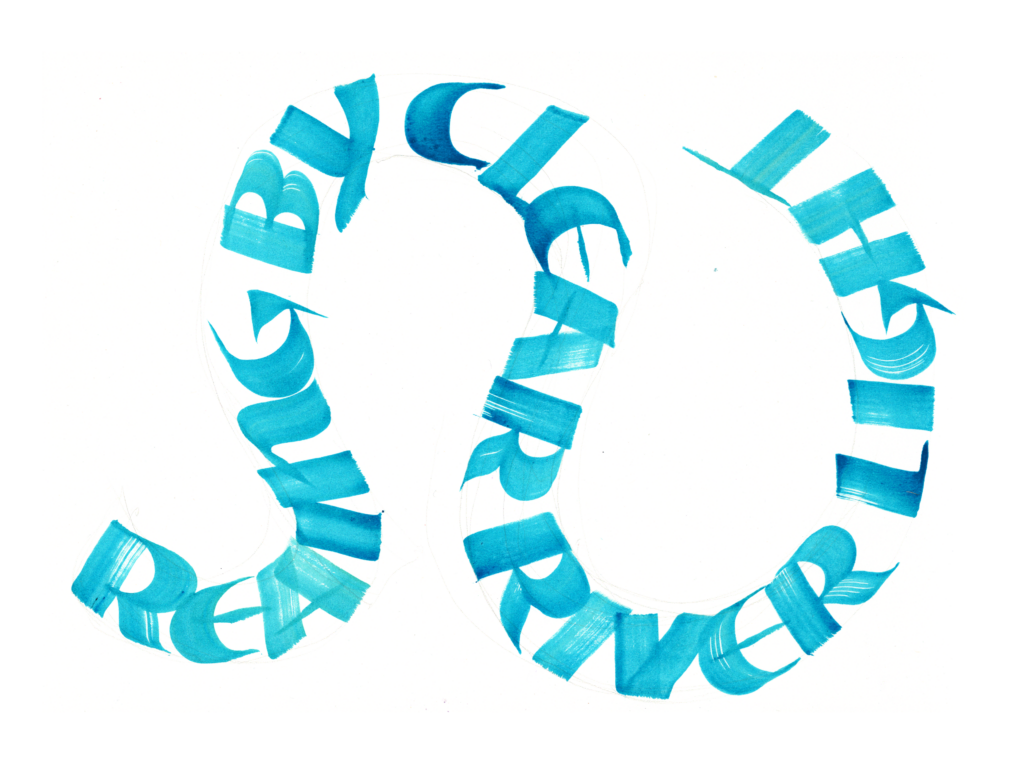
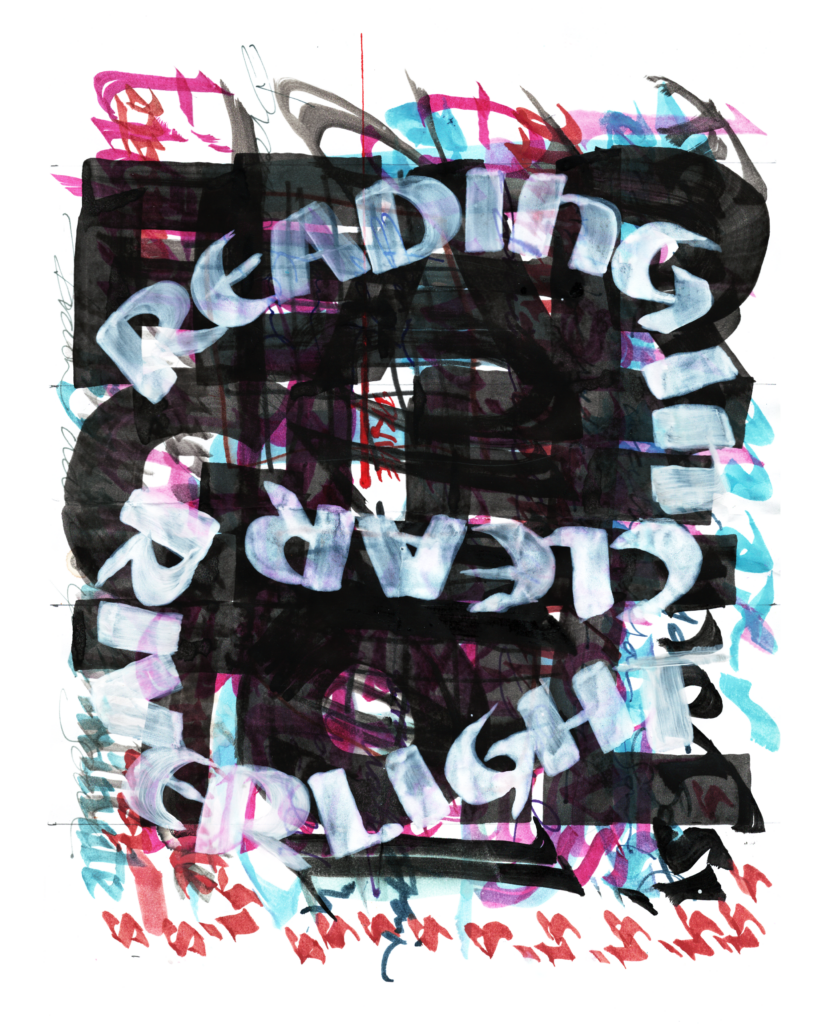
reading by clear river light
I studied abroad in Paris in the Spring of 2007. It was a glorious semester. I traveled a little, had a nice project, and spent a lot of time in the city of lights. One of my favorite moments was reading Raymond Chandler along the banks of the Siene on a glorious Sunday afternoon.
,
3/15 Inktober 52 (2024), week 14
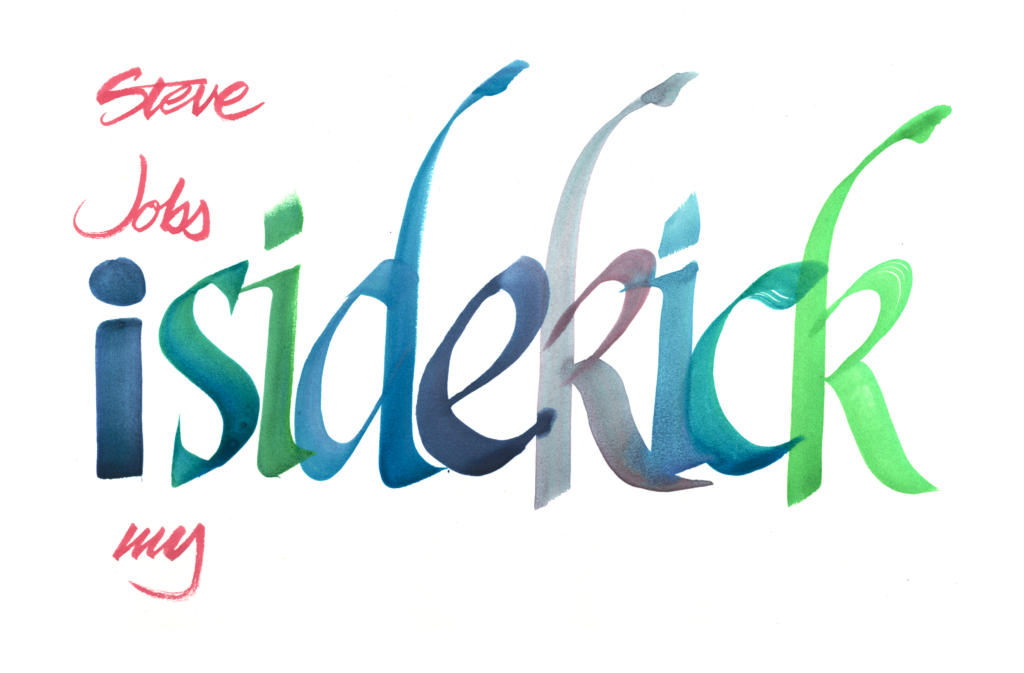
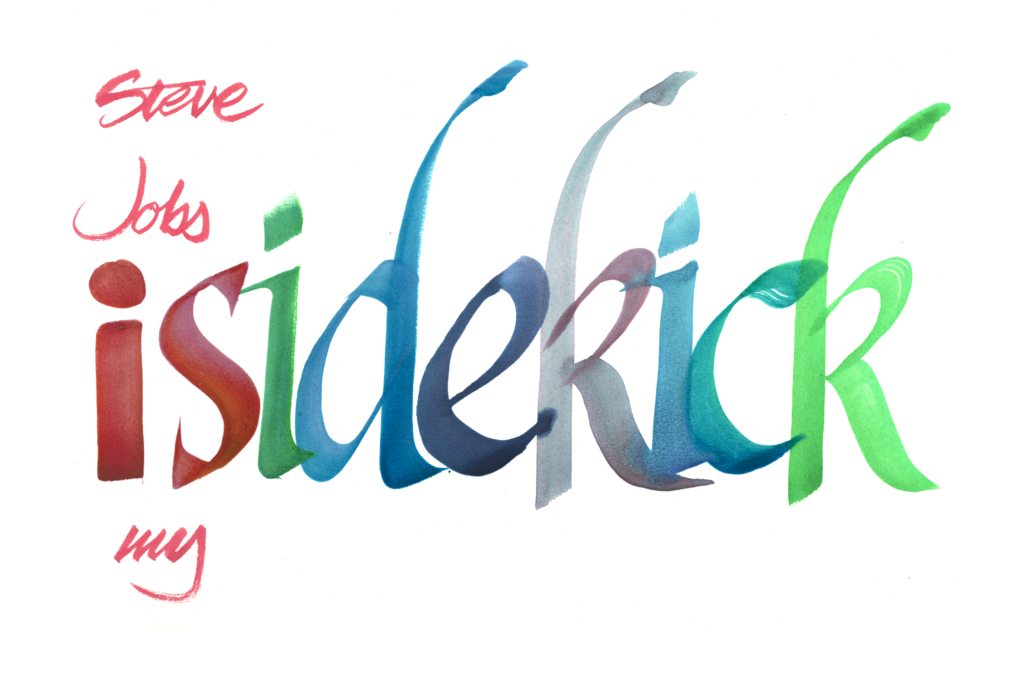
Steve Jobs is my sidekick
It’s crazy how addicted we are to these rectangles in our pockets.
Growing up in the 80’s, it’s crazy to think the guy behind the Apple IIe’s would take over the world with pocket computers, with unimaginable power and connectivity.
,
3/23 Inktober 52 (2024), week 10
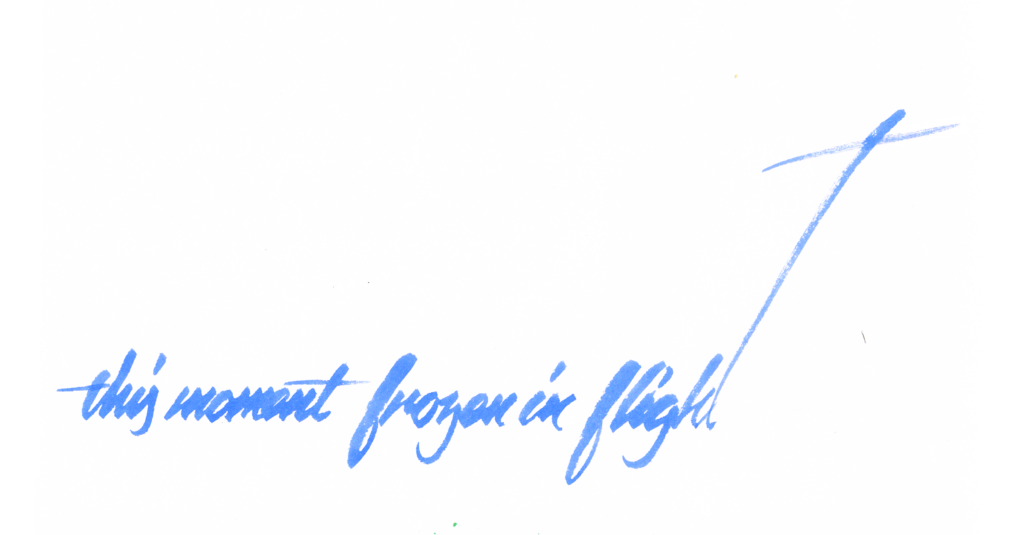
this moment frozen in flight
Once I have a good rhythm going, it’s really hard to go off script. So that last “t” was surprisingly hard, even though I had the cursive down pat.
,
I’m writing this a bit in advance, but I’ll have basically run through my second Inktober.
I’m sharing my pieces on Substack Notes and on Bluesky, but I won’t be using Instagram, where the whole exercise sprouted. I despise Zuck’s algorithms, so I’m not giving him any more “content”, especially since all I get in return are a few hearts on IG and no comments of substance.
There are very few clean transactions in this world—one day I’ll have to reconsider my usage of Substack and Bluesky, but I’ll enjoy the party for now.
Cya next time!
,
PS—Pokémon TV
It’s a kids show, boring for adults.
I was just old enough to miss the phenomena when it first hit America, but after winning a Pikachu stuffy at the claw in the Primm Outlet Mall, the kids wanted to see what the fuss was about.
Good lord, Nintendo created one heck of a merchandizing machine.
Gotta catch them all!
Toys, collectable card games, video games, books, plenty of gear, and endless TV shows!
A brilliant case study for late stage capitalism via a little yellow electric squirrel!
Pika pika!
—September 2023
,
PPS-Pokémon Go
A slight nudge to walk more Kilometers (to hatch eggs)
Kids love collecting! I had to set a screen time password on this game.
Eventually stopped using it, I don’t need more nudges to use a phone.
PPPS-Pokémon Sleep
I never tried a sleep tracker before. Interesting to see how badly I slumber.
The kids spent too much time playing with the game parts.
I stopped using it. It’s weird to have a phone on the bed next listening to me all night.
PPPPS-Pokémon Smile
Great timer for brushing teeth. Works for 44-year-olds too.
The kids spent a bunch of time with stickers until Mama put her foot down.
I brush my teeth in horse stance so my head is low enough for the iPad camera. 2-for-1 exercise!
—January 2024
,
PPPPPS—Pokémon Zeddemore (v0.1)
Years ago, I came across a single-deck format for Magic the Gathering by Seth Brown and Tom (no last name given).
After a fellow architect gave me a pile of Pokémon commons for my kids, I dusted off the ruleset to make a game out of these cards (since the little ones aren’t ready to construct their own decks).
We played it a couple of times this weekend and this format translates well to Pokémon.
Plagiarism alert: everything below is a copy of Tom’s original tumblr post with only minor revisions to adapt it to Pokémon—why rewrite rules that already work?
Winston is a draft format designed for two players by Richard Garfield. Here’s how it works:
A big shuffled deck of cards is put, face-down, in the center of the table. The top three cards are placed in a line next to the deck. I will refer to these cards as ‘piles’, because that’s what they may soon become.
The first player to draft looks at the first pile (currently just a single card) and decides whether or not they want to add it to their pool. Let’s say they don’t. They add a new card from the big deck to that pile and move on to the second pile, where they repeat this process. Let’s say they want this card. They take it and replace the now empty pile with a new card from the deck.
The second player looks at the first pile (which now contains two cards). If he wants them, he takes the entire pile – in this case, two cards. He replaces the empty pile with a new card.
If a player passes on all three piles, they take a random card off the top of the deck.
Continue until all cards are taken.
And that’s it. Simple.
What Zeddemore does is take the already fun Winston Draft, and spreads it throughout the game. You draft as you play. Your initial draws at the start of each turn become drafts.
Hopefully that gives you a sense for how Zeddemore plays, so let’s talk about how it works.
The Opening Hands
The original MtG Zeddemore starts with three rounds of drafting to construct your opening hand, which makes sense for sophisticated players. On the other hand, I’m just playing with my kids.
So I just deal seven to the hand (and six as prize cards).
And then start the first draft as the first draw phase of the game.
Changes to Pokémon
Before we start playing, I borrowed up two key rule changes dug up from the internet.
Any Pokémon can evolve into any other Pokémon of the same type, as long as the stage matches. Hoppip—Gloom—Venusaur, but not Hoppip—Vileplume—Venusaur.
You can use any Pokémon as an energy (turn it upside down to attach). The energy type is determined by the Pokémon type.
The Turns
Aside from the draw being replaced by a draft, turns work as they usually would. Drafting does, however, have one important rule. Only your first draw during your turn is replaced by a draft. Any other card drawing is handled in the usual fashion – straight off the top of the deck. You may only draft during your turn, and only once per turn.
The Deck
Much like with Cube, a bunch of cards will be needed. A great deal of creativity is possible in the construction of a Zeddemore Deck. Generally though, it follows these guidelines.
Energy – Since I use Pokémon cards as energy, there is no need for energy cards. However, this rule change came about because I wasn’t gifted energy cards. Maybe this will change at some point. (The original MtG Zeddemore recommends 25 to 30% of the cards in a Zeddemore deck should be lands, a bit less than normal, but they also start with a couple lands in their hand).
Milling – Cards that put cards from the top of a player’s deck into their graveyard are generally avoided. Players can’t lose by decking, so most of these cards simply don’t do much.
Singleton – Generally, Zeddemore decks are singleton, although this is by no means a requirement (I don’t have enough cards to go singleton, but it is a goal if I buy a bulk pack of a thousand).
Card Quality – One aspect of Zeddemore that Seth and I both hold dear to our hearts is the inclusion of both good and bad cards. I will explain the thought behind this in depth in the future, but suffice it to say that it serves an important mechanical need in Zeddemore, and an experiential one. If you have any cards that would cause you to recoil in horror if they should somehow appear in your opening hand, you should probably include them in your Zeddemore deck. Worry not – strong cards are welcome too. An equal number of good, okay, and bad works well.
Recovery – (I have no idea what is good or bad in Pokémon, but I’m keeping this here for future reference), Zeddemore has an aspect to it that can allow a player who’s ahead on the board to easily build upon their advantage, leaving their opponent in a situation that rapidly falls out of their control. For this reason, I like to include some cards that are not at their best in the hands of a player that’s winning. There shouldn’t be too many of the good ones, of course. Occasionally, players do have to lose.
Deck Search – For reasons I will explain below, cards that let you search your library, while allowed, should be approached with caution. (Unfortunately I don’t think this is suggestion avoidable in Pokémon).
Deck Size – The bigger the better. How small can a deck be? Well, you don’t want to run out of cards (though it’s not a big deal to just shuffle the discard pile and keep playing).
Random – Some of these guidelines can be ignored if players are willing to utilize the deck construction technique that is most in the spirit of Zeddemore – completely random. With this approach, not even the deck’s builder may look at the cards until the drafting begins.
Sundry – There is all sorts of other bits of advice and rules, often relating to specific mechanics, that I will share in the future.
The Graveyard
Traditionally, there is a shared graveyard in Zeddemore. This is not a requirement. If the builder of the Zeddemore deck feels that their deck would work best with individual graveyards, then that is their prerogative. Playing with a shared graveyard can make some cards better. Generally, this is fine. Zeddemore likes strong cards.
The Annoying Rules
Zeddemore alters some basic things in the game, and as such, some annoying rules are required. (Some of these rules might not be applicable to Pokemon, but I’m hesitant to delete them until I feel more comfortable with the Pokemon TCG universe)
Searching the library – If a card tells you to search your library for a type of card, you may only look at the top eleven cards of library. When done, cards that weren’t taken are shuffled and placed at the bottom of the deck. The overall deck is not shuffled. Zeddemore decks are often very large, with the number of cards currently on the table possibly only representing a small portion of the deck’s total size. Allowing players to search even 50 cards, which they may not be all that familiar with, for the one card that would be optimal for them, is simply too slow. Searching 500 is a nightmare. It would also run headlong into one of Zeddemore’s greatest strengths – an exploration of the unknown. This rule makes many cards worse than they would otherwise be. Generally, this is fine. Zeddemore likes bad cards. However, cards that will often not do what they say they’ll do can piss off almost any player. Tread lightly.
Card drawing – As already explained, additional card drawing never gives you additional drafts.
Card ownership – A card’s owner is the player who most recently drafted the card. This rule can be especially important with shared graveyards.
Tucking – Cards that are put on the bottom of the library or are shuffled into the library, should be put on the true bottom of the library. As already stated, the portion of the deck currently on the table may not be the full deck. In my case, it never is. Most of the library sits in a box, waiting to replenish the cards on the table. Rather than turn the timing of this replenishment into something that can be ‘gamed’ (a short library might advantage one player), never consider a portion of the library to be the full library. Cards that are put on top of the library, or in the top portion of the library, work like normal.
Drafting – The game essentially pauses while a player is drafting. Abilities can not be used. Cards that continuously reveal the top card of the library don’t work until the drafting is finished.
More on drafting – A single draft counts as a card draw, even if that player drafted five cards.
The Play
(a benediction from Tom)
And now it’s time to play Zeddemore. Zeddemore is fun. Seth, myself, and the dozens of friends that have tried it can attest to that. Something else Seth and I can attest to, however, is that not every game is fun. Sometimes a player won’t get the lands they need. Sometimes a bomb can’t be answered. What Seth and I found, in our marathon sessions of Zeddemore, was that these games ended quickly. The great games, though, the ones with shifting board states, barely-answered bombs, and the skillful deployment of some truly sub-par cards, can last quite a long time, especially in our memory. I hope you have as much fun with Zeddemore as we do.
Revisions
If we play this game more (which hasn’t happened in the past eighteen months), I’ll make a freestanding posts with updated revisions. However, I suspect, this moment will be a relic of a moment, as I continue (unsuccessfully) my quest to be a boardgamer dad.
My contractor’s PM informed me that their project engineer gave notice to join another company. I called my architect to inform her of the upcoming change, but the project engineer had already called her.
Construction is a collection of organizations who combine into a temporary team. Of course we are all responsible within our own verticals, but it goes best when silos are broken with horizontal bonds between the individuals.
We were lucky that everyone on this project nurtured these relationships. I love that they were close enough to directly inform counterparts when big news broke.
Of course, I would have preferred that he stayed, but I’m happy that my guy found a better job. Hopefully we’ll cross paths again, soon enough!
~
Some Links
These three have enticed money out of my wallet more than once.
Annie Hendrix is a multi-talented threat—a musician, an author, and a hilarious follow on Notes. I’m looking forward to her upcoming book of poetry.
Daniel makes lovely letterpress prints from his studio garage from Indiana. If you’re looking for a nice gift, check out his Etsy shop. If you want to see him in action, PBS interviewed him a few years ago.
Duane Toops is a collage artist whose pieces always delight. It’s even better to feel the layering of these pieces in your own hands.
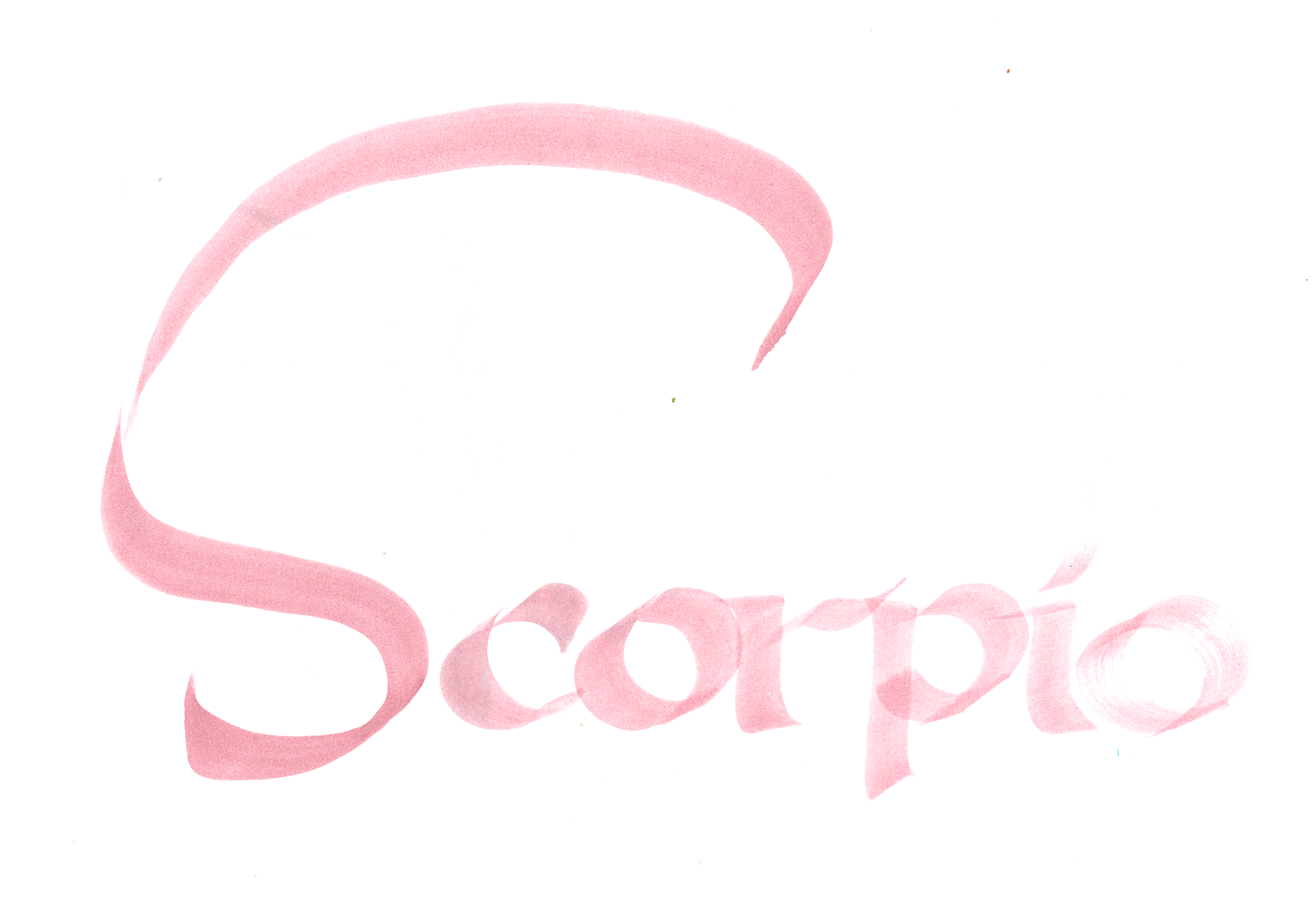
I occasionally moan about taking multiple attempts to lock in a piece. Since I’m only doing this for fun without professional obligations, I quit when I run out of steam in a session. Otherwise I’d be taking exponentially more shots to get something right.
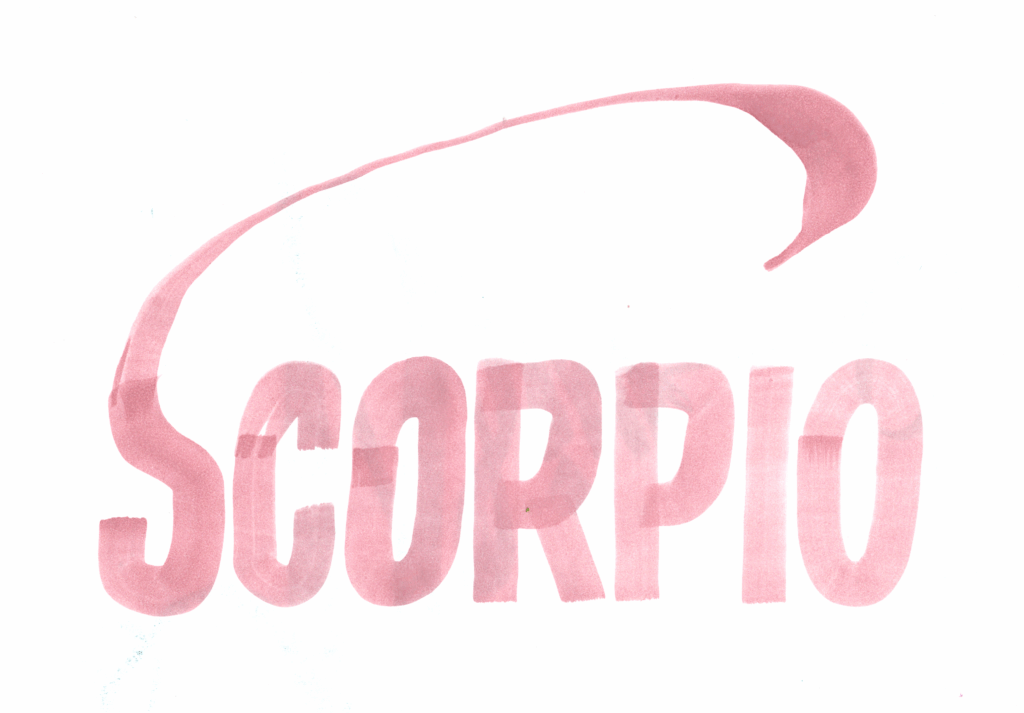
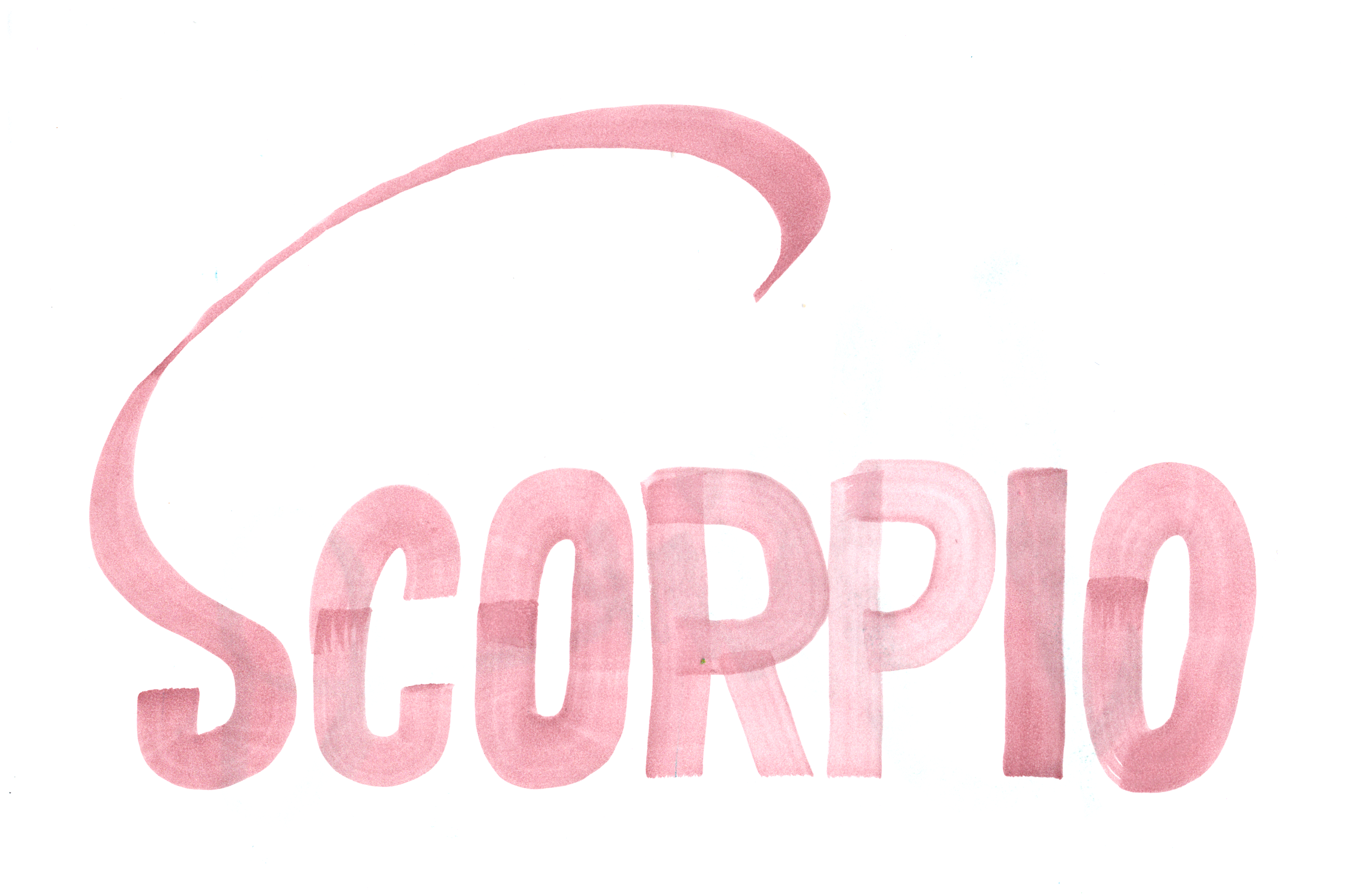
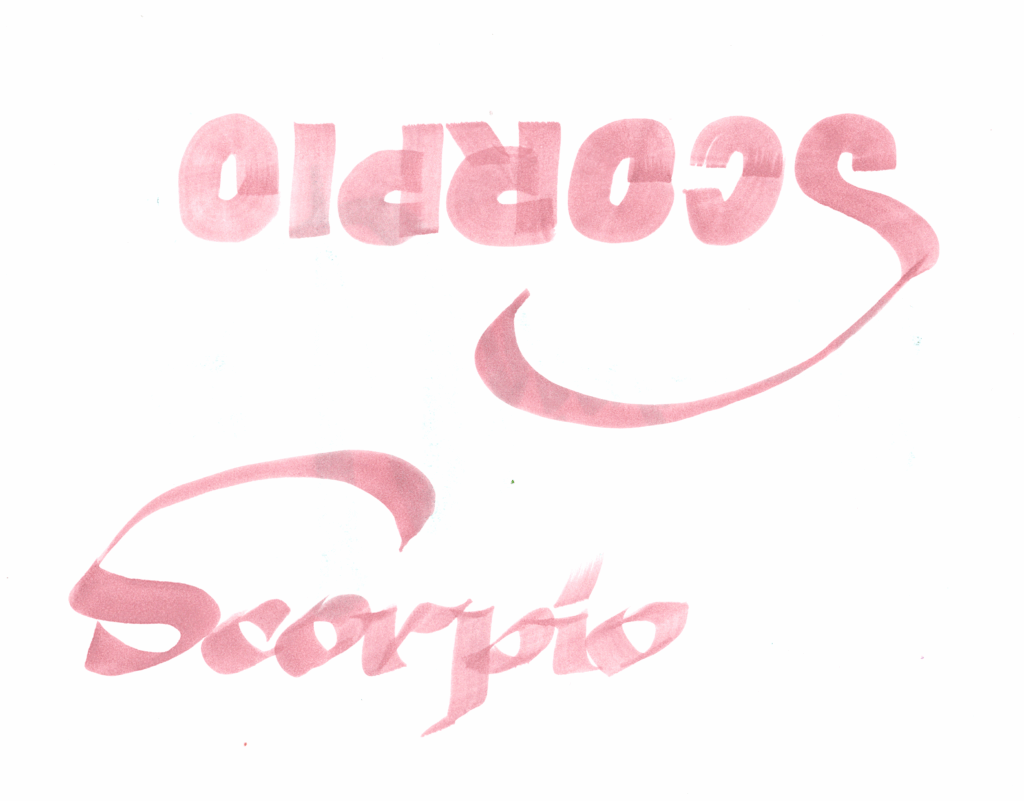
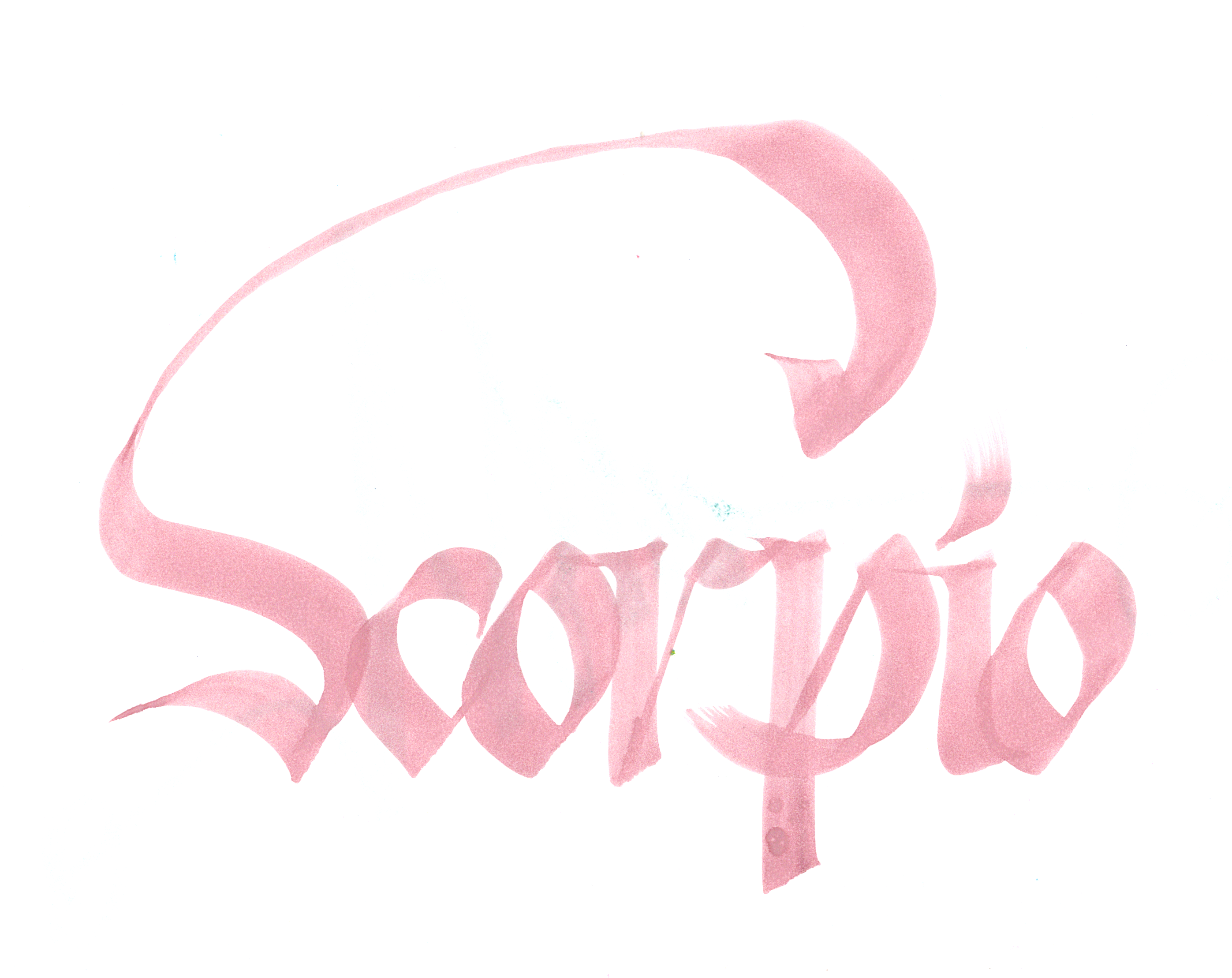
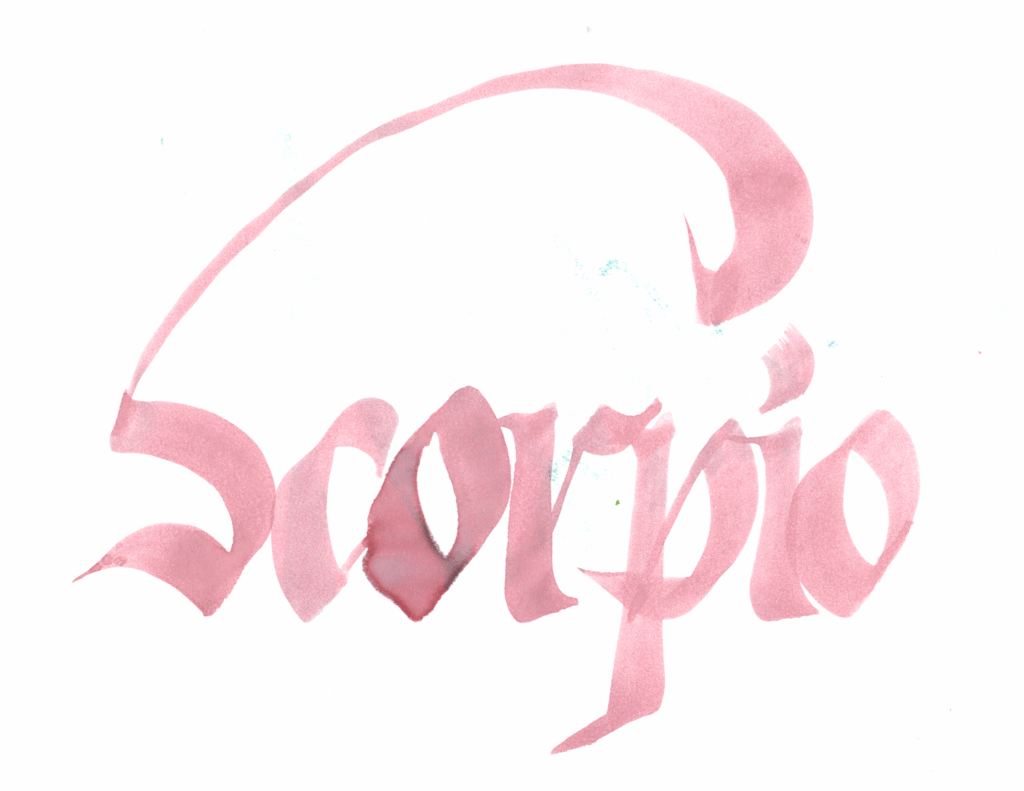
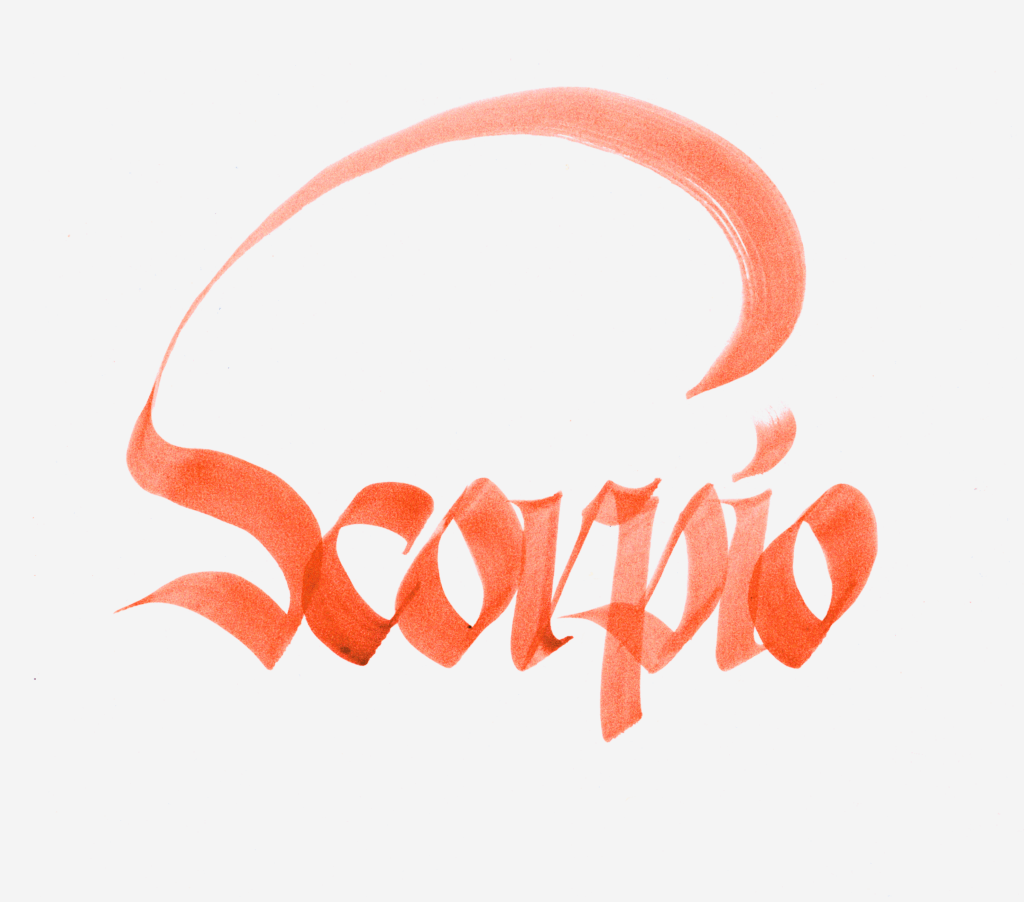
After testing Scorpio a few times on pre-used sheets, I had a decent run of attempts on blank sheets. I took them all downstairs for final selection, but my deciding brain wasn’t working that morning.
So I scanned them all for this blow by blow commentary.
I’ve need to practice the foundational hand again. But a rounded script wasn’t right for this prickly creature.
Still, you gotta try an idea a few times, to make sure it’s a dead end.
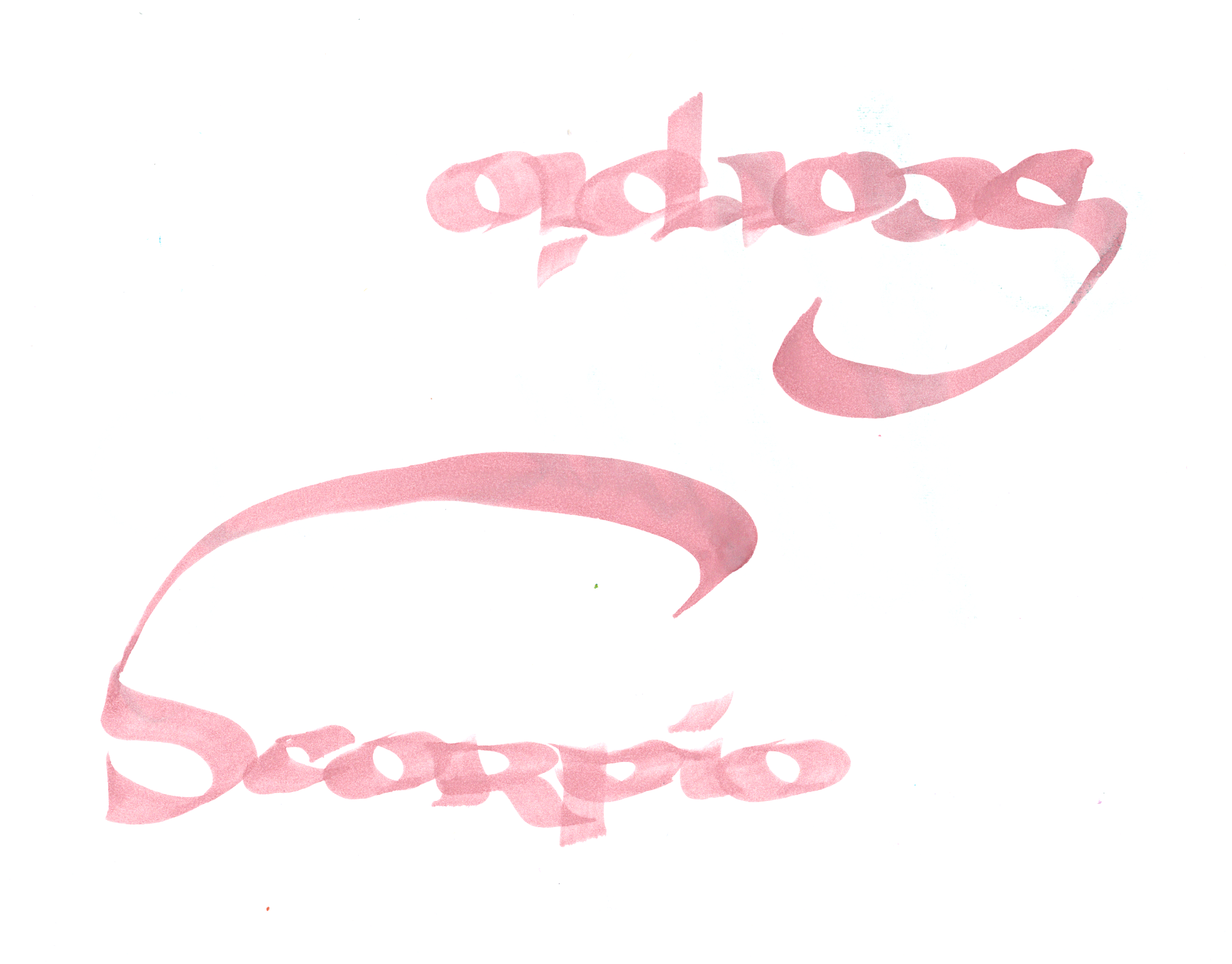
I next tried a sign script. It was a fun challenge to morph the blocky S into a swoopy tail. I was hoping the contrast might look cool, but it felt chunky.
I love the transition on this S to the swoop, but you can see where I lost concentration on the last O.
On the top piece, I tested compressing the script, but it felt even more chunkier. I went spiky with gothicized italics, but with a twist by going wide. I’ve been trying to figure out wide pointy O’s, but that wasn’t getting solved that morning.
I like how the glitch at the stinger makes sense for a scorpion but left too much space between the R and the P.
I dipped a bit too much water for the O, otherwise I might have picked this one even though I don’t love the joint at the S.
I preferred the stingers from the previous two examples, but the letters and spacing came together nicely, which is are the most important aspects in this digital age. Once scanned, I pushed the color towards a punchy rust orange instead of the faded brown from the children’s watercolor set.
So there’s 10 attempts at a word. I suspect more folks should share their process and their failures. So here is my contribution to rectify this absence. Maybe I’ll get really good one day and won’t have to take so many attempts for each prompt, but that’s a problem for next year.
We were curious about the plants in grandma’s backyard—there’s an app for that. Take a photo, identify the plant! Easier than hitting the big red Staples button, and it’s almost always right.
Amazing, until I remember watching my landscape architecture friends slaving over flashcards preparing for tests. Now it’s a camera and an internet connection. Kind of scary!
Is the the future? The prophets of AI have been warning us that automation is now coming for us. (I wrote the first draft in 2020, before ChatGPT became famous!)
I suspect that my generation, those landscape students who are now a quarter century into their careers, will be spared the worst of it. Our kids won’t be so lucky.
How do I help them become useful producers in this brave new world?
The obvious answer is to minimize the menial work in my job. If it’s easy, someone will automate it. Focus my energies on the difficult, squishy parts of work. Like figuring out how to create deep relationships with my team, to dance through problems with firmness and grace.
Of course this is a bummer. Crushing a simple TTD list feels so good! But too gorge on fluff and some OPM-AI app will push me into an early pension.
~
Some Links
John Parshal gives an intriguing presentation on the different tank manufacturing systems between the Germans, Americans, and Soviets. (The full conference session about the Kursk is worth a watch.)
Dr. Robert Citino asks “Why Did the German Army Fight to the End?” The sobering answer is because they kept fighting. As much as we want to blame one man, everyone played their part in that machine.
On a completely different note, a surreal scene of a gunfight capped with a Nick Cage directing one of the gunmen to shoot a corpse, “his soul is still dancing”.