I stumbled across this podcast via this excellent animation of his review of the Lascaux Caves.
The concept of the podcast is very neat. Every month he writes two short essays about life in the human world and rates them on a five star rating. He slips in a well written commercial between the essay (not the usual canned stuff, these are actually worth listening) and ends with one random fact that didn’t fit in one of the main essays, along with a small audio bonus.
It is a joyful little podcast. The two subjects allow for delightful juxtapositions, with a smattering of trivial knowledge keeps the podcast light even when it veers into some heavy territory.
Like all NPR offerings, it comes very close to being unbearably precious, but he’s managed to avoid crossing that line in the episodes I’ve heard so far.
I would say this is one of my favorite podcast finds of the year. I give it four and a half stars.
I heard about this book on an interview of Brian Koppelman on the Tim Ferris podcast. Brian recommended this book highly, and it makes sense given other books that he recommends. This memoir is the non-melodramatic version of the War of Art, which makes it a far superior book.
There is very little about writing in this book, but when Murakami talks about writing, it pops. Especially when he takes a couple pages in the middle of the book to discuss the three key ingredients to making it as a novelist – talent, focus, and endurance.
That passage alone is worth the cost of the book if one is an aspiring writer.
I’m not an aspiring writer, but I am an occasional blogger and a slob who has always known the need to get off the couch and start exercising.
He doesn’t glamorize running either.
Running is both the subject and the metaphor.
Put one foot in front of the other. Again and again.
He doesn’t claim any particular epiphanies during his runs. He just enjoys the solitude of running. But that is quite comforting as well.
As I’ve broken forty, I’ve become a better at getting bored. During this quarantine, I’ve started talking walks on a regular basis. Just a mile or two sprinkled with the occasional 10k.
It’s nice to exercise without expectation, not waiting for the runner’s high or some special insight. Just log a few more miles, one foot in front of another.
Coda: As pedestrian as this book may be, it has resulted in three key decisions. Few books can claim such an impact on my life, even if it only lasts a short duration.
I’ve decided to read the entirety of Murakami’s english-translated ouvre. His writing is so forcefully delicate, personal and piercing, that I need to read it all. I had considered this exercise years ago, but his books had not yet been widely translated. They are now, and I have no excuse.
I’m quitting self help books. I’ve known for the longest time they are the junk food of non-fiction prose – quick easy reads that makes you feel like you’ve accomplished something but invariably leave you empty after a few days. Just as John Maxwell quit reading for pleasure to focus on his study of leadership, I am going to quit work related reading so I can focus on life.
I think I will refocus this blog with a new tag line “thoughts on my consumption”. My excursion into daily blogging last year was an interesting practice, but without a center the experiment felt rootless. “Write every day” may be a rule that works for many people, but I found myself being starved of input, since I was spending all my free solitude keeping up with the next blog post. “Write about any book that I’ve read” may result in a better balance between input and output. It doesn’t require constant output, but it doesn’t allow the blog to lie fallow for extended periods. Plus, it also addresses my great fear of becoming merely a passive consumer. We’ll see where this goes!
I revisited Count Zero, the second of Gibson’s Sprawl trilogy, for maybe the fourth or fifth time since I first read it in college.
It’s odd to think that I’m further from my initial reading of the book than my first reading of the book was from its publication date. I guess that’s life, it keeps moving forward, but some artifacts keep staying along for the ride, and Count Zero is one of them.
This book is the tightest, cleanest, and meanest of the trilogy. Almost a novella compared to its older and younger siblings. That’s why I love it. It feels effortless. It’s a story that says plety but doesn’t try to tell you anything.
It seems odd that I still enjoy such a simple rip roaring genre yarn as a middle aged adult comfortably ensconced in the desert with a prototypical family of four. But then again, I’m not any more sophisticated than my collegiate self, just more willing to embrace the same old dopeyness.
Certainly nostalgia plays a big part. The heavy, physical tech brings warm memories from computer class elementary school, descriptions of cyberspace resonating with flashy MTV logos, even as the direct neural connections of jacking-in seeming so gauche in this wireless age.
As I walk around my Vegas suburb thinking of the book I just reread, it seems the real world has ended up closer to the gleaming spotless clones of Star Wars prequels, but during this time of pandemic, it feeling that the decrepit barbarism of Gibson’s Sprawl is just around the corner.
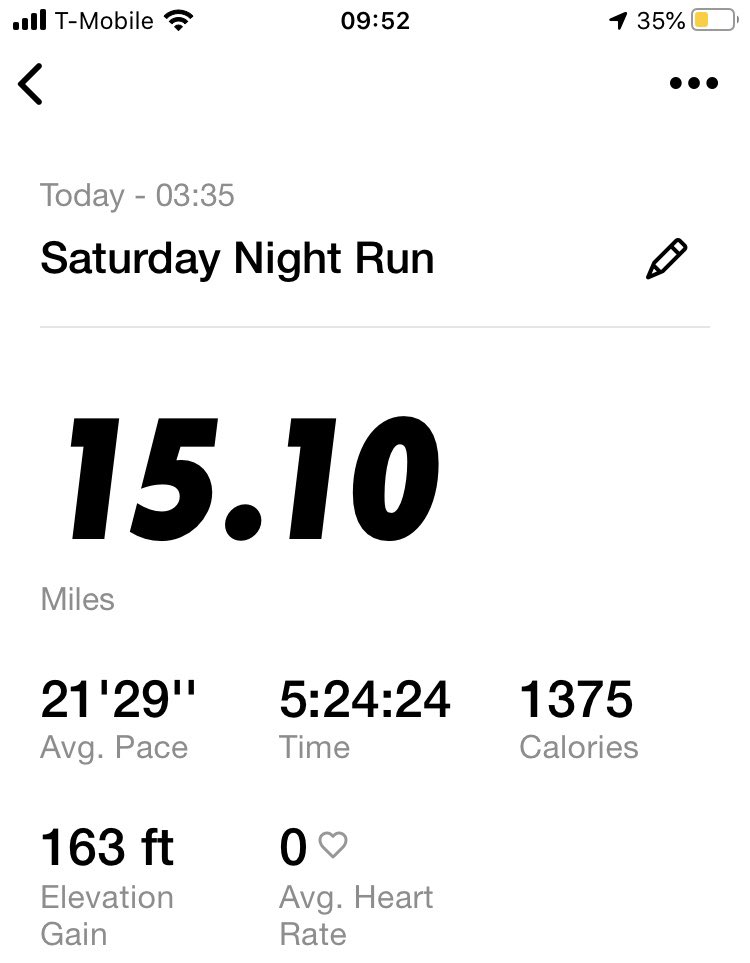
Aside from bragging about the minor achievement of placing one foot in front of another for an extended period, there were a few thoughts that popped up into my head as I spent five and a half hours on the road that morning.
Even though this was a simple task, not everyone has completed a half marathon. I’ve never done a “13.1” before, but I’m pretty sure I’ve logged more miles in a single day on foot while being a tourist. So anyone can do a half!
But realistically, not everyone can do it. Such an act implies both the ability walk and the freedom to wantonly waste six hours. A half marathon is a luxury. I might indulge in a little credit for my decent health, but most of it is good genes and good luck with a family support structure that let me wander off one long morning.
The week before the half marathon, I walked a 10K. I started that challenge by pushing for a faster pace. However, my body quickly sent me warning signals. After a mile of the uptempo pace, I paused and realized that the goal of each stage of this Quarantine Quartet was to finish each stage. Sometimes it’s easy to get caught up with style, and if you can do something better, you should. However, it is important to stay clear on the primary goal of an endeavor.
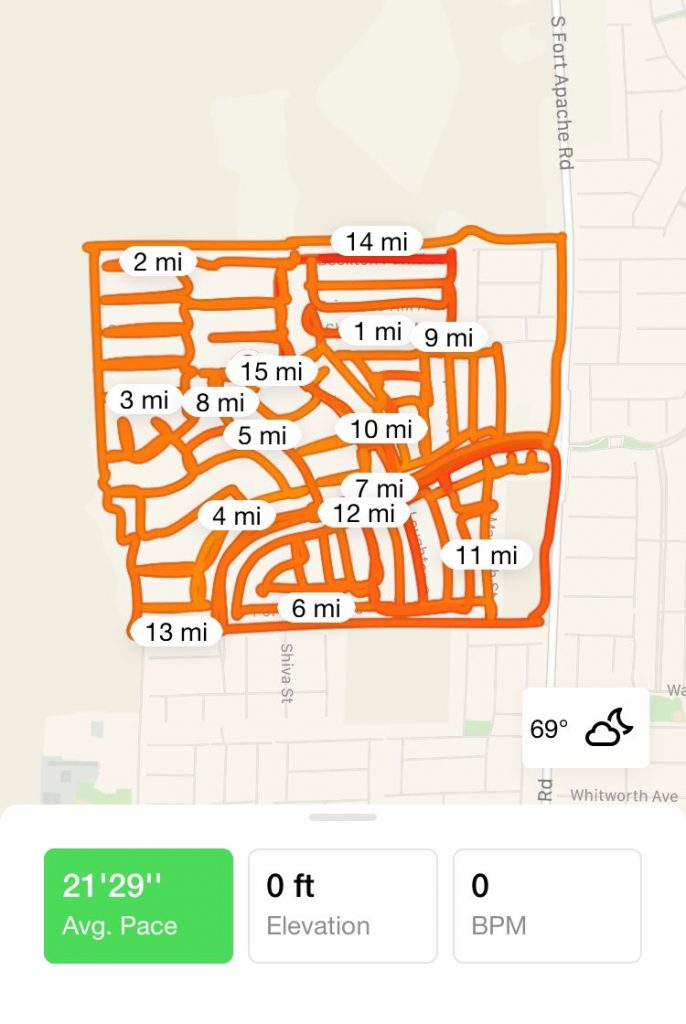
With the previous week’s lesson in mind, I paced myself during this half marathon. After walking all the interior streets of my neighborhood, I had completed 12.30 miles. At that point, I could rewalk some interior streets and stop at the minimum distance, or I could take a loop around the entire subdivision, which would end up around 15.1 miles. Since I had maintained my leisurely 21’30” pace, I had the energy to go two miles over the top! Sometimes, keeping a little in reserve will still allow you to finish in style.
I’m not sure if I’ll ever indulge in such an activity again, but the Quartet was a good experience, especially since it introduced me to the hills behind my neighborhood. More importantly, it was a reminder I need to walk and exercise a bit every day. I didn’t need this twitter challenge to know that, but sometimes a silly spark is what is needed. Let’s hope the flame keeps burning.
Four weeks ago, I saw a state assemblyman propose a quarantine quartet on twitter. The first challenge was innocuous enough – just a one mile walk.
The second week was a 5k so I hiked the hills behind our new neighborhood.
The third week was a 10k, so I took an longer looping route in those same hills, going in the opposite direction.
This morning, I finished the final challenge, a half marathon, where I walked all the streets in my subdivision.
In all, I guess this is a case of willingly succumbing to online peer pressure. But hopefully the good kind.
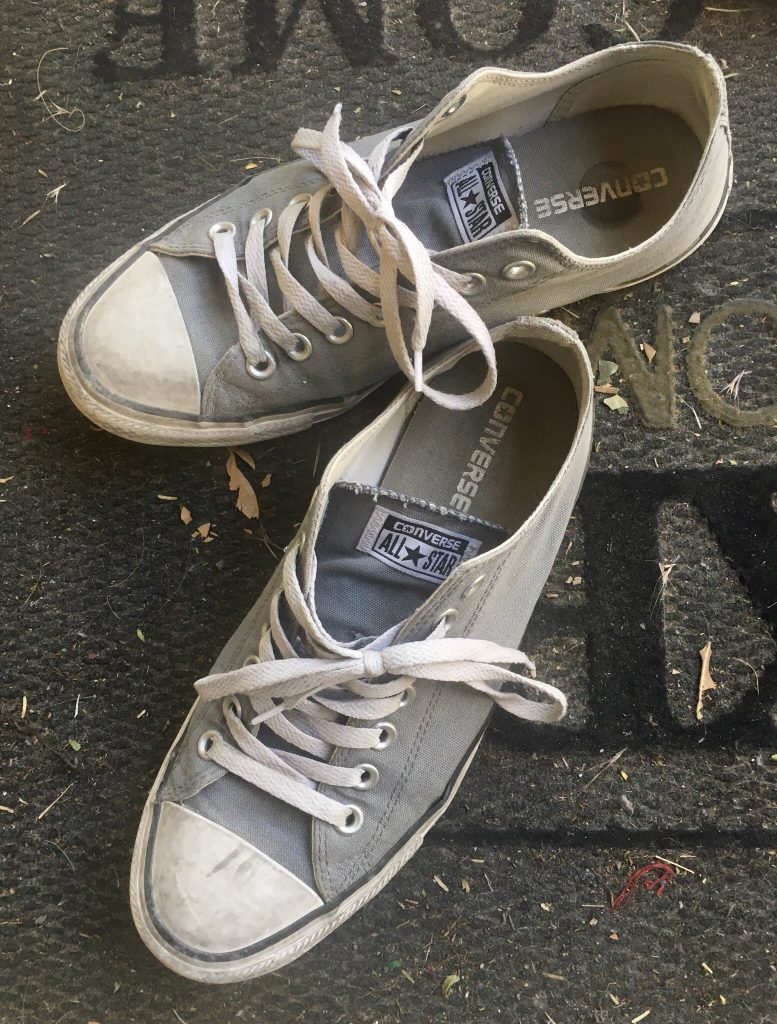
Here’s the Huntington!A note of thanks to Jordan Harbinger whose podcasts accompanied me for a couple hours in the middle of this long walk. Silence is good, but five and a half hours is a long time!One final shoutout to my Converses, that had no say in this matter and got dragged around the neighborhood for a total of 28.44 miles
After a facebook acquaintance posted that he thought we were overreacting to COVID, citing a recent Oxford Study that estimated the Infection Fatality Rate (IFR) at .1% to .36%. So I fell into the trap of playing armchair epidemiologist. First, percentages mean nothing without comparison, so I dug up a website from the CDC that says we have 12-61k deaths for 9.3-45M of symptomatic transmissions.
Just doing a rough average of those rough numbers results is 36.5k deaths for 27,150k symptomatic infections. Which is a symptomatic IFR of .00134 = .134%
However then I realized that Oxford study included asymptomatic cases. So I dug around a little more and found a couple NIH articles on the issue. The first one is a bit complex, but the second one said that 1 in 3 flu cases is asymptomatic. As such the asymptomatic IFR is roughly .048% which would would make COVID somewhere around 2x to 8x as deadly as the flu.
edit: I made an error in that paragraph above. If 1 in 3 flu infections is asymptomatic, that means that the symptomatic flu cases are 2 out of 3 flu infections. So that would change the overall average infection count to 40,725k total infections for an IFR of .000896 = .0896%, which is a little less than the low end Oxford IFC to being 4x worse than an average flu.
The first lesson is obviously I have no business being an epidemiologist, what a minefield of numbers, charts and percentages! (But I have to admit it was fun to mess around with the numbers for a bit this fine morning!)
The crux of the question is “should we keep flatlining the economy for something that is 4x worse than the flu?” If our hospitals were fully stocked with PPE and ventilators, I’d be open to the idea of getting the economy back up and running. There is definitely a balancing act between letting a few people die versus keeping the economy flowing, after all, we don’t shut down the economy for the flu.
Then again, the flu doesn’t result in global shortages of medical supplies. With the continued panic in the medical supply markets with the feds and states getting into bidding wars, we’re clearly not ready to reopen yet.
I suspect we will eventually be forced to open before a cure or vaccine is found. However if I’m gonna die of COVID for the great American Economy(TM), it better be due to co-morbidities, bad genes, or shitty luck — not a lack of PPE, equipment, or hospital staff.
And this is may be the greatest disappointment of the moment, because I don’t think we’ll be ready when the time comes. I fear we will have squandered the time of quarantine for no good reason.
Postscript: Lest the first half of the post lull you into a false security. Another of my friends posted this stark analysis from the Washington Post. Basically, COVID was logged as the 2nd highest cause of death in the past week, only after cardiac arrest. Whatever magic you might be able to spin using percentages, you can’t get around the body bags.
Over the past few months, I’ve been experimenting with a “wet-grind” method that my wife suggested one morning. I soak wheat berries for about 8-12 hours at 160% hydration. Then I just blenderize the heck out of them in the vitamix.
I’ve had consistently good results with for 50% berry and 50% flour breads (basically 80% hydration dough), though I have had decent attempts all the way to 75% wheat berry loaves (admittedly it took a few tries to figure out how to fold such wet dough!).
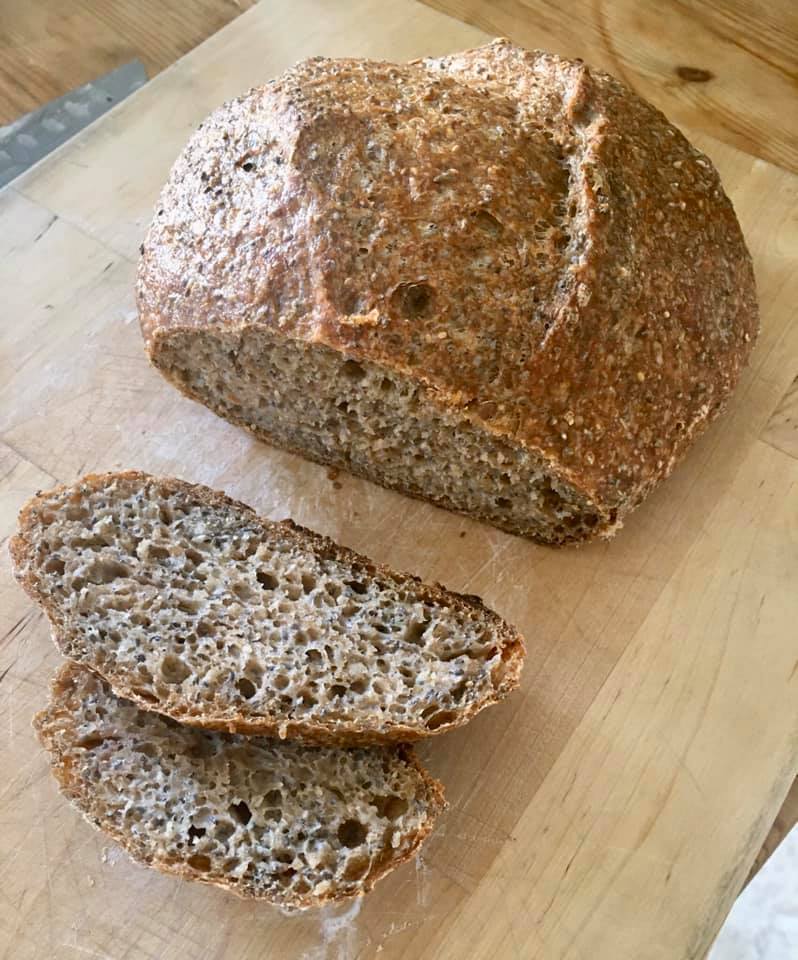
The other day I found some chia seeds in the fridge. In the past, I’ve noticed they soak up an incredible amount of water (at least 4x their weight) so I thought I’d go all wheat berries this time:
200g Berries soaked in 320g water for about half a day. After blending, mix in 100g starter (100% hydrated) With the starter, this is a 148% hydration dough. 40g chia seeds, soaking up an +/- equivalent of 160g water, resulting in an equivalent to about 72% hydration – an almost dryish loaf! 4g salt, don’t forget your salt.
And yeah it worked out really well, the oven spring wasn’t amazing (I don’t think I proofed long enough) but this was most likely the best tasting loaf so far this year.
Plus, with flour being so rare at this time, I think I’ll be doing this 100% wet wheat berry grind method for a while coming up.
We’ve done a few things that have supported social distancing on my big project, so I thought it would be worth sharing.
Weekly OAC meetings are held via teleconference. This is a no-brainer, but as an Owner-side PM, I have the leeway to maintain this practice long past the lifitng of official quarantine, which is something I will almost certainly continue.
Job walks are held in the afternoon (3pm). The late walk lets us avoid the worst of construction noise, allowing for more distancing while still being able to communicate. We have also reduced the walk to every other week, on a day separate from the OAC update call.
We are still coming out of the ground. As such, the CMAR’s weekly drone videos and aerial photos have been invaluable for groking what is happening on site without being there on a weekly basis.
To be clear, this emergency has been timed ideally for this project, given the current progress of construction. Since this is a State project, we have a full time inspector on site, and the CMAR delivery method fosters a more collegial atmosphere than design-bid-build. As such, I’m in a bit of a fantasy world which would be more difficult for smaller firms to institute. But I hope this brings up a couple ideas that may be worth requesting for your own projects.
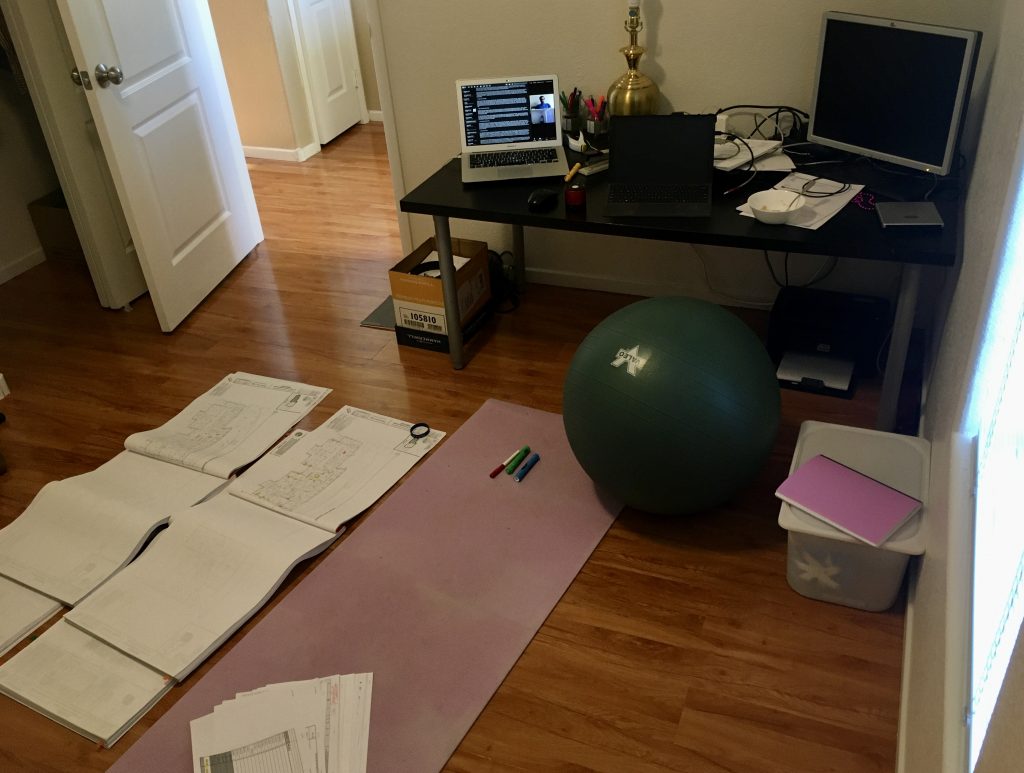
I just finished analyzing a major change order for the my building. I’ve handled smaller ones, but this is the first time I’ve stared down a quarter million bucks in bite. Before sending out comments to my contractor, I thought I’d type up how it went, since this week-long push has been a good distillation of various tactics that I have found useful for tackling an unfamiliar, scary project.
Jump in and thrash around.
When confronted with a new and difficult task, the first danger is analysis paralysis. The best antidote is to start by assuming the initial efforts will be wasted. Knowing the first few hours are inevitably suboptimal, I am mentally free to just jump in. The sooner I jump in, the sooner I’ll to cobble together a better strategy for completing the project.
Unless there is an obviously better first step, a good default is to categorize a project into smaller pieces, so I started last Wednesday evening by sorting out the subcontractor bids. But I wasn’t done thrashing around yet. Thursday morning, I started analyzing the first couple bids. Only by jumping into the deep end did I realize that I was missing a critical item. It is hard to analyze changes without the original. I needed to get an older set of plans from the office.
Make room to breathe.
I didn’t have an opportunity to go to the office till Sunday, but intervening these days weren’t wasted. I spent Thursday afternoon and Friday clearing out a bunch of little tasks and emails. I spent Saturday doing absolutely nothing, we often underestimate the important of rest! On Sunday I picked up the plans. Even though I did not do anything on this project, these days were critical days that set me up for the big push. It was important to recharge my energy and have the confidence that there weren’t any urgent work fires while I spent the next few days offline.
Eat the biggest frog first.
Monday morning was got chewed up with random work detritus, and I finally started in earnest during the afternoon. I quickly realized I needed to step back. I couldn’t analyze numbers until I had a better grasp of the basis for these prices. I needed to grind through every line on the architect’s change narrative as well as every cloud and delta on their drawings sheets.
So that’s what I did on Tuesday. Being nitpicky has negative connotations, but it was the necessary tactic for this effort. I highlighted every item on the sheets and compiled any thoughts and comments into a detailed list. I had hoped this would take half a day, but took the entire day. However, I now had a thorough grasp of what had changed. Just as important, I was now confident in my grasp of this knowledge.
Tackle the easy ones first.
On Wednesday (a week after I started) I finally started on the main task – crunching the numbers. Unlike the previous day, I took the opposite approach and started with the easy bids first. Since I am new to being an owner’s rep, I don’t have a deep well of experience. Heck, I was still designing the spreadsheet for compiling the numbers! It made more sense to slowly tiptoe into the deep end, better to make my mistakes on little items before tackling the really complex bids. By the end of the day I had gone through analyzed all fifteen bids and plugged their numbers into my now-refined spreadsheet.
Tidy up your mess.
The last 5% of the project always takes an inordinate amount of energy to finish well, but these last steps will separate a mediocre product from a good delivery. In this case, I needed to clean up the spreadsheet. The analysis was the hard work, but it won’t do much good for the contractor if it isn’t readable. Plus, I won’t be looking at these numbers for a couple weeks before the revised pricing comes back. If I quit before getting thoroughly organized, I will waste a lot more time getting back into the numbers after my short term memory has faded. As always, suck it up, finish strong.
This effort involved quite a bit of tedious grunt work, but life is rarely glamorous. I had been architecting long enough to jump in without much fear, but I’m new enough as an owner’s rep to be pleasantly surprised at how smoothly this effort went. The opening and closing steps are consistently critical for any endeavor. The art is found in aptly playing the middle three tactics during the meat of the project. It’s a game of mixing and matching different approaches to keep progress moving effectively.
All in all, it went fairly well this time, which must be why I’m bragging about it on this blog.
Thanks to the cadre at Akimbo who accompanied me during this effort as well as the fine folks at wecoffee.io who letting me hang out in their virtual workspace while I typed this up this post.