GRIZZLY PEAR

written snapshots

Category: Life

  • Old and new habits

    Sometimes they are a long time brewing but happen in a flash. For quite a while I be been doing decaf shots but it has two major downsides – it’s not very tasty and it still has trace amounts of caffeine in it.

    Last week I decided to stop that, but the bagged mint tea was very meh. The next visit to the shop I had a flash of inspiration. Get fresh mint from on the kitchen. Throw some hot water on it.

    And boom a new habit in a flash.

  • The Garbage Work

    I have an aphorism that you know you really like something if you don’t mind doing the garbage work that comes with any job.  Its one reason I know I like architecture.  There is a lot of grunt work in the profession, but I don’t mind slogging through that stuff between the moments of really enjoyable work (for me its puzzling out a floor plan within limited confines).

    But this morning I realized its also true in other field.  I’ve been practicing tai chi on and off for the last few years, but I also have a gimpy right knee.  From the beginning my teacher said I need to just exercise that knee every day, strengthening the muscles around it and teaching it to bend straight.  Given that I haven’t done so and its definitely a limitation on how much I can practice, I’m at a crossroads.

    Time to exercise that knee.

  • First night in!

    We just moved into our new house that we’ve been remodeling over four years and change (1,479 days to be exact).

    Plenty of things to still do, but it really was gratifying to cook dinner with the girl and my wife in our own place for the first time in almost five years.

    Morning Kefir!
  • oi…so much for lunch.

    Here’s a photo of a car wreck that got in the way of lunch between me and a buddy.  At least it wasn’t her Karman Ghia and noone got hurt that day…..

  • an irascible love of the game

    On Sunday morning I woke up to a message from an old friend from Asakura Robinson Company, a landscape architecture firm in Houston.

    Unfortunately, the news was a complete shock, Patrick Chang, one of the principals, had a sudden heart attack and passed away over the weekend.

    Patrick wasn’t a principal at the time I interned at ARC, but he was one of the lead PM’s at the small office.  As I pondered my two summers with him, I realized how much I have modeled myself upon his example. He was a superb project manager, thoroughly understood the technical aspects of the profession, and could run a project to make great drawing sets. 

    More coarsely, Patrick knew his shit and made the trains fucking run on time.  He never bothered to get his license, but he was exactly what you would have wanted in a landscape architect, except for passing a couple tests.

    He worked hard (maybe too hard) but he would also take the time to talk shop at that dingy cafeteria with a big vinyl graphic of a tulip garden at the basement of 2990 Richmond. And those conversations were real.  Since he wasn’t a principal, he was honest about how things were going, both good and bad, about outsiders and within the hierarchy. He spoke truth about the firm and the profession. He didn’t have to hide what annoyed him, because he was confident in his love of the work.

    For some folks, A+D is a passion that’s obvious upon first contact.  You aren’t just an architect, you’re an AAArrrkkitect. I’m envious of those folks, cause I’d like to be super cool like that, but that just ain’t me.  I like the job, I enjoy the work, and I want to run a smooth process while banging out clean drawings. But I’m not going to be all in your face about how much I love this shit.  I mean, I do, but I don’t have to keep emoting all the time, do I?

    The phrase I kept mulling all Sunday was that Patrick had an irascible love of the game.

    He wouldn’t wear it on his sleeve, but it was obvious that this was his passion.  He loved the profession.  He loved his teammates and he loved the work, the design, the documentation, the process.  In all, I worked with him maybe four months.  Not a long time, but his example has resonated throughout my career, even if I don’t huddle up in a dark blue hoodie every time the air conditioning goes into overdrive.

    Every Christmas I send out a holiday email out to old friends and colleagues.  And every New Years, Patrick made a point to say hello back and see how I was doing.  In a couple months, I’ll send out another card, but he won’t respond.  He was the consummate professional.

    He will be sorely missed.


  • Favorite Tools

    In iterations 15 Jeffery asks a question about favorite tools.  And it made me think a bit because I’m pretty utilitarian.  Coincidentally I had just been chatting with my coworkers about my Wacom tablet, an intuos3 that I bought at the suggestion of a graphic designer friend who thought it might help my wrist pain in grad school.  Since that time I’ve been the lone soul who who has used the product in an architecture environment and it puzzles me.  Its just as fast as a mouse and I’ve very rarely ever had wrist pain (and never when its not pure CD production deadline).  And it’s still working perfectly after thirteen years of daily use.  Hard not to put something like that at the top of the list.

    At home, I’d like to say my old Nikon D40, but sadly I think its been trumped by my iphone 6s.  The sheer convenience of a cell phone has always made for a high bar, and there is a world of difference between this camera and the one that was on my previous iphone 5c.  The 5c’s low light was worse than my D40, but the 6s is much much better.  So the only thing the 6s doesn’t do is BOKEH!  And god, the bokeh on a nice shot on the Nikon 105 f/2.5 is glorious.

    Away from computer technology, I have my flair pens, just your good old PaperMate Flair(TM) pens with a small felt tip.  I never have problems with any ball bearing mechanism and I’ve never felt the need for a fine tip.  In fact in my world, a strong bold line that’s easy to scan and send is far more useful than the ability to scratch out fine details.  And these things seem fairly indestructible, the only thing that kills them is a misplaced cap or just running out of ink.

    I’m certain if I keep baking, one of my tools, maybe the dough knife with a wood handle, or one of the porcelain coated cast iron pots, or maybe the towels and stainless steel bowls I use for proofing the dough may rise to the point of significance.  But for now I’ll just leave them as honorable mentions.

  • Digging around Toy Safety Standards

    160430-i5c-2739

    On Boardgamegeek I got into a conversation about toy safety standards and ended up doing some digging around. Since I end up digging up random regs and technical standards at work, this is pretty familiar process for me.

    The question that got me searching was the anecdote that the game Flash Point was rated “12+” because the publisher did not want to pay for the additional costs for toys for 10 year olds. So I started with googling “toy safety for 10 year olds testing” which led to some dross but the following two interesting website:

    https://en.wikipedia.org/wiki/Toy_safety#Appropriate_age
    (as to be expected, wiki has their fingers everywhere)

    http://www.cpsc.gov/en/Business–Manufacturing/Business-Education/Toy-Safety/
    (as a rule always go to the federal government website)

    For those not familiar with safety standards, typically, the technical standards are written by private organizations. Then the government will enact a law that references that technical standard. So in this case, the currently adopted standard is the ASTM F963-11 (the “-11” signifies that its the 2011 edition that was adopted, which makes sense since the most recent law was passed in 2012…as an aside, the Fair Housing Act adopted the ANSI A117.1-1986 handicapped codes and have never updated the regs to reference a more recent one, most current being 2009).

    http://www.astm.org/Standards/F963.htm
    Not a bad index and summary on that page

    However the problem is that the American Society of Testing and Materials owns the copyright over their technical standards – so you gotta pay to see the actual contents. So, sometimes the next best thing is to find summaries of the standard (again via google) though now that I know the regulatory agency, I know where to focus.

    http://www.cpsc.gov/en/Business–Manufacturing/Business-Education/Toy-Safety/ASTM-F-963-11-Chart/http://www.cpsc.gov/Business–Manufacturing/Testing-Certification/Third-Party-Testing/Initial-Testing/

    That said, sometimes industry powerpoints are also good starting points because of the fact that any good powerpoint contains a miniscule amount of content, so its a very quick read.

    http://www.toyassociation.org/App_Themes/tia/pdfs/safety/TF13Seminar/Kaufman.pdf
    (from this presentation it seems that the different age levels is about chemical composition which would explain the increasing cost as you go down in age, NB this is pure conjecture)

    But going back to the CSPC, it turns out that there was a very good summary page of how things are tested at the bottom of one of the pages. (such a high when you find something like this buried on a website!)

    http://www.cpsc.gov//PageFiles/109675/testtoys.pdf
    (Not the actual regulation, but a really comprehensive document for how to test those toys and for different ages. Pictures included!)

    Now, we still haven’t gotten to the actual document at this point. So the next step is to go to one of my favorite places on the internet – Archive.org. And here’s a gratuitous plug for public.resource.org who was were important in fighting the copyright holders and obtaining the right upload scans safety regulations (because you can’t get governments to adopt a code, but then prevent the public from freely accessing said codes). So in my world, even though the International Code Council owns the copyright to the International Building Code 2012, a scanned PDF is available for download due to the efforts of public.resource.org (which I think actually buys a paper copy and then scans the paper copy).

    Unfortunately, unlike Building Codes which are widely adopted and thus end up being needed by more people and thus available online, a search of Archive.org doesn’t turn up any copies of ASTM F963-11 So I fell back to digging around with different search terms in the Archive.org search bar and “toy safety” came up with this super cool little gem.

    https://archive.org/details/ERIC_ED152405
    “Voluntary Product Standard PS 72-76: Toy Safety.” First sentence of the synopsis: “The purpose of this voluntary product standard is to establish nationally recognized safety requirements and test methods for toys intended for use by children in age groups through 14 years.” And if you look at the little two digit numbers…yup the publish date is January 1977!

    Well, that’s plenty of reading material…Have fun!
  • Sharpness is nice, but not that important.

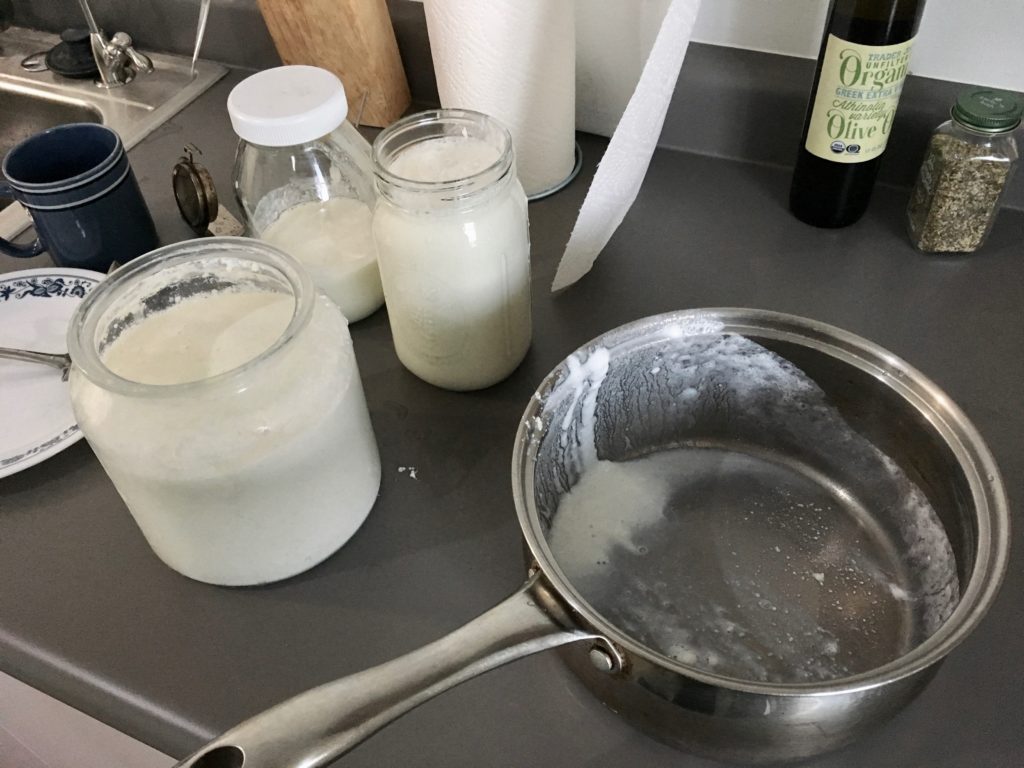
    Since I got back into the hobby, I decided to take baby photos I had previously posted on Facebook and repost them here. While doing this exercise, I also took a chance to review and tweak the photos. The funny thing is that almost all those photos are blurry. They looked ok when I posted them on Facebook, but now that I’m looking at them on my big monitor in Photoshop…Wow they are soft!

    Along with being a first time parent I was also in the middle of a remodel and changing jobs. I was so shell shocked I wasn’t even really using my DSLR then. And that’s a 10 year old D40. So I wasn’t rocking any sophisticated gear. These are “pure” baby photos – taken indoors on an ipad.

    Of course, I’d prefer that these photos be sharp. But I’d trade my sharp photos of other subjects for these killer blurry moments. And that really does hit the heart of the matter, photographs are the result of many tradeoffs. I traded the chance for a better low light SLR for the financial secuirty of extra savings. I traded the better lens and larger sensor of my D40 for the convenience of an ipad. I traded high ISOs and noise for a better shutter speed. And often I traded a sharp photo taken at the same time for a more soft photo that better caught the moment. As I’ve been reading about photography these past couple months, its become clear to me that everything is a trade. You really don’t get anything for free.

  • Your uJW  iiiilHhnbjnkllllk lll

    She says hello!

  • When making a mistake can cement your status.

    I hang out a lot on the Boardgamegeek.com forums. An interesting situation came up which made me think about expertise and authority in relationship to mistakes.

    I recently had a forum conversation with a member that I used to hold in high regard. He was a very distinctive personality but I always deferred to his opinion on games. In this situation he came in and dropped an authoritative line with little explanation. When questioned, he threw off a couple trite cryptic responses. When directly challenged, he went silent.

    I get the sense he wants to be respected for his ability to analyze games at their core. But in this case the best move for him would have been to just admit he made a mistake and explain how the mistake came about. We are all human, mistakes and misunderstandings happen. Even though we want to be right all the the time, we all know that just isn’t going to happen, especially in the free flowing and often confusing conversational environment that exists on the forums.

    While its not easy to admit you made a mistake, the paradox is that such a moment is the perfect opportunity to cement your authority as expert. Obviously, you must be right most of the time to be considered an expert, but that’s the easy stuff. The rare moments of error are the times when you can prove you are truly secure in your expertise. This is when you prove your desire to always get the right answer over being “always right.” This is when respect is earned.

    But instead, I now see this guy in a new light. I’ve always assumed his distinctive personality was a consequence of his logical approach to games, but now I wonder if its there to mask some insecurity, trying to preemptively keep people from challenging him. The internet lets you be whoever you want to be because the means of interaction are so constrained. Unfortunately we all know this, so missteps are given more weight by those around you. You can hide for only so long, who you are will leak out by your actions and inactions. You can try to maintain a facade, but we’ll wonder what’s behind the that edifice.