My boy had picked up an odd habit of skipping the number fourteen when counting to twenty, while washing his hands in this COVID shaped world.
On the one hand, that makes him a good Asian (14 is an unlucky number that is a homonym with death in Chinese). However, we have no idea where that came from because we aren’t a superstitious household.
We didn’t make a big deal about it. He hasn’t even turned three, so we’d rather celebrate that he’s nailed nineteen of the numbers on the way up to 20. Then again, we couldn’t just let this mistake stand, so we would correct him every time as he washed up for a meal.
Yesterday he got it right.
He was so pleased with himself he stumbled past sixteen through twenty.
Meanwhile, I stood at the sink, struck with a lingering sadness as another phase of his life suddenly came to an abrupt end.
-
13, 14, 15
-
OPM.000000 (Thought Manager)
Hello World!
Thought Manager
As with any project, a good first step is to start by making its goals concrete, and the aspiration of this newsletter is best condensed by this odd phrase.
I’ve been out of college for twenty years, but Architecture is an old person’s game. I’m still learning new things every day, and I’ve only been an OPM for three years.
Then again I’m embarking upon the back half of my career, so I hope I’ve got some valuable ideas worth sharing with my colleagues and the next generation of architects.
I believe that writing this monthly newsletter will force me to think sharper while providing a vehicle to connect with fellow OPM’s. In more detail, my definitions of success for this project are:
- Develop a library of work related musings for future personal reference.
- Create content that can be easily shared on my portfolio as well as email and Linkedin.
- Push myself to keep improving. I’m at a dangerous moment where I’ve developed just enough experience to become complacent. I’m hoping that sticking myself out in public every month will keep me from getting too comfortable.
Fortunately, these three goals are attainable by my own effort. Just sit down and write a few hours every week.
Ideas should be shared, not hidden. I wouldn’t be blogging if I didn’t have this bonus goal in mind – to develop an audience and spark conversations with folks I might not otherwise meet. If that happens, I think I’ll have become a Thought Manager.
~
What are your goals within this modern information-connection economy?
Hit Reply and lets chat!
~
My OPM notes from January
Apologies for the self indulgence, but it seemed fitting to start the year and this newsletter with a post with an introduction of a hundred words and ten photos.
It Doesn’t Have to be Crazy at Work is a an aspirational manifesto for a calm workplace. However, the foundation starts in one’s mindset. Calmness starts with being satisfied with enough.
Seth Godin repeatedly touts Linchpin as his masterpiece, even when he is on the book tour circuit selling his newest books. He’s right. It’s his most earnest attempt to push us to risk failure over guaranteed stagnation.
When I finished reading it, I thought Tiny Habits would be the most influential book of the year. I was partially correct. Some of its tips have helped me develop better personal habits, but its biggest influence was introducing me to the world of ebooks and revolutionizing my reading and audiobook habits.
One from the Archives
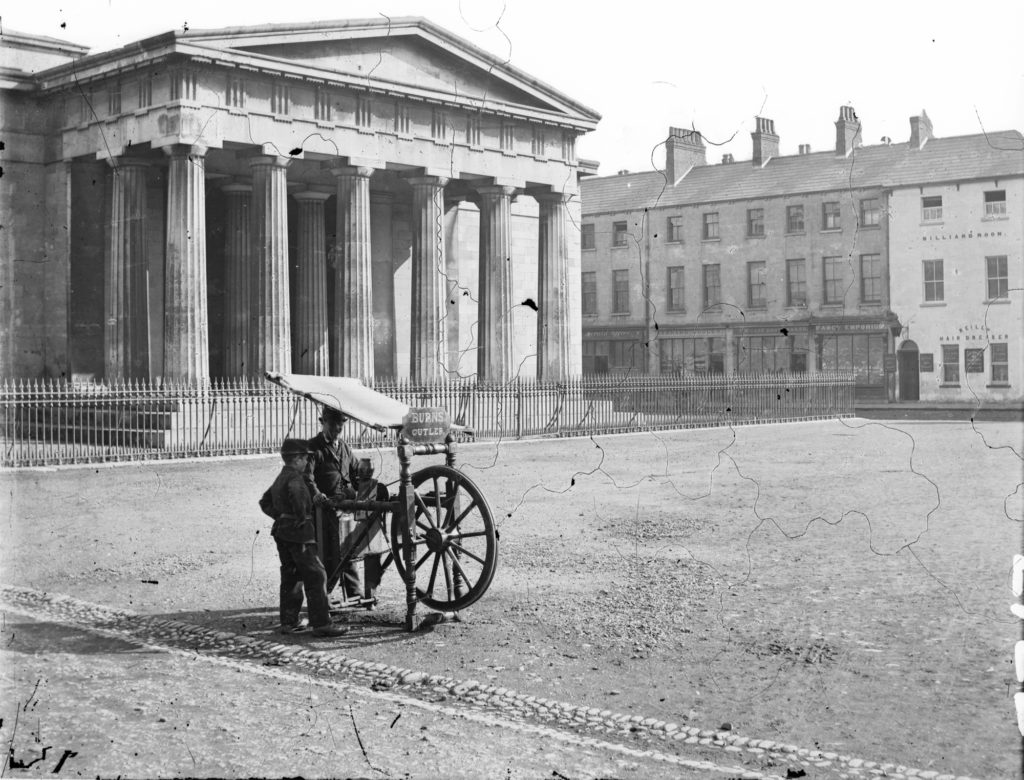
I’ve always taken a fairly personal approach to work and business. If I am doing something for the better part of my waking life, then I might as well bring my best self to this effort. However, one’s compatriots in a project are not always the most obvious folks. The conversation with the past is one of the great joys of renovating older buildings.
… and a public domain photo.
-
Labyrinths, Jorge Luis Borges, 1962
I was originally introduced to Borges via his short stories while in college. Twenty years later I finally got around to reading the essays and parables.
Wow. Just as with his stories, these pieces are tight, dense, and well worth reading. Then again, that was pretty obvious – all the adulation that could be written has already been written. Hell, I couldn’t write a collection of hosannas more effusive than the introduction at the start of this anthology.
So let’s talk about the librarian and the Librarian.
One is lionized as a god from South America, the blind protagonist in the rose. And the other is a teacher who makes my daughter excited to live with books. In this time of distance learning in pandemic, where I am an ever present spectator of my girl’s education, I now know why my daughter loves her school librarian.
Ms. Douglas brings the heat. She can control a room even over a video call, with an infectious generous energy every Friday afternoon wrangling first graders for an hour. It is a mundane display of exceptional skill.
As in my profession, there are the great and the Great.
The masters of our universe are revered in legend, but we ought to praise the vast cohort who have quietly mastered their craft, spreading the love to the next generation.
-
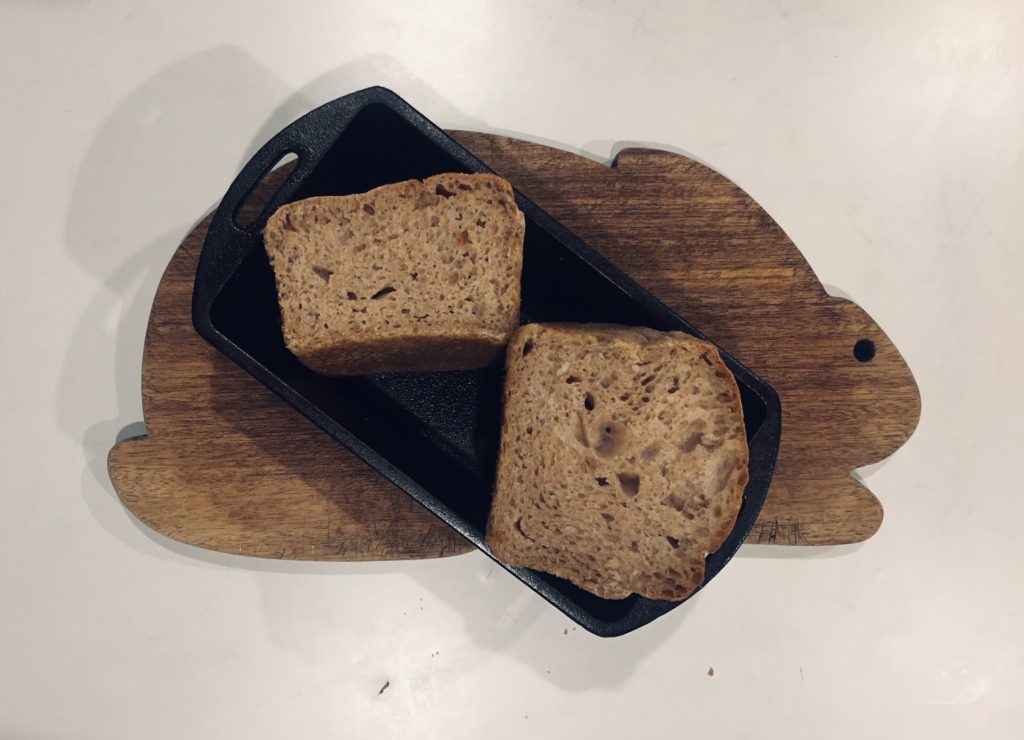
Bread, 27 Jan 2021
Today’s loaf was a case of failing upwards.
I overproofed my dough in the toaster oven. Maybe because I set the warming function too high and prematurely killed my leaven. The loaf collapsed in the bake.
No matter, I was still hungry for a midnight snack.
Which is when I found out that I forgot to add salt to the dough when I mixed it this morning.
But all’s well that ends well.
I pulled out my fig butter (which I had fermented with too much salt) and slathered it on a slice.
I can’t say it was delectable, but it was tasty.
One of my favorite aspects of being a home baker of sourdough bread is that you get to eat your failures.
Occasionally those failures will be interesting. And I’d say that a bland gummy slice of sourdough bread with a heavily salted fig butter topping makes for a singularly unique snack.
-
It Doesn’t Have to be Crazy at Work, Jason Fried and David Heinemeier Hansson, 2018
I read this book a couple years ago and really enjoyed it. In fact, my initial blog draft was a long series of quotes that basically plagiarized the entire book. There was no way I could publish that old blog post, but suffice it to say, this book is highly recommended. While re-reading all the quotes in the old draft, this line caught my eye.
Calm requires getting comfortable with enough.
While there’s no hard-line definition of when’s enough or what’s enough in every situation, one thing’s for sure: If it’s never enough, then it’ll always be crazy at work.
It Doesn’t Have to be Crazy at Work, 161Lately, I’ve been thinking about the question of “enough”.
I really enjoy my gig right now. No job is perfect, but it is hard to find of a better fit for what I want. Reasonable hours, interesting problems, minimal risk. Plus it compensates me quite nicely, meeting all of our family’s needs.
Studies have shown minimal gains on general happiness after one’s household income surpasses a basic level. So assuming no drastic changes to our needs, I’ve been pondering the question is “what next?” Do I just execute as a PM2 for the next twenty years and then draw my pension when I don’t feel the energy to keep up a 40 hour week?
But would I get bored? And I can’t deny that I would be flattered the local acclaim that comes with a fancier title – go high enough and I might get listed on a bronze plaque! At what cost? We have no desire to uproot the family, and I have little interest in working the hard hours and playing the long politics to earn an exalted position.
I’m not a adherent of any religion, but I’ve been haunted by an oft repeated line by Dr. Carl Totten, “Taoism is the art of saying enough“.
Maybe it’s time to turn off the career radar and say “I’m good”.
-
Bread, 20 Jan 2021

Our range oven died after Thanksgiving and we’re waiting for the pandemic to settle down before fixing it. So I’ve been using a toaster oven for baking bread.
Fortunately we have a cast iron Lodge Loaf Pan which makes a lovely toasted crust, (though the top sometimes gets a little burnt given how much it rises, so I’m still working on that).
The recipe is as simple as always, just scaled down a little from my usual 4/3/1/.02
306g flour
270g water
46g starter
4g saltThe loaf pan lets me skip the shaping process. I take the proofed dough and just pour it directly into the pan. I let it rise a second time (about three hours) and then throw it into the oven for the bake. I don’t bother preheating the oven if it isn’t already hot from something else.
Since we’ve been eating a lot of bread (and because it is cool in the house due to winter), I’ve also started using the bread dough as its own starter. When I pour the dough into the loaf pan, I pull off some dough that becomes the next day’s starter. I let it proof on the counter overnight and it’s ready to start another loaf.
I kind of miss the shaping process, but it was the cause of quite a bit of mess and a little bit of stress, plus the loaf pan loaves are much easier to cut! In all, I can’t say I miss the dutch oven baking, though I’m certain I will revisit it, as soon as we get the range fixed.
-
Linchpin, Seth Godin, 2010
I’ve started reading this book a few years ago after Seth mentioned that this book was his masterpiece during the previous book tour for This is Marketing. When he repeated this claim again during promotional interviews for his newest book The Practice, I finally buckled down and finished it.
Spoiler: It is.
I’m not sure why I had difficulty pushing past the first few chapters during my initial reads, but it really picks up steam mid-book and earns the author’s own esteemed opinion of it.
I suspect Linchpin did not grab me in previous attempts because it is particularly ambitious. I’m quite fond the smaller format of his other books, such as The Dip and Purple Cow, which also have catchy premises that grab us on the first page. The argument for Linchpin is both obvious and takes a bit of unpacking.
To become indispensable, we need to be more than “good enough”, so we will have to take some risks. When trying to improve things, we have made a commitment that might not pan out. Once in a while, the proposed change might be a “big hair audacious goal”, but normally it’s just putting ourselves just a little bit past normal. It can be daunting to step out of line, and this book is all about encouraging us to dance with that fear.
If we want to be indispensable, we need to create a deliberate practice of testing improvements. However, there is no guarantee, experiments fail as often as not. Trying to be better takes initiative, and taking initiative means we own the results – both good and ill.
It sounds risky, but what’s the alternative? Staying stagnant locks us into today’s mediocrity and becoming obsolete tomorrow.
So we might as well become linchpins. Not everything will succeed, but work is a lot more more fun when we’re constantly experimenting!
-
A Concise Guide to Macroeconomics (2nd ed.), David A. Moss, 2014
I’ve always been a bit mystified by two political fields – economics and foreign affairs. The first because everything seems counter-intuitive, the latter because it always seems to be a choice between several bad options.
I haven’t found a good primer for foreign affairs, but this book helped me get a basic “macro” sense on economics.
Ultimately the basic issue is “what are the people producing”? If they are producing a lot, the macroeconomics are going to be generally quite good and the inverse if people aren’t producing a lot of value per capita.
That’s simple enough, but then everything starts to get funky once you add the two other core concepts of money and expectations, which can color the how production is calculated and create odd phenomena around the economy.
Secondary concepts of interest rates, exchange rates, and methods of accounting then fill out the picture. This is when things start to get a little counterintuitive, but nothing too crazy that can’t be handled with a little careful reading.
The counterintuitive part of economics is found in the fact that these basic concepts are affected by a myriad of factors – ultimately all the individual actions of all the players in the marketplace (as in each of us). Also once we get comfortable with a theory, something comes in and bowls us over, as the Great Recession, and people need to reassess their theories. Life tends to be messier than math.
Even though the basic concepts are pretty straightforward, when there are so many players (who aren’t perfectly rational) interacting with each other you end up a pretty complex field.
This book gave me a basic sense of how the big pieces of economics fits together. Even though I doubt I will read another dry textbook on economics and I’ve already forgotten some of key concepts just a couple months later, I sense a residue buried in my brain and these ideas should be much easier to recall when needed, kind of like riding a bike.
This book was just what I needed. For future reading, I’m going back to popular books about wacky counterintuitive quirky economic topics. Sometimes you need to read the fun stuff first to get you interested in a topic, but I find that exposing oneself to basic foundational stuff is always worth the effort, even if you ultimately go back to the candy.
-
Tiny Habits, BJ Fogg, 2019
I tend to plow through self help books, like my daughter just did with the 16 volume Roald Dahl box set over a week.
I read this over the holidays and I think this will likely be one of the most important books I’ve read in a while. So I’m following up the library copy with a purchase on Amazon.
We just tried his Focus Mapping technique with how to teach her Chinese and in twenty minutes it yielded some key insights in what wasn’t working. My wife still found it painful (she finds all such exercises difficult) but I think it was quite valuable.
After having gone through one of his “full” processes (in all a half hour of time), I tend to agree with his assertion that you can start habits at any time. There is no need to wait for a new year’s resolution. Just notice a problem, take a moment to look at it systematically, and start implementing a change.
Normally I try to write up some (slightly) deeper thoughts or anecdotes to go in my initial impressions. I also usually let these notes marinate for a while before publishing.
This one is just go, go, go.
Strongly Recommended.
-
My career so far, in 100 words and 10 photos
I was requested to put together a bio for Rice Mentorship Program’s instagram page. Here is what I wrote, with the photos I submitted.
Justus Pang is a registered architect who has worked in Berkeley, Houston, and Las Vegas. His project history includes residential remodels, new apartment complexes, adaptive reuse conversions, and commercial, government, and hospitality tenant improvements.
His experience includes working as a laborer in a construction crew after college and summer internships with a landscape architect. Since 2018, he has worked for the State of Nevada as an Owner’s Project Manager.
Having participated within all roles within the industry, his focus is on fairness to all parties, strict quality control of the design and construction documentation, developing a collaborative environment, and continuous process improvement.
Ideally everyone walks out of my project with a smile and proud of the work.

1904 Blake
The interior of this converted single car garage was quite plain, but the rabbits and I used every cubic inch in this space.
Russell Residence (Ron Bogley Architect and Builder)
A simple patio became a lesson in composing wood members and structural connections.
Wonderland of the Americas (Rogers+Labarthe Architects)
A gaudy façade in EIFS was an exercise in detailing and composition.
Design opportunities are simultaneously rare and ubiquitous in this profession.
Desert Regional Center, Kitchen Demolition (State Public Works Division)
The only commercial project I’ve ever stamped was nixed after the construction contract had been fully signed (due to the pandemic). No project is ever safe from cancellation.
900 Hassett
In spite of years of experience with residential renovations as an architect, being our own general contractor was a miserable, grueling slog – learning to work with others and ourselves.
900 Hassett
It was an incredibly valuable professional experience. I recommend it to all architects, once.
John E Carson Motel Adaptive Reuse (Bunnyfish Studio)
Occasionally you’ll come across a breathtaking moment of beauty on the job site.
UNLV Flamingo Auxiliary Code Upgrades (Aptus)
Sometimes those moments will be found in the most pedestrian of renovations.
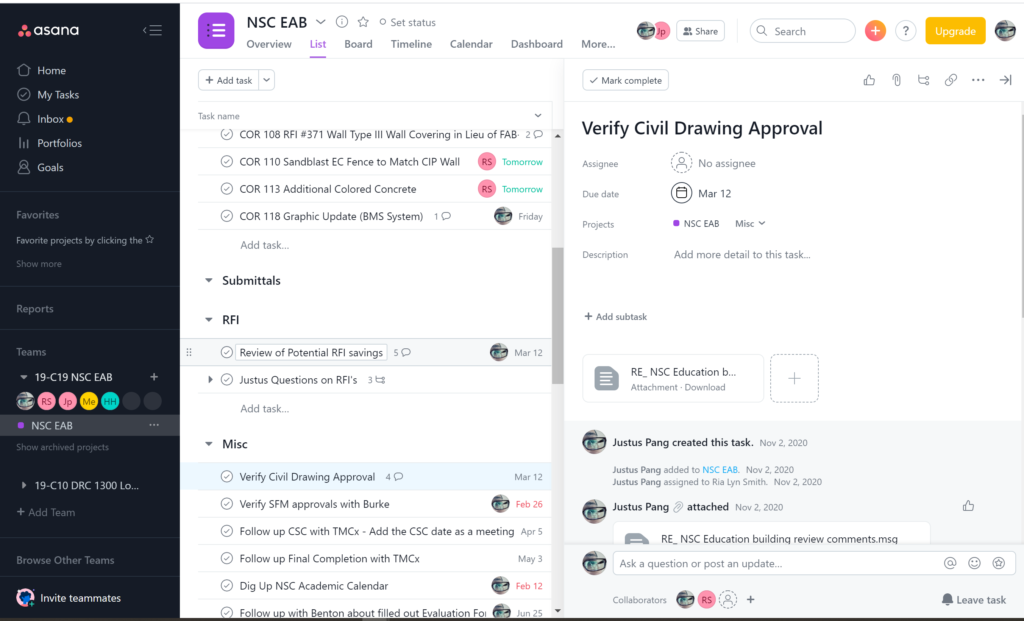
Nevada State College Education Academic Building (State Public Works Division)
The Owner’s Project Manager handles administrative tasks, sets limits around the project, fosters a team atmosphere, and gets out of the way so the design and construction professionals can do their work in meeting the needs of the users.
This photograph was taken by a former colleague, Yang Liu who has his own photography studio in Houston and was kind enough to let me use this image.