starting today, ending tomorrow?
- Exercise first!
- No YouTube until the four dailies are done (Write, Sketch, Photo, Read)
- Play with the kids when they ask me to join them.
- No snacks until down to a proper weight.
GRIZZLY PEAR
What’s not to love?!
What’s a better Disney film?
As I grow up, my tastes regress.
Continue the trend and this will become my favorite movie!
(Though I can’t envision how it could dislodge Pom Poko.)
We watched it with her years ago.
No memories.
As I pulled up the movie, she was unimpressed by my excitement.
Then it started.
She LOL’ed throughout.
The boy watched intently.
During our dinner break, he smiled and proclaimed
That was a lot!
(But refused to elaborate.)
I’ll re-interrogate him on film criticism during breakfast.
Should we watch the sequels?
I’m a timid gambler.
I’d quit while I’m ahead.
But if the kids insist…
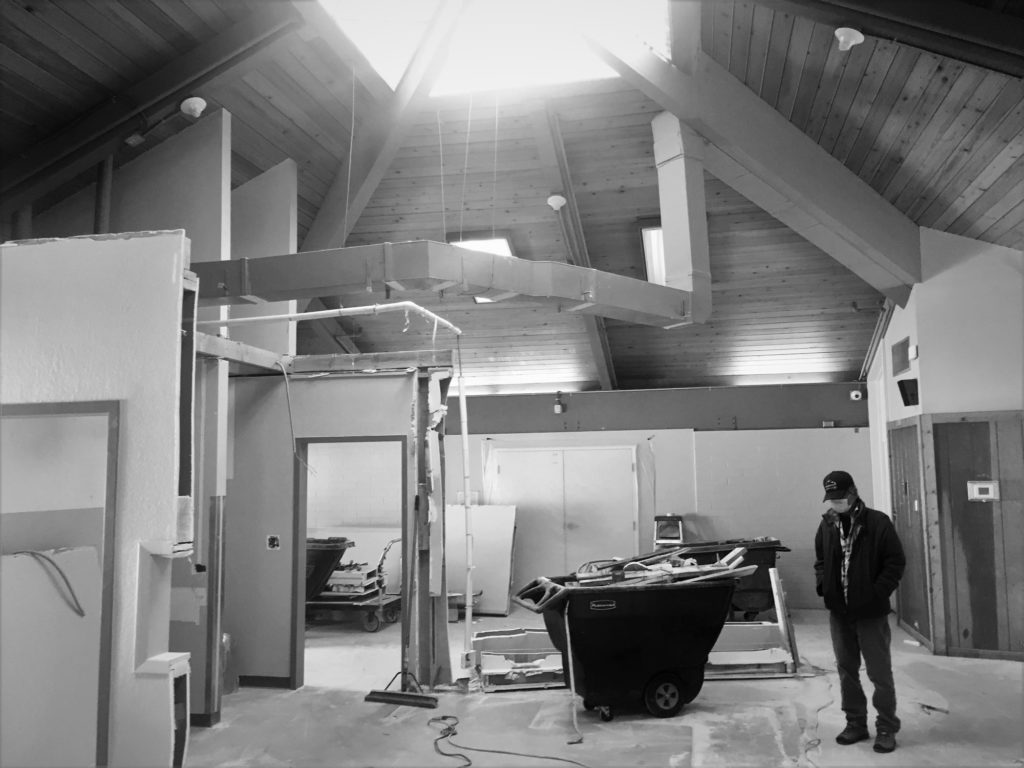
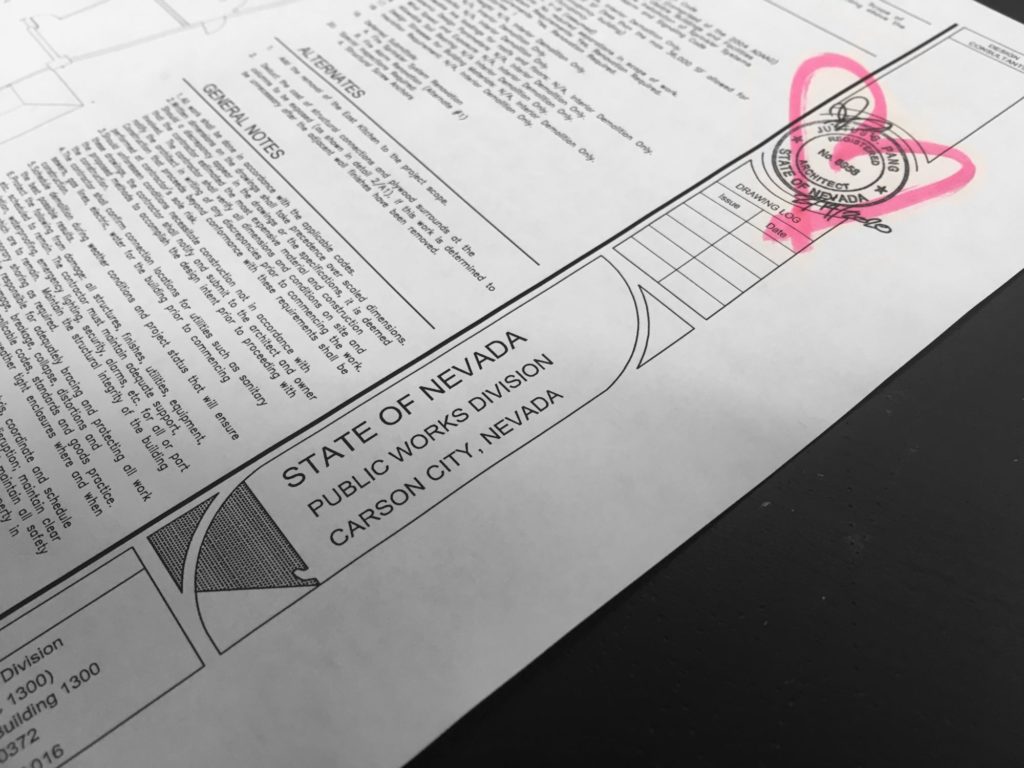
Our home renovation was the first project under my stamp. The second was this renovation at Building 1300.
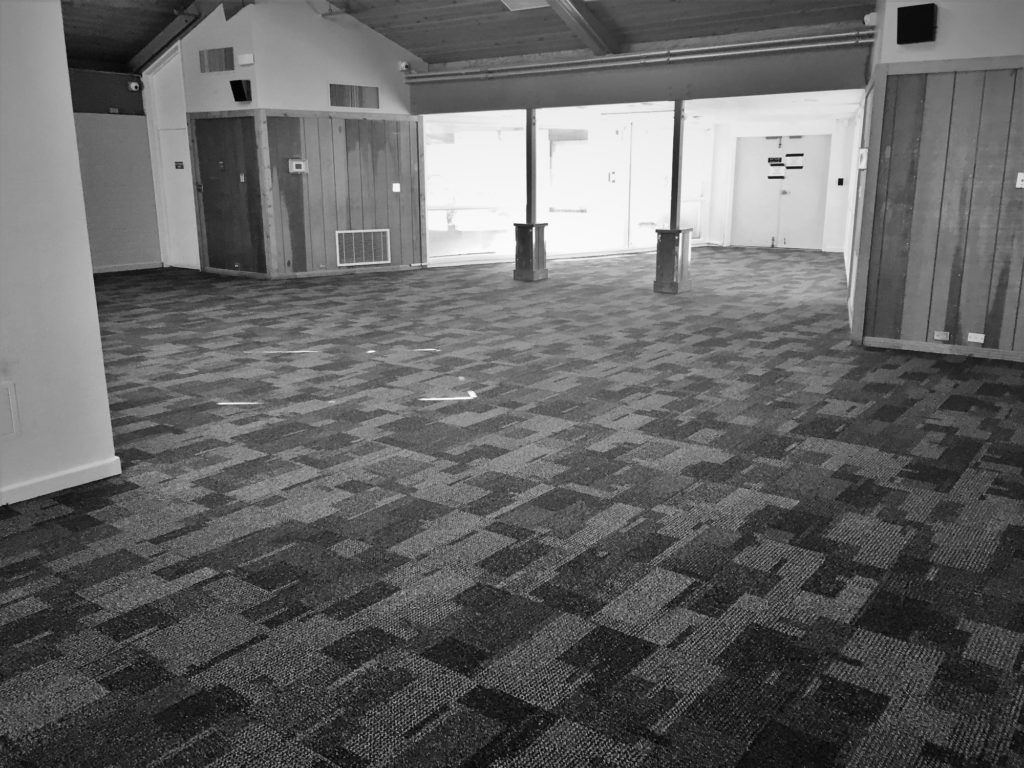
It was built as a residential center the disabled. Fifty years later, it’s an administrative building. We removed two kitchens, freeing up space to become an indoor exercise activity space for the clients and a training room for the staff.
In school, we design majestic pretend structures. Sometimes we get to participate in marquee IRL projects — my wife worked on curtain wall details for an addition to an iconic museum and I’ve played a part on three university building projects.
But really, Architecture is a mundane practice.
We make incremental improvements to what’s around us. We get paid to make the world a little better.
Four years ago, I left private practice to become an Owner’s Project Manager for the State of Nevada.
I’m the ultimate middleman — I don’t deliver nothing. The Architect designs the project. The Contractor builds it. The Agency uses the facility to serve the public.
I just shepherd the team to deliver the project on time and on budget, hopefully at an optimal quality.
My tasks are unremarkable. Calculate estimates. Send emails. Meetings and phone calls. Double check drawings and dollar signs. I shuttle documents around our bureaucracy.
My position is five steps below the Governor on the org-chart, but it’s blessedly free from politics. The Citizens elect our Politicians. They determine our directives. The Division gets it done.
But nothing happens without people.
My big paradigm shift after taking this job was realizing that work is all about relationships. As a professional architect, I delivered tangible documents. Now, my only unique skill is familiarity with the government bureaucracy.
I’m here to balance the conflicting demands on a project, negotiate the cross incentives within the team, and chart a path through the process.
It’s not always daisies. On Friday night, I dropped the velvet hammer on a flooring manufacturer for delaying another project. It’s my duty to be fair and firm as a steward of taxpayer dollars.
I grasp the checkbook, but I work for those who do the real work. Construction isn’t easy, but I hope to make it satisfying. I try to conduct myself with honor and enable each team member to to do their best. I care about each of us, in our roles and as individuals.
This is our work. Let’s make the most of this precious opportunity.
Maybe even walk out with a smile.
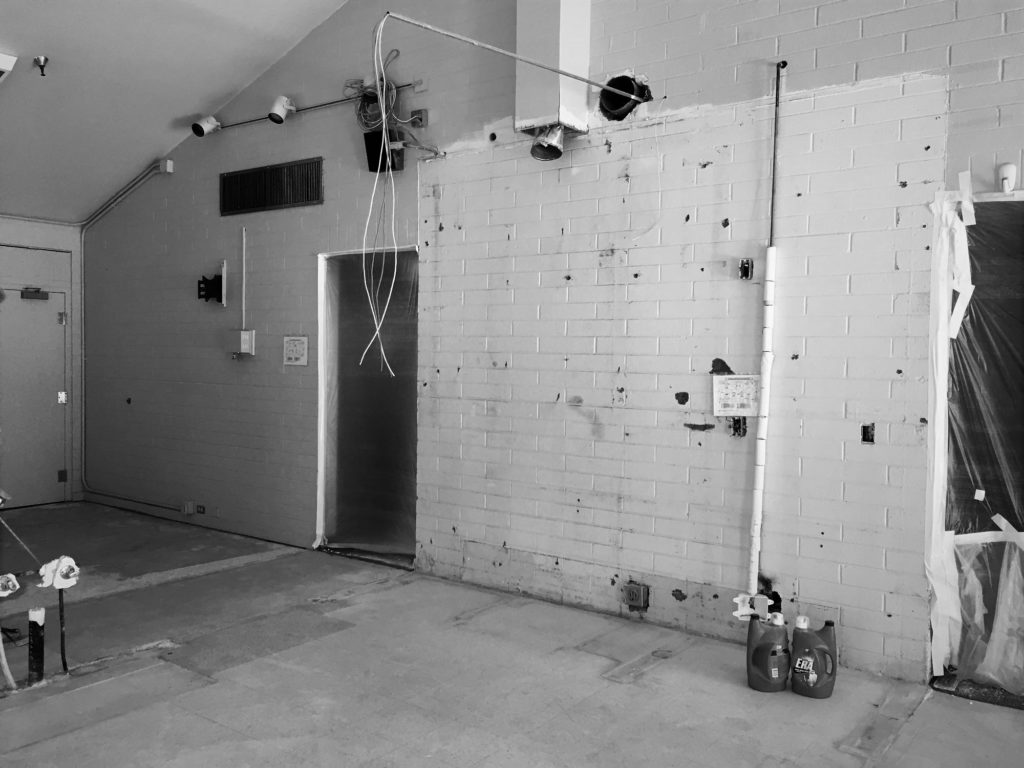
This Kitchen Demolition project did not go smoothly. It started as an extensive renovation with a consultant architect, but the agency suddenly realized that the funding was about to expire.
With that nasty deadline, I could only deconstruct. I slammed demolition drawings on AutoCAD LT and pushed it out to bid. The contract was approved, signed by all parties.
Then COVID hit.
The Capitol feared we were at the precipice of a depression and killed this little project. (Of course, the cancellation dragged out amidst the pandemic confusion, leaving the contractor in limbo for more than a month.)
By Spring 2021, the looming depression became an economic rebound. The Agency revived the project.
The Contractor held their bid, we waded through a swamp of paperwork, moved the cash into the right budget account, and those kitchens disappeared!
We celebrated with a twelve pack of Dr. Peppers.
Construction is only straightforward after it’s done. Every project suffers its twists and turns.
We can plan, but only so much. When chaos hits, the universe forces us to negotiate. If we choose to collaborate, these frustrations can cultivate relationships beyond mere project roles.
June came and went this year. The twelve month warranty expired — the only part of our job without hiccups.
Wednesday morning, I returned a missed call.
His voice quivered.
Tracey passed away.
I thought you should know.
She really enjoyed working with you.
䷨䷆
one small project
client and contractor
respect
notice beyond this vale
greatest honor of my career
Practical effects!
A nostalgic reminder of life before CGI.
Movie magic still dazzles the kids.
I wanna sleep inside a blue Lego brick!
A slim, tight story.
(I’ve lost patience for protracted narratives.)
One denouement is enough.
A fun show with one blemish.
It’s a uniformly white world.
Growing up, my non-existence was status quo.
A perpetual bystander to a world of beautiful alabaster teens.
The sting lingers.
But I hope it’s not as pointed for them.
Today’s media is more diverse.
One homogenous film doesn’t feel like erasure —
Just a tart anachronism in today’s sea of color.
~
I used this trailer to convince the girl to cancel Netflix for Disney+.
We got sidetracked by everything else for a few months.
Happy we finally watched the movie.
a novice reads the I Ching
How shall I consider 100 Posts?
63:3 to 3
Heading into our third weekend together, this will be my 100th post. (Technically I hit it earlier, but I deleted a few stray Posts along the way.)
I pick up — and drop — hobbies with alacrity. I wish I weren’t so fickle, but I’m not the only one. There are many conflicting pulls on our time. Doing one means diminishing another, so I cycle through my recreations.
Over the past two decade, we’ve seen social media platforms rise and fall. Glittering potential dissolving into pernicious squabbling. A brilliant dawn fades into tragedy.
Will this be an apex or a milestone? I don’t know. If it’s near the top, then early gratitude for these magical 16 days. If the latter, then I look forward to many more Posts together.
~
63. After Completion 既濟
䷾ (water over fire)
Success in small matters. Good fortune in at the beginning. But things might end in chaos. Equilibrium on a knife’s edge, calamitous disorder on both sides. Water over fire, steam gives power but fraught with danger. With the wrong attitude completion leads to decay. Practice constancy.
Changing Line 3
(yang becomes yin)
Conquer demon territory. Establish a bastion in the borderlands. It will take capable leadership and persistence. Three years. A bold initiative will become a protracted campaign. Employ people of character. The work will exact a brutal toll. A petty man will lose it all.
3. Difficulty at the Beginning 屯
䷂ (water over quake)
Life grows through the abyss. Great potential is attainable with good character. Be adaptable and dynamic, as clouds and thunder. Birth is a treacherous moment. Associate with noble people.
~
Good start, don’t get cocky.
Victory is attainable at great cost.
Shape order from chaos with good company.
He was one of the first folks to play with us,
On our first visit to Friday Night Game Night,
(Jim and Troung’s place.)
He was a little geeky — me too!
(Two dudes playing board games every week)
I best remember his aura of kindness.
My days in Houston ended in 2013,
Never got around to that 3P game of Konig von Siam.
(He liked heavier games, I’m into lighter games.)
Just found out he passed away this year.
We’ll get that play one day,
(Between rounds of of Tichu)
On that next plane.
䷤䷂
sincerity
arrayed like a king
good fortune in the end
A four book series around the theme of family.
This theme is tuned perfectly with its audience.
At this age, the kids are realizing their individuality beyond us.
This family isn’t forever.
They will soon explore the outside world,
It won’t be easy —
Dangers lurk, both harsh and soft.
And there are rewards,
To find new friends,
Together create their own new worlds.
At home, the parents prescribe the horizon.
Soon (too soon!) they’ll fly away.
And one day,
Hopefully,
They’ll come home.
~
I came across this series via Le Guin’s No Time to Spare, an excellent collection of blog postings. This highlights my egregious oversight in never reading her before. Hopefully 2023 will be the year to dive into her work.
S. D. Schindler’s illustrations are delightful. It’s a shame that Overdrive only hosts the Catwing audiobooks. Hopefully they’ll get the digital rights in order so they can distribute the written books.
Thankfully, our library has copies of the physical books.
novice reads the I Ching
19:1,3 to 46
In reading classic texts, one should be wary of the context. These are invariably Imperial documents. They were written by men in power to influence men with even more power. Literacy was an ultimate privilege.
Reading them is a balancing act. Books that survived the ages must have provided great value to their readers. But we shouldn’t uncritically marinate in their archaic values.
Then again, questioning paradigms is the point of divination. This is a tool to help us surface our self-imposed unconsciousness.
So let’s ask the oracle of ancient kings concerning this day of democracy.
~
19. The Approach 臨
䷒ (earth above a lake)
Success approaches by obtaining the trust of others. Be boundless in teaching. Lead by patient persuasion. Share the truth. But growth may be short-lived, calamity might be around the corner.
Changing Line 3
Complacency in the approach will result in stagnation. However, doom is not predestined. Remorse against comfort and vigilance against ignorance will protect from harm.
46. Pushing Upward 升
䷭ (earth above the wood)
Like a tree pushes upward through the earth, greatness will rise. Rooted in good character and heaping small efforts. This accumulation can climb high. Practice devotion to continual progress.
~
Success is near, so is calamity.
Don’t get comfortable, continual refinement.
The constant pressure of little victories leads to great progress.
Hoopla lets us borrow a certain amount of titles per month, and I used up my last few credits in October to try a variety of albums. Keith Jarrett’s Koln Concert blew me away. A commenter on a youtube video called it “the sound of God”.
Thelonious Monk with John Coltrane — two immortals. Even if Jarrett is my artist of the month John Coltrane is the “voice of God”.
Clifford Brown and Max Roach — another pairing of greats. Delilah is an awesome opening track.
Know what I Mean? — Cannonball Adderley with Bill Evans, I prefer the slow rendition of Waltz for Debby in its original incarnation.
The Complete Village Vanguard Recordings — I get the appeal of hearing everything, but give me the curated experience of an album. Maybe I’ll dig this after I become a real jazzbo.
Unity — I’d buy the album for the cover, but the organ doesn’t do it for me.
Paper Moon — Another great album cover, but Brubeck feels uninspired. It must be endlessly frustrating for musicians to pour their souls into an album only to be so casually dismissed.
Song for My Father — Horace Silver was the only (non-christmas) artist to cut through the dominance of Jarrett. This album swings.
Koln Concert — as noted in the intro, this overwhelmed everything else this month. It’s the most sold solo jazz album of all time for good reason.
Concerts Bremen / Lausanne — His first solo piano concert album. Very good, including Rick Beato’s “Most Beautiful Two Minutes in Music“.
Koln Concert — I borrowed it twice.
Facing You — His first solo piano (studio) album. Very good.
Paris Concert — It starts on a classical note and stays in that tone while being jazz. Remarkable. Not as accessible as Koln Concert but I’m intrigued.
䷯
With the passage of Thanksgiving, and the advent of the holidays, my spare Hoopla credits in November were spent on holiday albums. Here is all the Christmas cheer you can handle — the kids insist.
A Charlie Brown Christmas — Last year, it started our jazz kick. This month I’ve found two great companions with Ella Fitzgerald Bobby Timmons.
Ella Wishes You a Swinging Christmas — I’m not a connoisseur of vocal music. This needs to change in 2023. She’s amazing.
Holiday Soul — Bobby Timmons plays just enough Christmas to make this a holiday album, but I could play this all year. Per the title, it’s got soul.
A Dave Brubeck Christmas — Solo piano. Unremarkable.
The Original: Gene Autry Sings Rudolph the Red-Nosed Reindeer & Other Christmas Favorites — Fun album, starts with popular songs on side A and carols on side B.
White Christmas — Bing Crosby takes the opposite tack and serves the veggies first.
The Christmas Song — Nat King Cole sings traditional Christmas songs. I love his voice, my kids want cheery pop. In the war against Christmas they are partisans for the “Holidays”.
James Brown’s Funky Christmas — Definitely James Brown, need to listen to it again.
Elvis’s Christmas Album — Our kids’ introduction to Elvis.
A Motown Christmas — With my jazz kick, I’ve lost interest in compilations. I prefer to hear a unified voice in an album.
A Christmas Gift for you From Phil Spector — hard to enjoy this album with the spectre of its namesake.
Christmas with Sinatra and Friends — Sinatra is great but it feels disjointed as a compilation after the grave.
We’ll see which albums have staying power for repeated plays into Christmas after this initial survey.
䷊
from the deep
peace on earth
good will to men