With all the calls and emails I’ve fielded over the past two years, this week was the first time that someone looked at my online portfolio before contacting me. (LinkedIn recruiters are shockingly lazy!)
The opportunity wasn’t a good fit, but we had a great conversation, and I learned about an exciting position to share with younger architects.
~
My portfolio is a simple WordPress site with the Twenty Fourteen template and these plug-ins:
Disable Comments
Fourteen Colors (to change the colors in the template)
Really Simple SSL
SSL Insecure Content Fixer
WP Meta and Date Remover
If this looks like too much, remember the imperative is to have a portfolio. Use a free site builder. (The creative director that I met had their work on Behance.)
~
I’m a paranoid employment prepper. I graduated into the dotcom bust of 2001 and finished my masters in 2008. An online portfolio is an essential piece in my professional go-bag (along with a current resume, LinkedIn account, and preprinted work samples).
More than forestalling doom and gloom and compiling old work, building a portfolio signals where you want to go.
It forces you to write. Writing makes you think.
I built this iteration in 2020. Amidst the global chaos, it was salutary to appreciate my career and ponder the future. As always, the process is more than the final product.
Go make a portfolio! You’ll get more than a portfolio.
I’ve always thought I’d read some Chinese philosophy, someday.
That day came on a sunny afternoon my mind was blown as I was parking my car behind E-Jo, a Korean bone broth restaurant. The History of China podcast was talking about a Han dynasty emperor who used Daoism as his ruling ideology.
That blew my mind. I always thought Daoists were crazy drunks in a forest, not competing with Confucians in the halls of power.
Don’t get me wrong, the Tao Te Ching is great stuff for skipping out into the woods. But there is plenty of “leadership advice”. Timely stuff before landing a gig as a Project Manager representing the State.
~
True leaders are hardly known to their followers. . . . When the work’s done right, with no fuss or boasting, ordinary people say, Oh, we did it.
excerpt from Tao Te Ching 17
My project teams have been complimentary of my leadership. Of course, I’m the source of their next project, so it’s hard to know how much of it is sincere. Then again, I guess such compliments are better than the alternative. On my end, I believe that I have the easiest job on the team. I move some paper around and they do all the real work.
~
And so the wise soul predominates without dominating, and leads without misleading. And people don’t get tired of enjoying and praising one who, not competing, has in all the world no competitor.
excerpt from Tao Te Ching 66
A hidden benefit of joining the State is that any promotion includes a significant increase in stress for a marginal pay raise. There is no financial incentive to rise up the hierarchy. As such, I have no competition in my office. If someone else wants the headache, let them have it.
John Minford’s commentary for this section includes this short poem by Li Bo for his friend the Taoist Hermit Yuan Danqiu.
I envy you, my friend, Dwelling on East Mountain, Lover of beauteous hills and valleys, Asleep in the green season of spring Among empty forests, Rising long after daybreak, The wind in the pines Blowing through your sleeves, The stony brook washing your soul. I envy you, Lying there unperturbed, Pillowed high On your emerald mist.
~
How to make peace? Wise souls keep their part of the contract and don’t make demands on others. People whose power is real fulfill their obligations; people whose power is hollow insist on their claims.
excerpt from Tao Te Ching 79
In the heat of the moment, it’s easy to get annoyed at an underperforming contractor or consultant. Such tendencies get worse the longer I hold this comfortable position of power. I need to constantly remind myself that I don’t have to insist on my rights — I hold the fucking checkbook. Unfortunately, I’m sometimes forced to remind my partners of their obligations and my expectations of their performance, but there’s no excuse for losing my cool.
Whosoever lacks Inner Power will try to control Others by Force, will demand a due, exact a tithe, and Bitterness will ensue. The Tao of Softness and gentleness wards off Bitterness. Hardness and Strength, Vanity and Pride create Bitterness and Resentment
John Minford’s translation of Magister Liu’s commentary
When I joined the State, we processed physical paperwork.
Vendor mails Invoice to Accounting in Carson City
Accounting interdepartmental mails invoice to Public Works
Public Works admin mails invoice down to Las Vegas
Project Manager mails signed invoice up to Public Works in Carson City
Deputy Administrator mails signed invoice across the street to Accounting
Accounting mails check to Vendor.
Paper shuffled across our state 6 (SIX!) times to pay a simple invoice.
Fortunately, a Management Analyst joined the State the same day that I started. One of his goals was to implement digital signatures.
I eagerly volunteered.
Ten months later, we finally contracted with a vendor. It took another half year of brainstorming and pushing management before we were approved to process invoices on Adobe Sign.
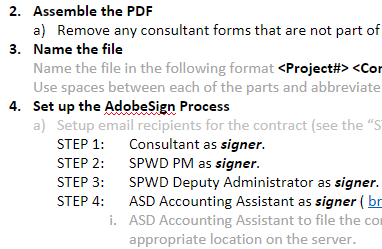
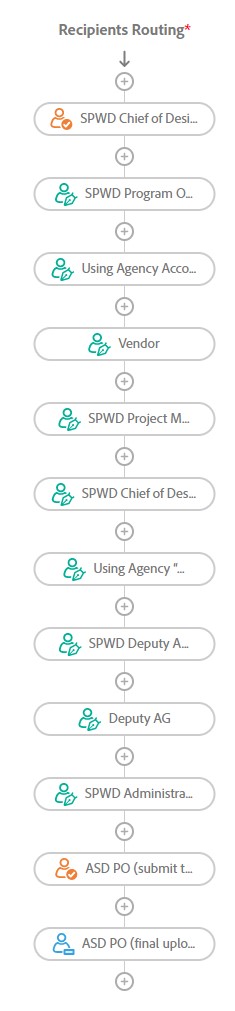
The vendor emails their invoice to the PM. It takes five minutes to send it out for approvals and payment.
A couple months later, COVID happened.
We were fortunate to have gotten past the fear of digital approvals before the pandemic hit. The calamity actually accelerated the adoption of digital signatures for rest of our documents.
I also discovered that Adobe Sign can automate much of the process — a godsend for complicated agreements which consistently go to the same individuals.
Being an evangelist for of this initiative has been my most tangible accomplishment within the State.
Sometimes it’s just lucky to be new at the right time!
Hopefully I’ll discover other awesome process improvements to share over my next two decades!
~
On net, this digital process is an absolute winner for the State and our partners. However, I must note that has resulted in a perverse dynamic where a PM spends more time processing paperwork than in the past. The cloud stole tasks from administrative assistants and put it on licensed engineers and architects.
The next step would be free up the licensed professionals to return their focus on their professional expertise. Cal Newport discusses this issue in his book “A World Without Email”, but the path forward is still murky.
~
PS: You can “add” email addresses in Google with a “+” (plus sign). If your gmail is “sample@gmail.com” then you can create a limitless sub-email addresses like “sample+vendor@gmail.com” and “sample+chief@gmail.com”… All those emails will just land in your main gmail inbox. It’s an invaluable hack to testing all sorts of digital systems.
A few years ago, I was roped into assisting with the state’s transition to a new Enterprise Resource Platform (ERP), updating our ancient web-software backbone to link all our HR and financial information.
Anyone who has helped implement an ERP can attest, it’s a complicated effort — enough that this initiative has been put on hold for a year.
I’m an architect, not an accountant. But as a project manager, I’m now accountant-adjacent. A big part of my job is preparing and moving documents around. As the division’s representative, my goal was to make sure that they didn’t set up the system in a way that make our lives as Project Manager 2’s harder after implementation.
It was an enlightening experience. I’ve always been the Architect-Consultant who is hired to fix a problem. Things shifted a little when I joined the state and became the Owner.
This was the first time that I was just a User.
It’s hard! These consultants swoop in with minimal knowledge of how I do my job. They shove my needs into a their workflow for their brand new, opaque system. They don’t know what I do, and I barely know what they do. In this case, I was doubly ignorant — of both software and accountant-speak. Amidst the confusion, I was keenly aware of the high stakes because we were gonna be stuck with this program for the rest of my career.
I’d like to think I was a reasonably humble architect, but being a User is humbling at a whole other level! I was powerless, just praying that the experts listened to my pleas and followed through on their promises. I appreciate that a new software platform presents opportunities for positive change, but it felt like they were following their own standard playbook without addressing our specific concerns. It didn’t help that as a project manager, I was extra-sensitive to how they were mismanaging the process. It was so frustrating that I lost my temper a few times, once in a large meeting!
Aside from that shameful embarrassment, this effort gave me a chance to build great relationships with our accountants (nothing builds comradery as an uncaring outside force).
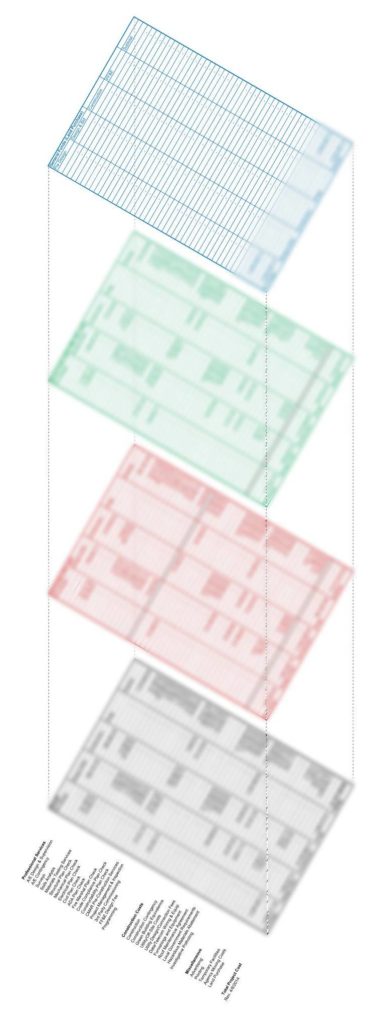
And in a moment of inspiration I threw together this diagram showing how the new system will allow to analyze our project finances along multiple dimensions.
I’m inordinately fond of this diagram, maybe because it melds my current work with my old life. I doubt a non-architect would have realized that an axonometric drawing could sell the potential of the new ERP!
Alt Text: Axonometric diagram of the ERP tracking project funds on multiple dimensions. The different funding sources are shown as different layers on the vertical axis, with cost categories on the X axis and project phasing on Y axis of each spreadsheet. I suspect my early experience as a hand draftsman is why I love axon’s.
I left Ziegler Cooper ten years ago. They’re a fine architecture firm, but in the wrong part of continent.
My parents were in San Jose, her parents are in Las Vegas, and fate had told us it was time to go back west. The heater in our apartment blew out, filling the place with acrid smoke. Instead of fixing the busted equipment, the landlord released us from the lease (turns out he was selling the property and it’s now a parking lot).
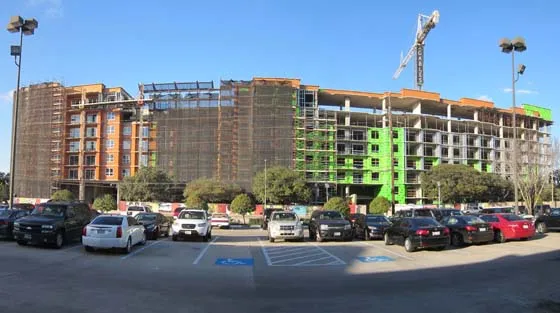
My two years at ZCA revolved around this 300 unit, 8 story luxury apartment behemoth on the outer ring of this suburban metropolis. I was the job captain for this project, but we were understaffed so I drafted about 80% this set, from the start of Design Development until halfway through Construction Administration. (We did this in AutoCAD, so Gables Tanglewoods must be among the last generation of projects at this scale that wasn’t documented via BIM.)
It was great experience for a guy who had only worked on small residential and tenant improvement projects. I learned a ton from the older architects, like proper waterproofing principles and how to squeeze every square inch out the building code from Rafael.
I also picked up how a more corporate firm works. You have to stand up for yourself in the corporate environment, unless you don’t mind being run over. Sometimes it’s not a horrific trade (I got a ton of experience in a short amount of time) but I realized I can’t sustain such a pace for my career.
One day, we’ll visit Houston again. Along with pilgrimages to the Menil and the Orange Show, I’m going to saunter into the lobby as prospective tenant so I can finally get a tour of this place that I didn’t get to finish.
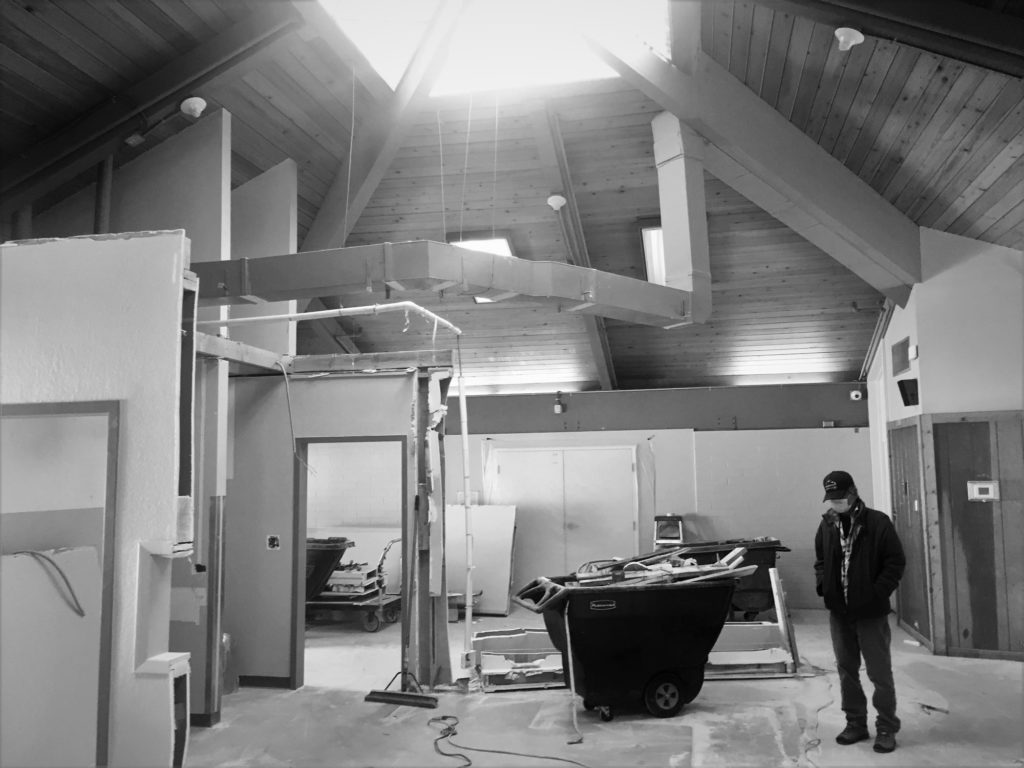
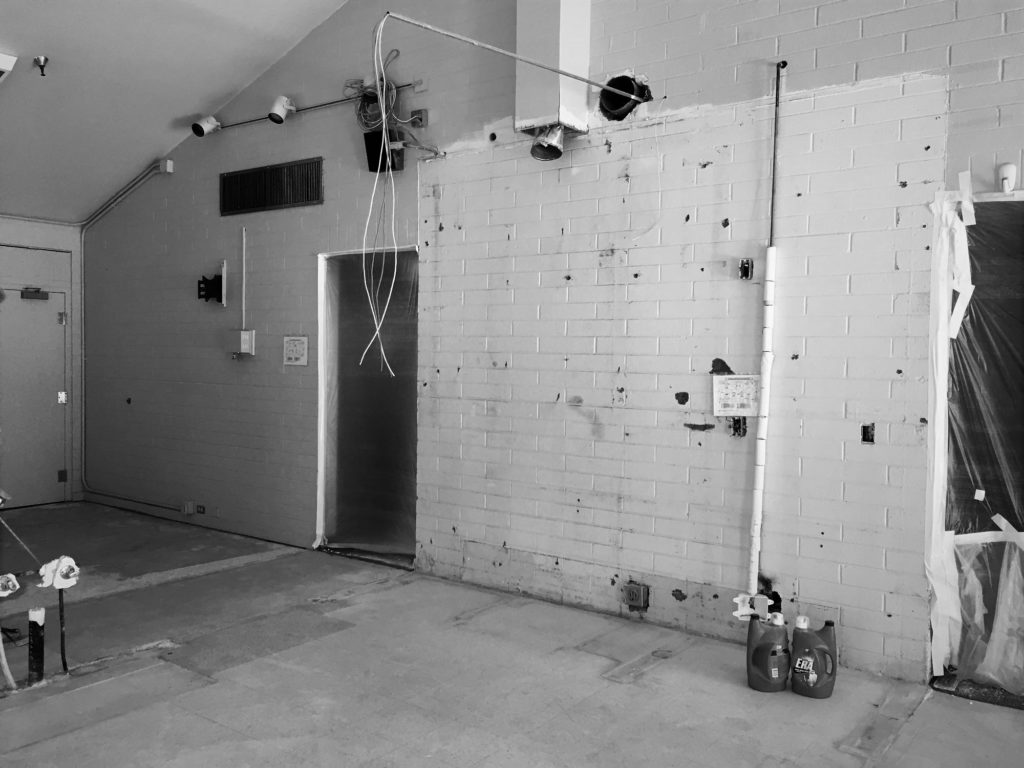
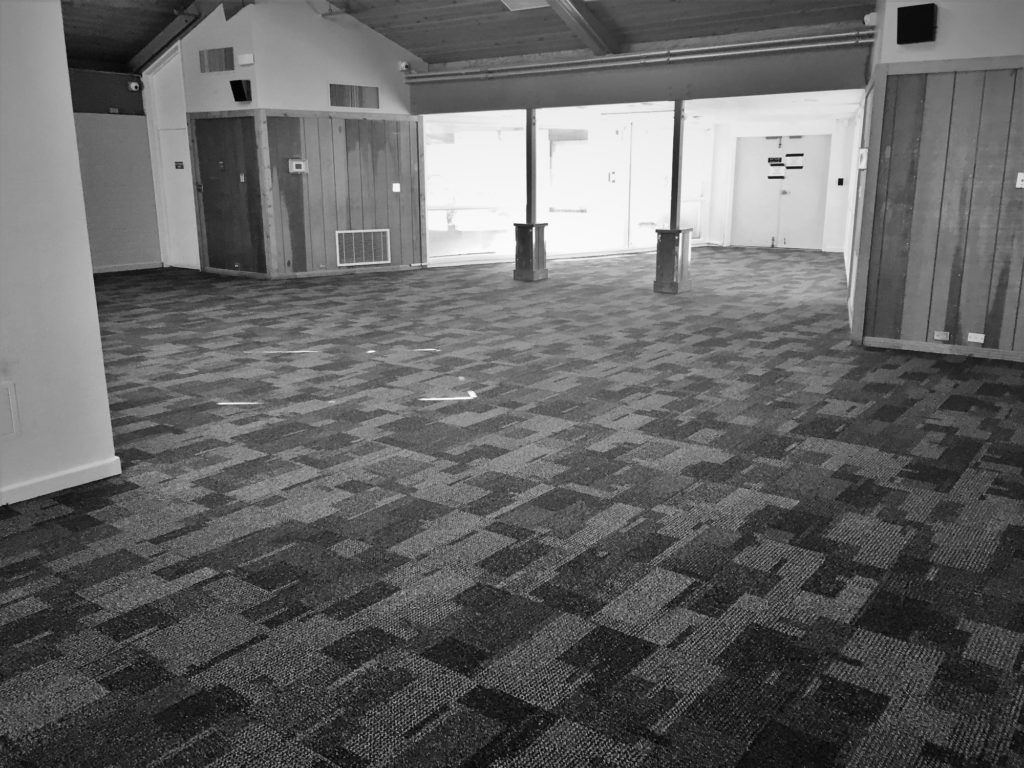
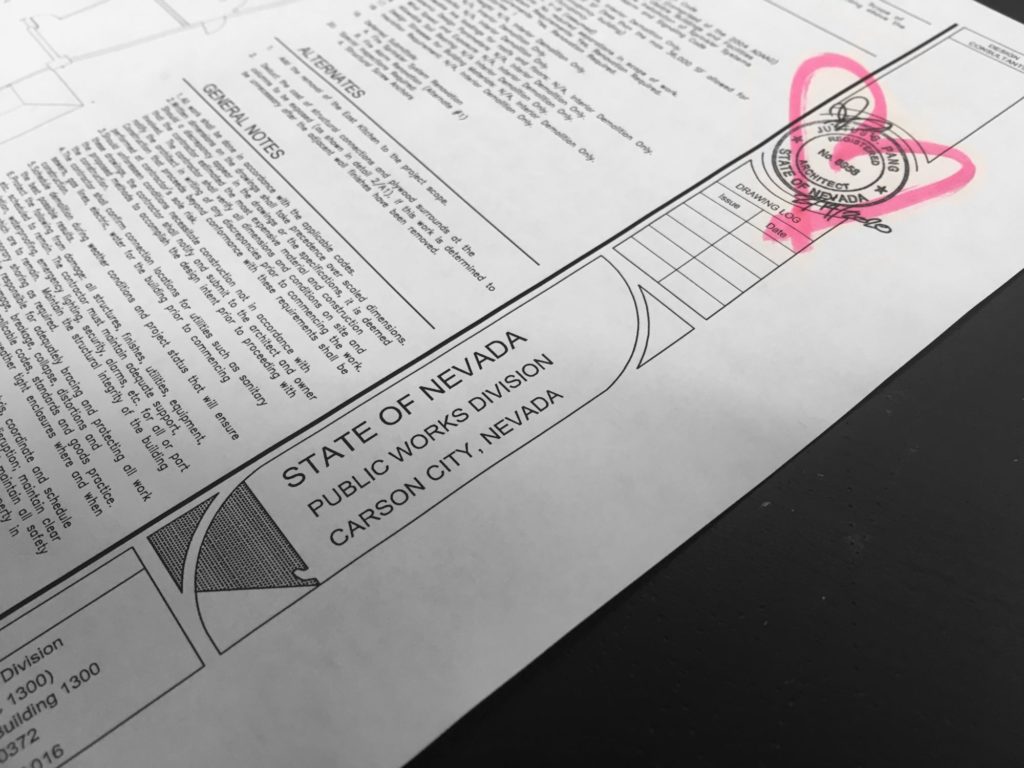
Our home renovation was the first project under my stamp. The second was this renovation at Building 1300.
It was built as a residential center the disabled. Fifty years later, it’s an administrative building. We removed two kitchens, freeing up space to become an indoor exercise activity space for the clients and a training room for the staff.
In school, we design majestic pretend structures. Sometimes we get to participate in marquee IRL projects — my wife worked on curtain wall details for an addition to an iconic museum and I’ve played a part on three university building projects.
But really, Architecture is a mundane practice.
We make incremental improvements to what’s around us. We get paid to make the world a little better.
Four years ago, I left private practice to become an Owner’s Project Manager for the State of Nevada.
I’m the ultimate middleman — I don’t deliver nothing. The Architect designs the project. The Contractor builds it. The Agency uses the facility to serve the public.
I just shepherd the team to deliver the project on time and on budget, hopefully at an optimal quality.
My tasks are unremarkable. Calculate estimates. Send emails. Meetings and phone calls. Double check drawings and dollar signs. I shuttle documents around our bureaucracy.
My position is five steps below the Governor on the org-chart, but it’s blessedly free from politics. The Citizens elect our Politicians. They determine our directives. The Division gets it done.
But nothing happens without people.
My big paradigm shift after taking this job was realizing that work is all about relationships. As a professional architect, I delivered tangible documents. Now, my only unique skill is familiarity with the government bureaucracy.
I’m here to balance the conflicting demands on a project, negotiate the cross incentives within the team, and chart a path through the process.
It’s not always daisies. On Friday night, I dropped the velvet hammer on a flooring manufacturer for delaying another project. It’s my duty to be fair and firm as a steward of taxpayer dollars.
I grasp the checkbook, but I work for those who do the real work. Construction isn’t easy, but I hope to make it satisfying. I try to conduct myself with honor and enable each team member to to do their best. I care about each of us, in our roles and as individuals.
This is our work. Let’s make the most of this precious opportunity.
Maybe even walk out with a smile.
This Kitchen Demolition project did not go smoothly. It started as an extensive renovation with a consultant architect, but the agency suddenly realized that the funding was about to expire.
With that nasty deadline, I could only deconstruct. I slammed demolition drawings on AutoCAD LT and pushed it out to bid. The contract was approved, signed by all parties.
Then COVID hit.
The Capitol feared we were at the precipice of a depression and killed this little project. (Of course, the cancellation dragged out amidst the pandemic confusion, leaving the contractor in limbo for more than a month.)
By Spring 2021, the looming depression became an economic rebound. The Agency revived the project.
The Contractor held their bid, we waded through a swamp of paperwork, moved the cash into the right budget account, and those kitchens disappeared!
We celebrated with a twelve pack of Dr. Peppers.
Construction is only straightforward after it’s done. Every project suffers its twists and turns.
We can plan, but only so much. When chaos hits, the universe forces us to negotiate. If we choose to collaborate, these frustrations can cultivate relationships beyond mere project roles.
June came and went this year. The twelve month warranty expired — the only part of our job without hiccups.
Wednesday morning, I returned a missed call.
His voice quivered.
Tracey passed away. I thought you should know. She really enjoyed working with you.
䷨䷆
one small project
client and contractor
respect
notice beyond this vale greatest honor of my career
I got my first full-time architecture gig twenty years ago. I had graduated Berkeley and entered the Dot.com bust without any computer drafting skills.
So I started by moving dirt.
It was a good detour. I consider my half-year of landscaping the most influential six month stretch of my career. Plus I met some friends I still treasure today. But work in the Oakland hills slowed down so it was finally time to start work in my chosen profession.
I ran down the phone book and came across Ron Bogley Architect and Builder. Ron was still hand drafting so he didn’t mind that I couldn’t AutoCAD. He needed someone at the office working on the drawings while he managed his crew in the field.
Working in the first floor of his house, looking over the back yard, and drawing by hand was an idyllic start to this profession. It was a lonely shock going from being in a crew of boys to working alone, but it helped to have a caring mentor.
We settled into a comfortable rhythm, I’d draw as much as I could, using old sets for reference, and leave some bluelines on his desk in the evening. The next morning, I’d magically have redlines on my desk and we’d keep going.
When I first started, we didn’t even have internet at the office. I remember when we got an iMac with a domed base and an articulated LCD screen.
Even so, the arrival of broadband didn’t make a difference to my life. I only used it for typing up general notes that we’d print onto sticky back. The real work was done standing at the drafting desk, laying graphite on vellum.
But nothing lasts forever. It was a great job in a beautiful city, but there is no margin in small residential and I needed to get my professional license. A couple of years later, I got into Rice University and shipped across country.
If moving rocks in the Oakland Hills was the perfect introduction for my career, then working with Ron was the perfect start to being an Architect. Working in a small firm gave me a chance to do everything – without the computer as an intermediary.
I was lucky to get this job. I got to start my journey before CAD and followed our technological growth into today’s BIM-dominated world. More importantly, working in a very small firm is an antidote to corporate brainwashing. I will always be the happy company man in front of the client, but I know it doesn’t have to be like this. Since my time with Ron, I’ve navigated this profession with an question mark seered in my psyche.
From small to big, every organization is a choice. It’s on us to shape them as they shape us.
~
How did you start in this profession? Did it affect your path?
Hit reply and let’s chat!
~
Abandoned places are a bit of a trope, but the Romain Veillon’s photos are still stunning. I looked at them a few times to see if they were CGI. Quite the antidote to life in the desert.
Chuck Jones had a simple set of rules for interactions between Coyote and Roadrunner. I should try something like that myself.
I’ve heard several internet-famous characters claim that they had more fun when they were just posting stuff without an audience. While they are always careful to say they are appreciative of their public lives, they nostalgically think of when they were toiling away anonymously.
Hearing such humble brags make me want to retort, “wish I had your problems”.
But Grizzlypear is a hobby (not a job).
So I thank them for the insight. Their warnings have tempered my desire for internet popularity. I have an enjoyable job that pays well. Why should I pursue an extra gig that might be neither?
I enjoy publishing publically on this blog because it encourages me to take the writing touch more seriously. Knowing that I’m not the only reader forces me to refine my thoughts. Then again, the small audience limits the angst to that of a professional email.
I’d say this is a perfect balance for my circumstances. Of course, my ego would gladly accept more acclaim, but I’m always concious of the warning “beware of what you wish for, ’cause you might get it.”
Between writing and publishing this post, I suddenly started a two week (minimum) side project with daily one sentence stories. I had been lightly playing with the idea for a few weeks and just started publishing them on a whim.
I suspect these silly experiments should have been perfect for social media, but that world has developed a darker tone these days, as many centralized systems ultimately become. And so we’re back to blogging on an older version of the web. The audience doesn’t come as easily – but neither does the mob.
Obscurity gives me the invisiblilty allows me to play without much angst. As always thanks for reading!